

This review is an AI translation of the original Korean post. Proper nouns, and some game titles and expressions, may differ.
1. ‘Farthest Frontier’ Overview
Through earlier reviews, I had already played several top-down medieval manor-building games. The first was probably ‘[PC Game Review] Banished‘. In ‘Farthest Frontier’, which I played this time, I could clearly feel the same atmosphere as ‘Banished’.
After that came ‘[PC Game Review] Foundation‘, ‘[PC Game Review] Kingdoms and Castles‘, ‘[PC Game Review] Settlement Survival‘ and others. Among them, I think ‘Farthest Frontier’ was by far the strongest in the qualities that make it appealing.
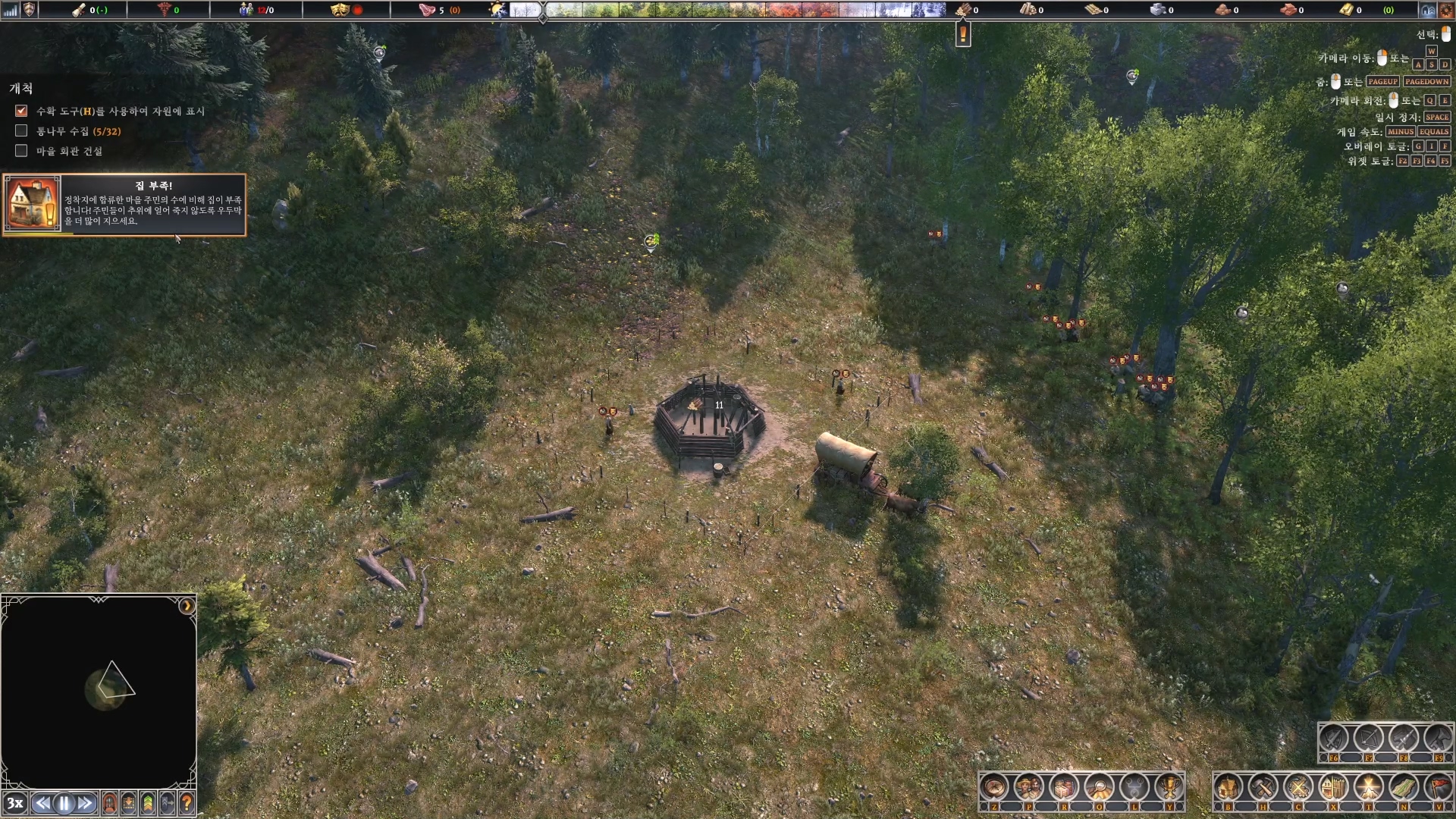
In terms of difficulty, it is hard to call it easy, but I want to say that it captures the feeling of running a medieval manor all the better for that. I will talk more about the game’s features in the review, and I would call the genre a construction and management game.
It officially supports Korean on Steam, so I was able to play without trouble. Aside from crashes caused by a problem with my own system while playing, I did not run into any major bugs that came from the game itself. Let’s get into the review.
2. ‘Farthest Frontier’ Review
2.1. Features
The basic framework is similar to ‘Banished’, which I mentioned in the Overview. Personally, it felt like a more expanded and more stable system built on that game. In terms of systems, ‘[PC Game Review] Endzone – A World Apart‘ came to mind in places as well.
After playing for a while and handling combat troops, I learned something surprising: I could move each villager directly, like a unit in a strategy simulation. They usually carry out their own work, but when needed I can select a specific villager and move them.
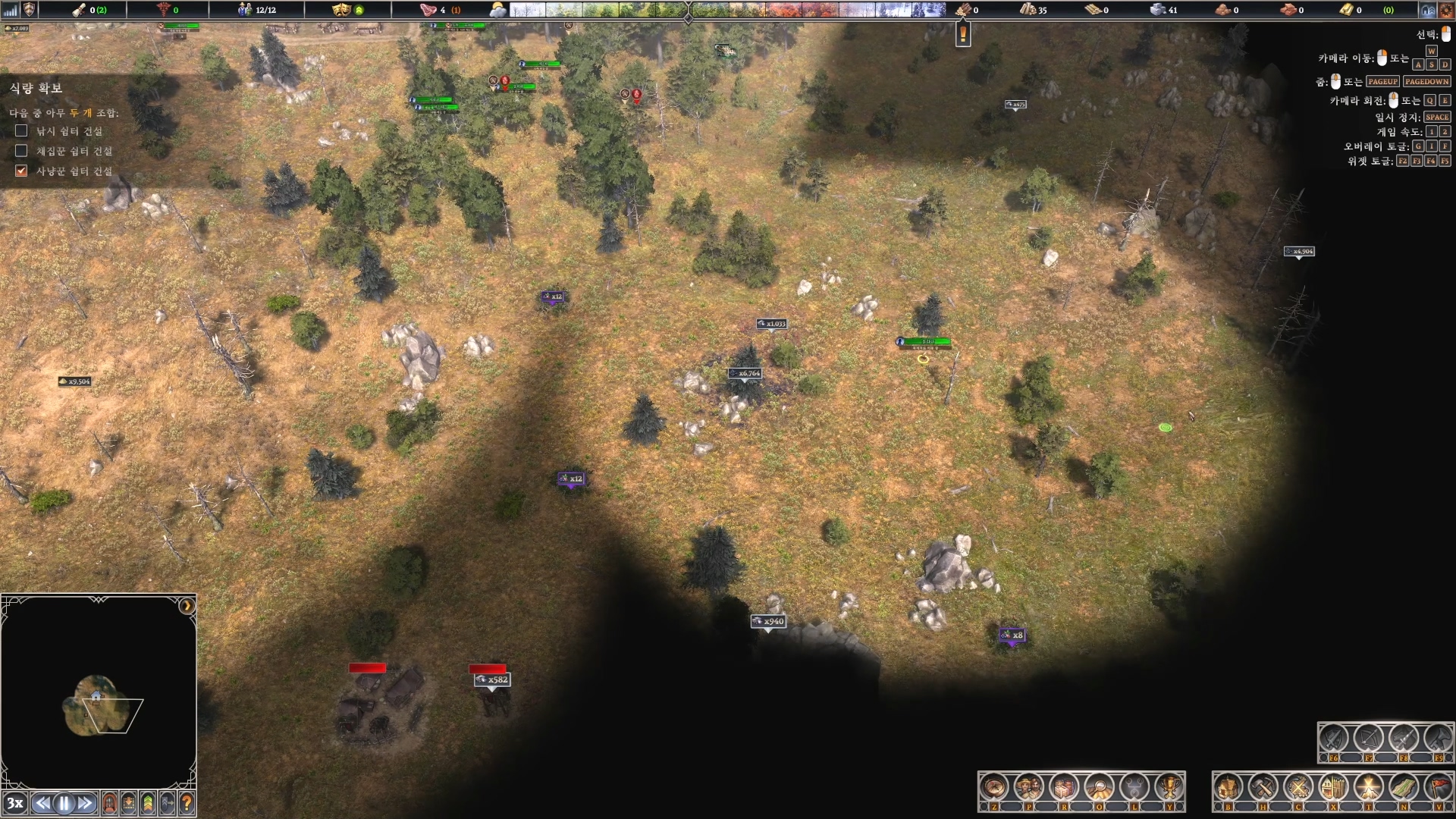
The ways to get food are quite varied, including hunting, foraging, fishing, farming, orchards, and dairy. At the start, bringing food straight from nature, as with hunting, foraging, and fishing, is the main approach, but as the manor grows you gradually build a more stable production structure.
After you gather materials and put up the buildings you need, raising the Town Center’s tier steadily expands the facilities and areas you can use. Sometimes you have to build a specific building before the next one unlocks, so simply stockpiling a lot of resources does not open everything right away.
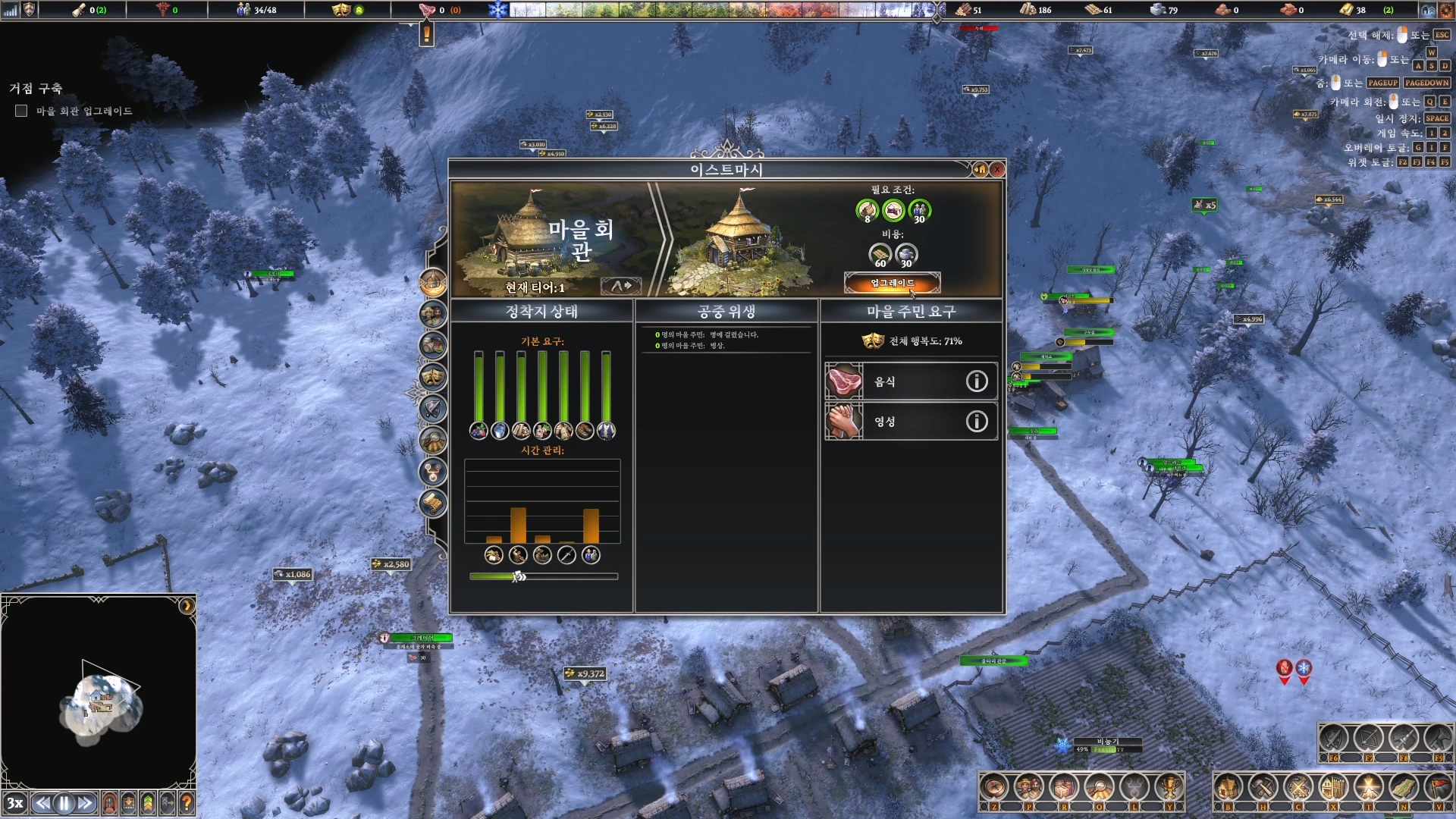
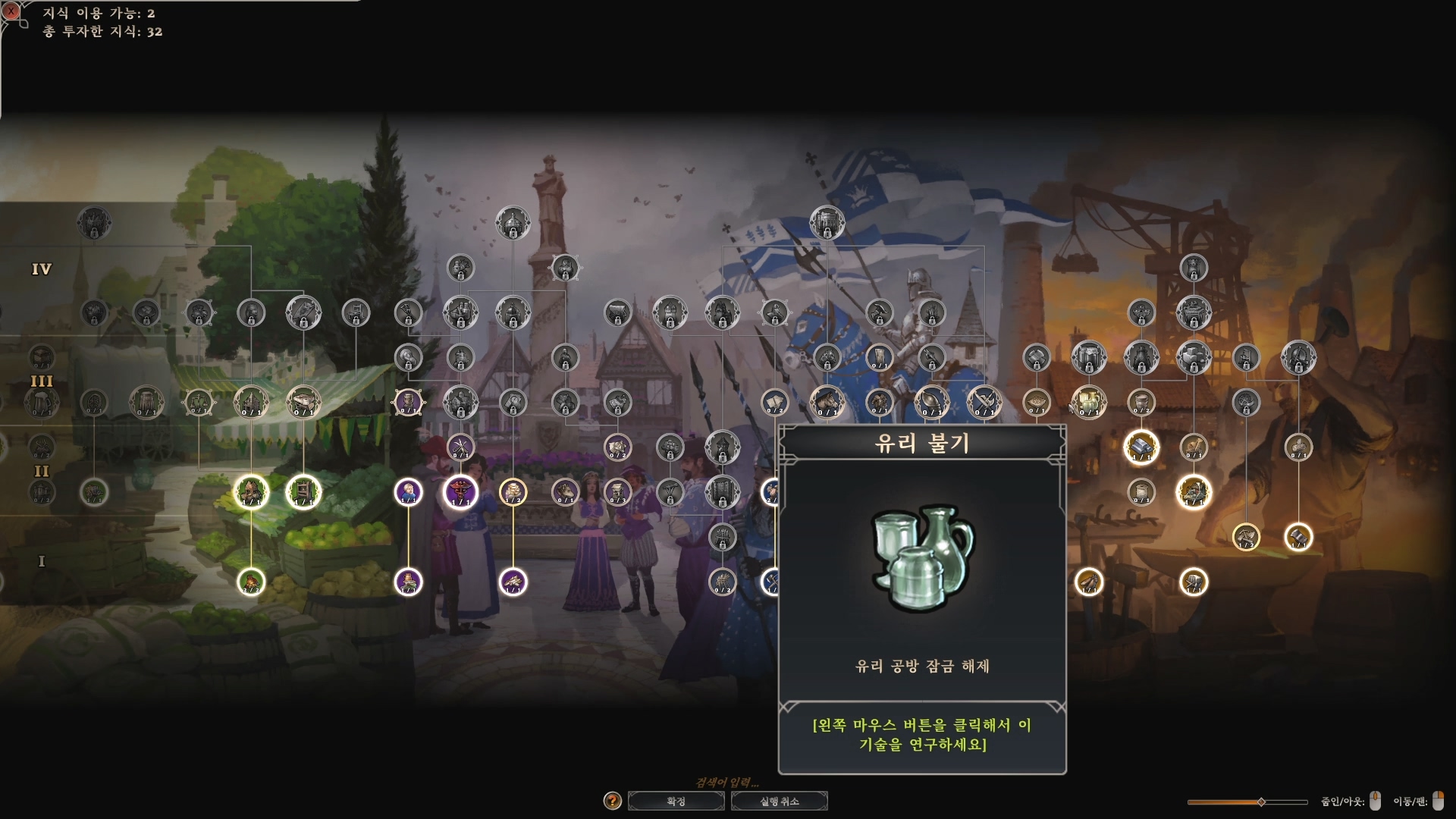
You can also strengthen various effects or unlock certain elements through knowledge and research. It felt a little complicated at first, but there was fun in learning it one piece at a time. If anything, I felt that unlocking content locked away in several directions, one by one, adds variety to a construction and management game that can otherwise be monotonous.
Some facilities require the Town Center to advance, some require a prerequisite building, and other effects have to be earned through research. I liked how these growth conditions are mixed together naturally, so things do not slide into a pattern of just stockpiling one resource.
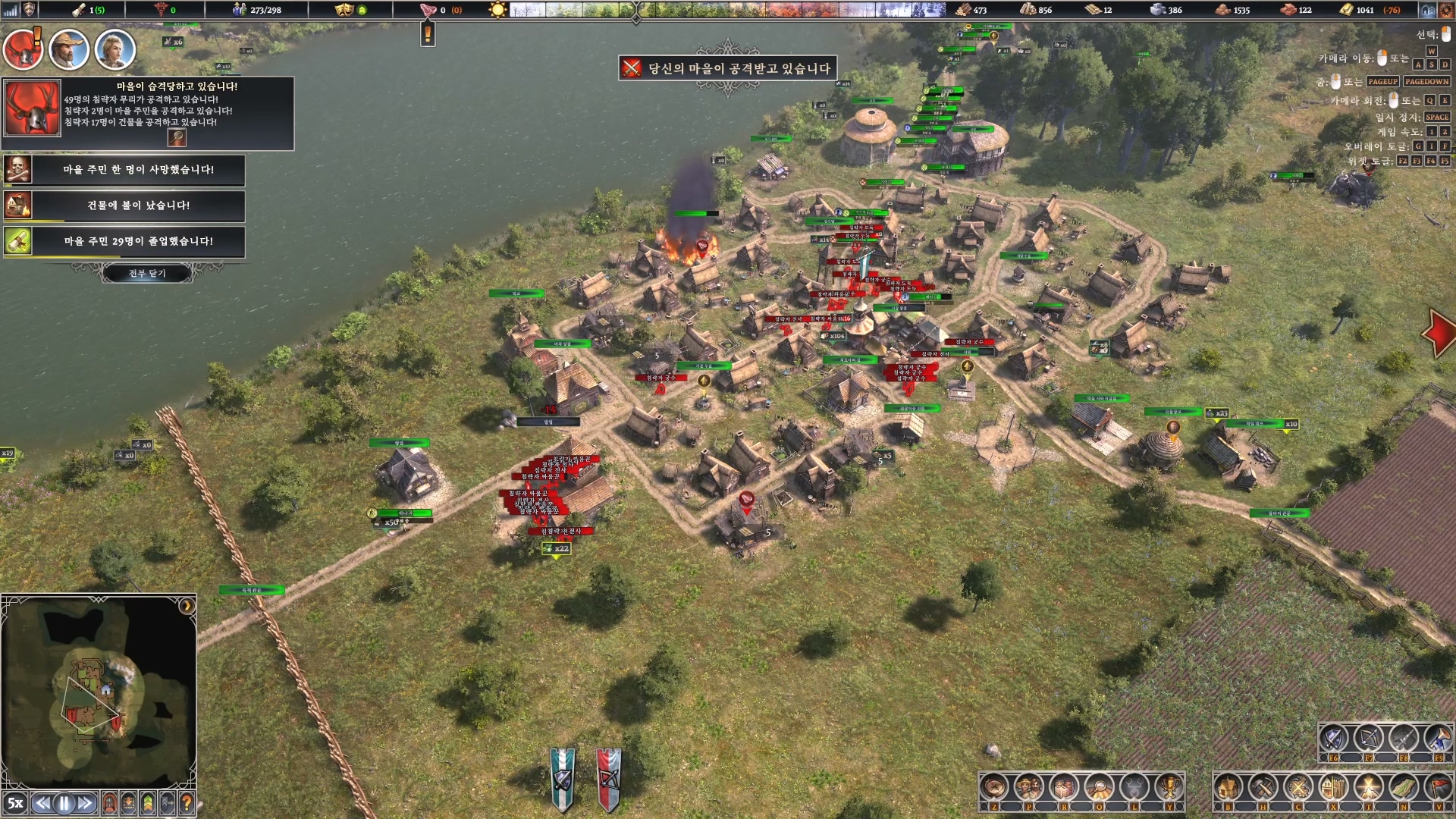
It does not end with peacefully growing the village, either. There are raiders who add tension, and wild animals in the form of wolves and bears. If you follow the basic map settings, raiders invade at regular intervals, targeting the Town Center and the storehouses.
In a building process that could otherwise run a little flat, these invasions were a welcome change of pace. As the village grows, the area and the goods you have to protect grow too, so you start thinking about how to run defenses and troops.
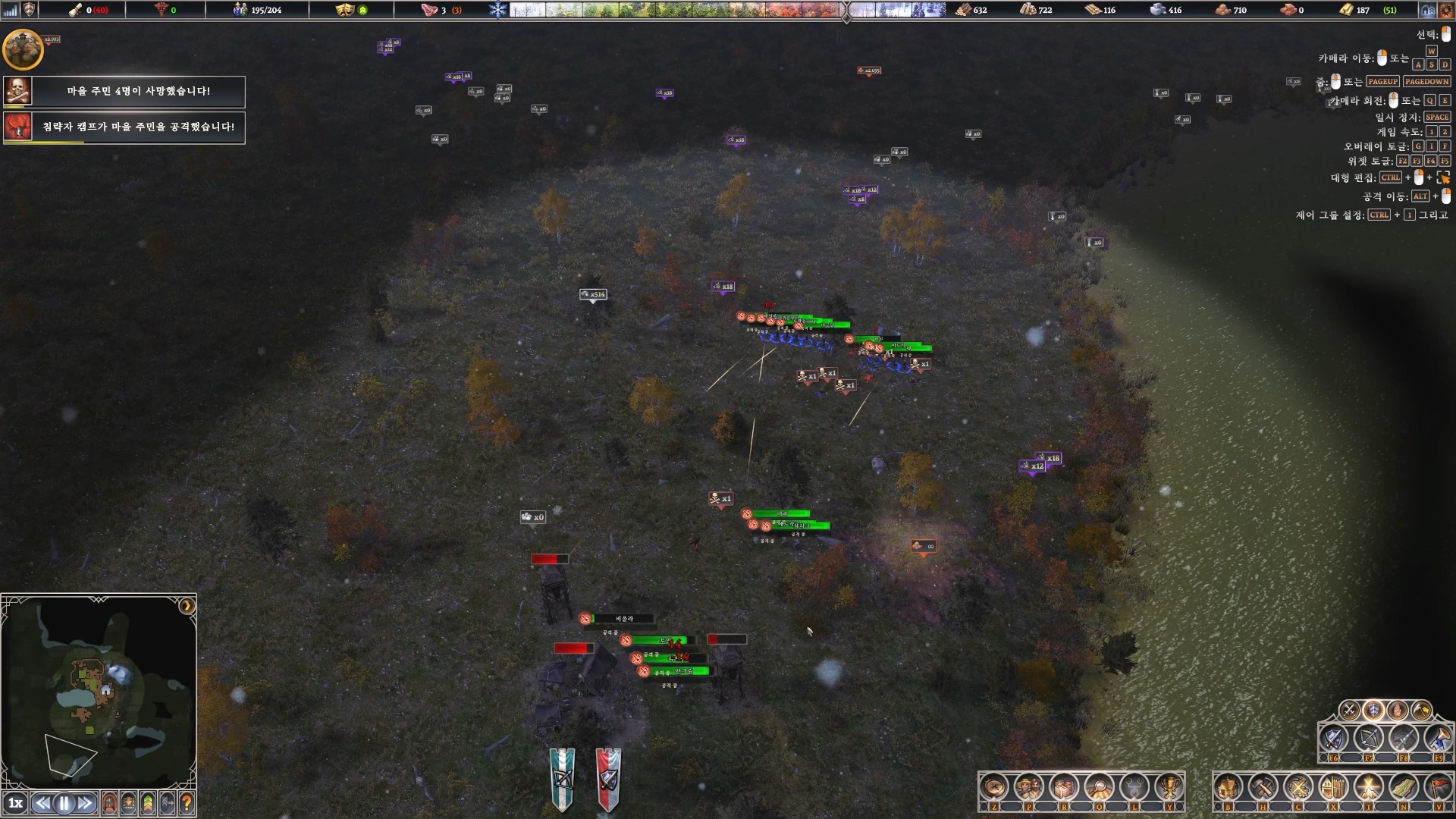
When the map is generated, raider camps and wolf dens are placed around it. At first they are closer to danger zones you should avoid, but once the settlement has grown and you have troops, you can clear them one by one. I could feel a sense of growth in going from carefully avoiding the surroundings at first to later sending troops to clear them myself.
The range of products and goods is also quite wide. There is fun in securing raw materials and processing them into new goods, broadening the economic structure. Once you factor in the goods villagers need and the goods needed for trade, you end up running quite a few production facilities.
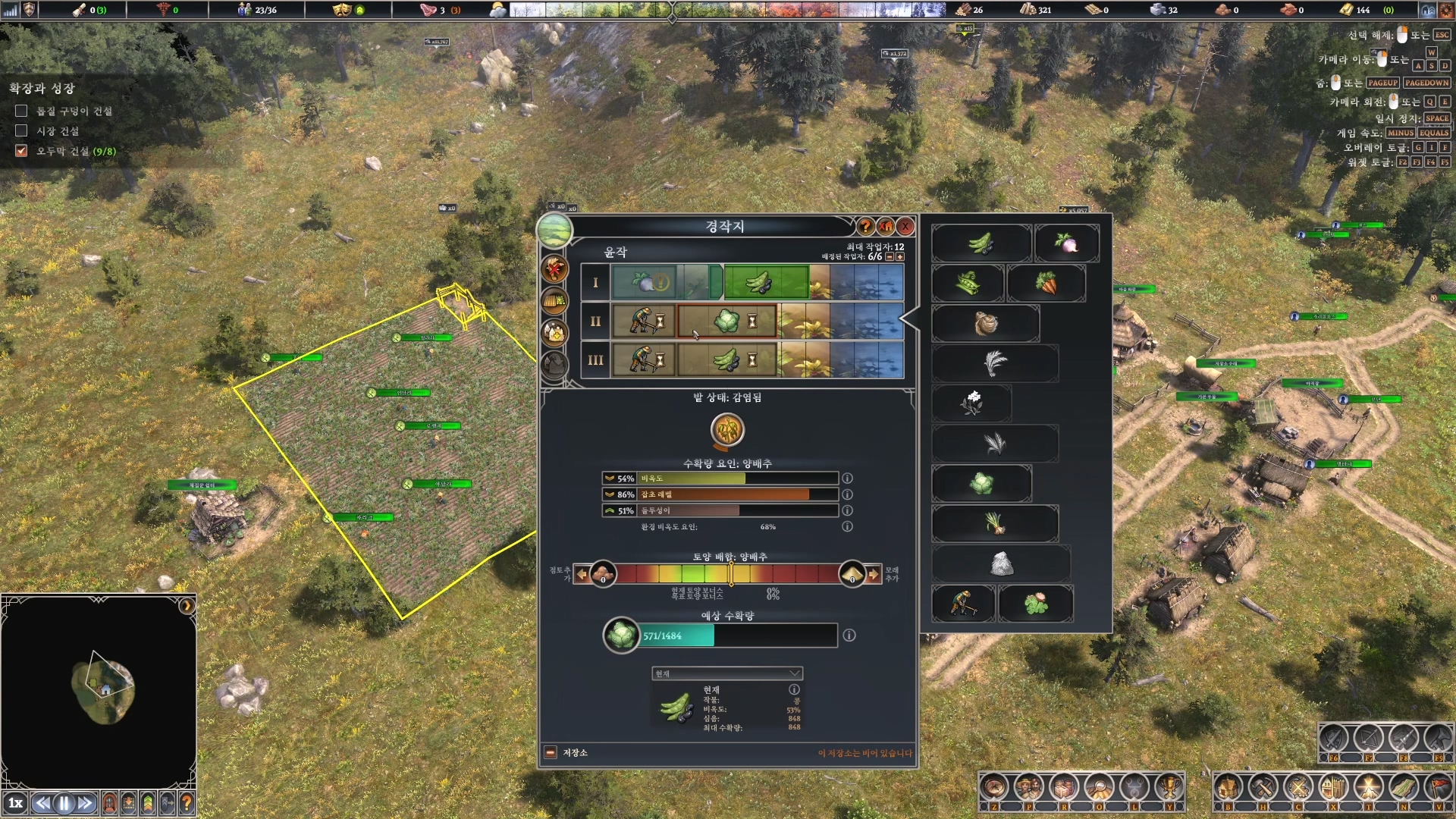
The farming system in particular was more detailed than I had thought. Instead of growing a single crop continuously on one field, you can assign which crops to plant and which work to do across 3 years.
Each crop has its own growing season and traits, and you also have to manage conditions such as the land’s fertility. I had assumed that placing a farm and assigning villagers would be enough for food to come out, and I was a little surprised by a field-management system more detailed than I expected. It was impressive that it made me pay attention even to crop order and soil quality.
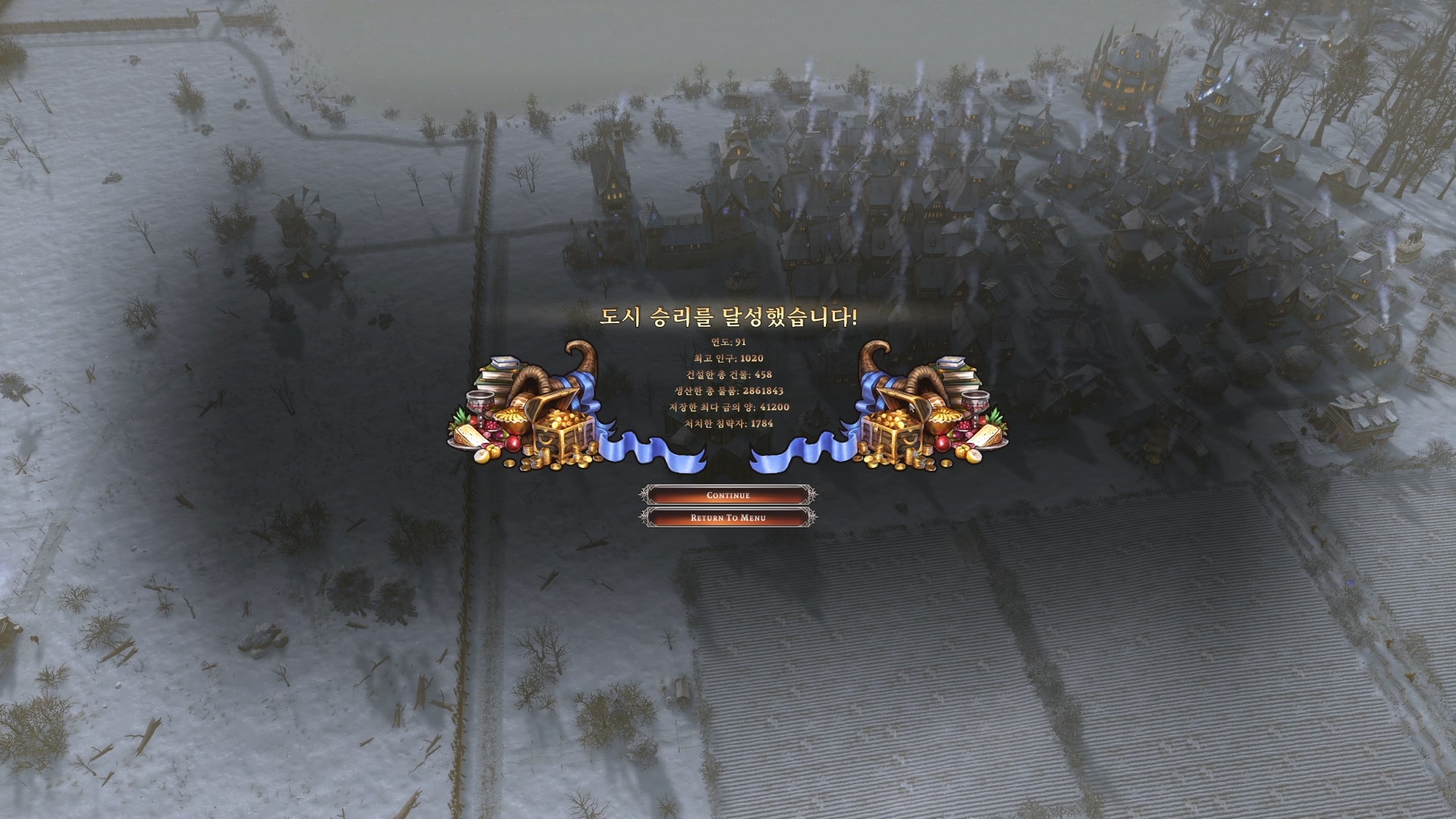
Another thing I liked was that the map has a clear goal you can use to finish the game. There are monuments tied to the economy, culture, and war, and completing the relevant monument lets you see a victory screen.
Construction and management games often leave you to decide the ending yourself once you have grown to a certain point, but ‘Farthest Frontier’ offers a finishing point in the form of monuments. I could have confirmed the victory and finished the game that way, but for some reason I did not stop there and was building the other monuments as well.
2.2. Graphics and Sound
I would not go so far as to call the graphics and sound perfect, but overall the detail is alive and the depiction is fitting. It did not feel like a handful of simple shapes. I could feel that many objects and structures had been combined into one medieval village.
Zoom the camera in far and some rough spots do show, as you would expect. But given that this is a game you basically play looking down on the whole village from a moderate distance, the detail holds up so well that I wondered whether it needed to be built this finely.
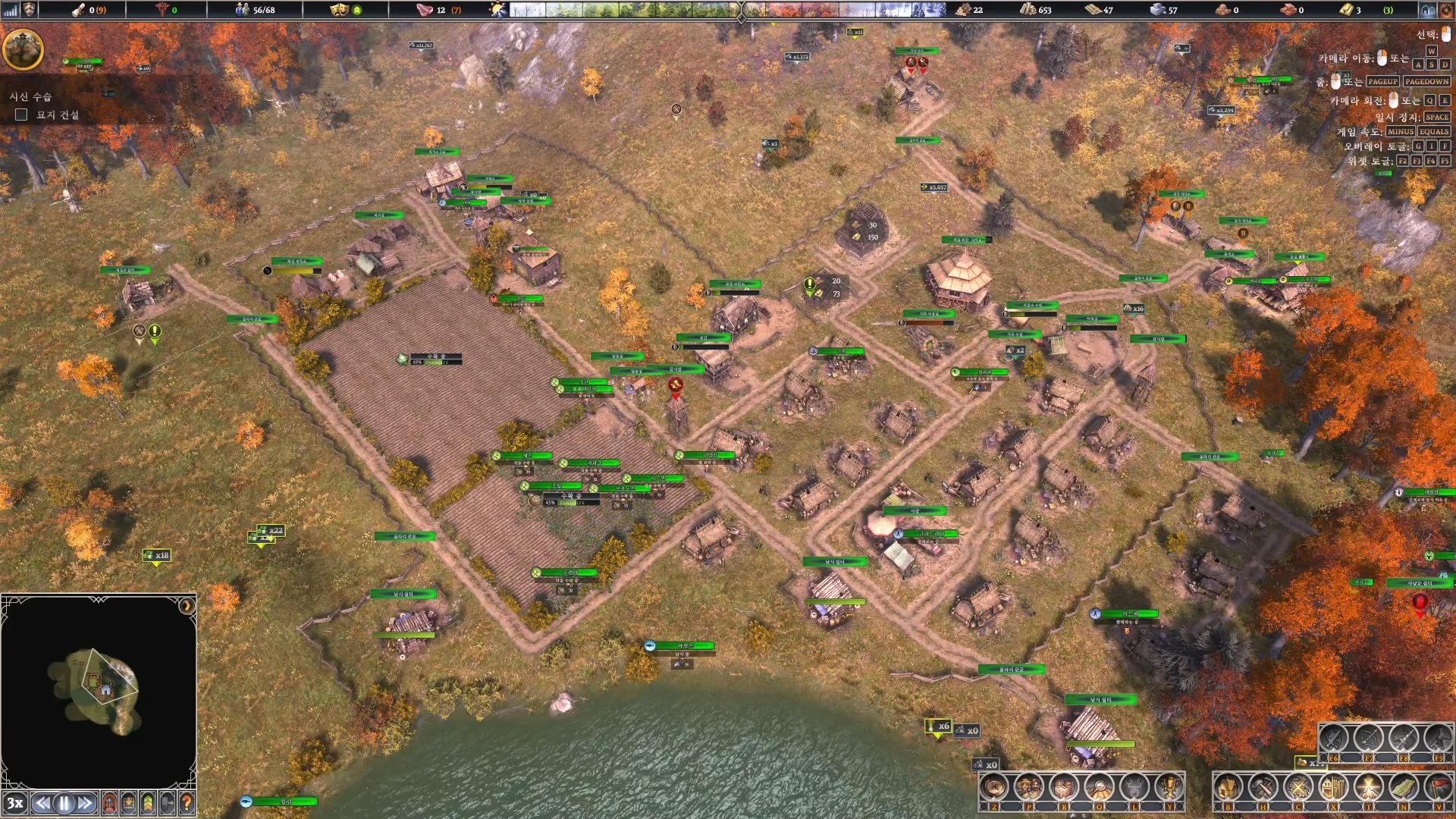
Speaking as someone who wants to make games, I think graphics work is always a difficult part. Even seen from that angle, I think the graphics of ‘Farthest Frontier’ have a quality worth showing off. As the village grew, the sight of buildings, villagers, and production all coming together on one screen was also very pleasing.
The sound captures a pastoral atmosphere well, and when combat starts it changes the mood with music and effects that fit the situation. I do remember, though, that it sometimes failed to ease back into the ordinary sound even after combat had ended.
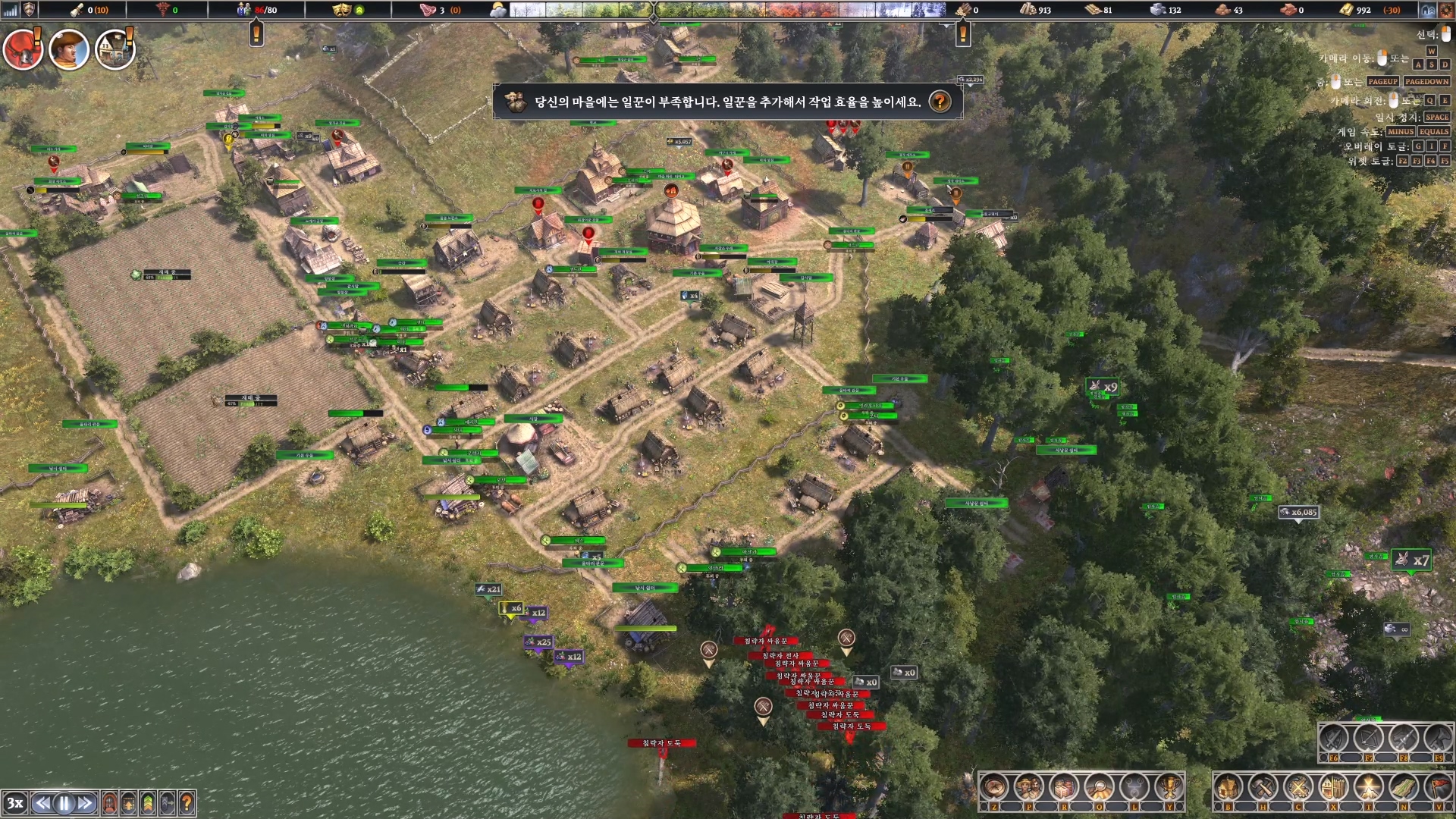
In the sound effects, for some reason the ‘Age of Empires‘ series came to mind in places. A few sounds felt familiar, such as the bell for evacuating villagers when an invasion happens, and the stone effects heard while crafting and building roads.
Overall, nothing in the sound effects was a serious problem, and they conveyed a response suited to each task well enough. It was also impressive that the sounds of the small villagers going about their work made the village feel like a living place.
2.3. Difficulty
At first I thought the difficulty might be on the hard side, but as I kept playing I came to feel that it is not that hard a game. It may be because I have played this kind of construction and management game many times, though.
If you basically follow the direction the game sets and, when a problem comes up, check the exclamation marks and the repeated warnings and fix things one by one, nothing blocked me in a major way. In most situations, such as a food shortage or trouble with housing conditions, the game does point out the problem to some extent.
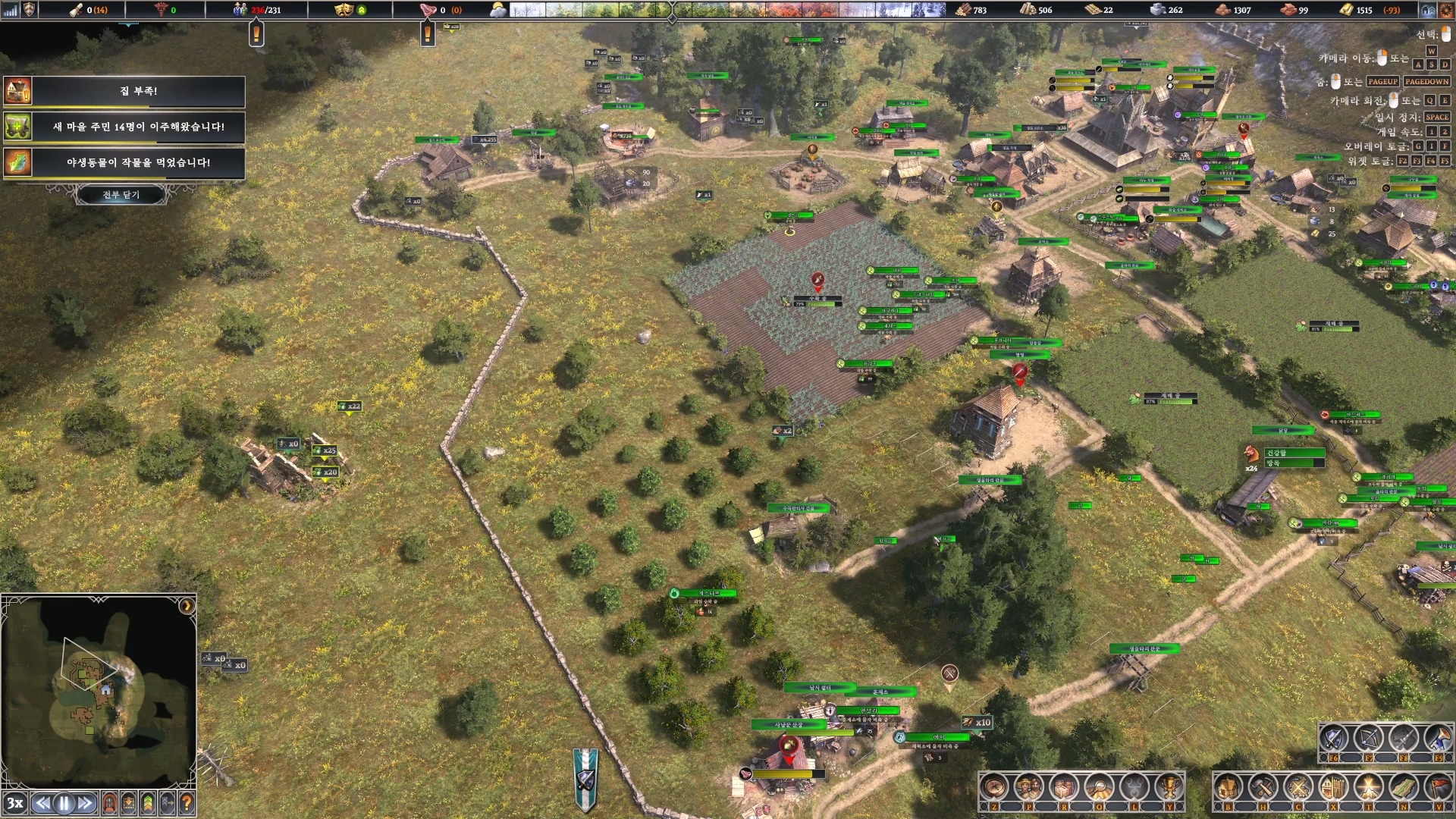
Vanquisher difficulty was not as hard as I had expected either, if I challenged it after playing through normal difficulty thoroughly once. Before starting, I worried the difficulty would rise considerably, but when I actually played I did not feel that the game became sharply harder.
The part of Vanquisher difficulty that felt a bit tricky early on was how aggressive the wild animals were. Wolves and bears sometimes attack villagers, so a bad placement or a late response can put you in an awkward spot from the start. Even so, if you grow and respond along the lines the game suggests, it was not more than I could handle.
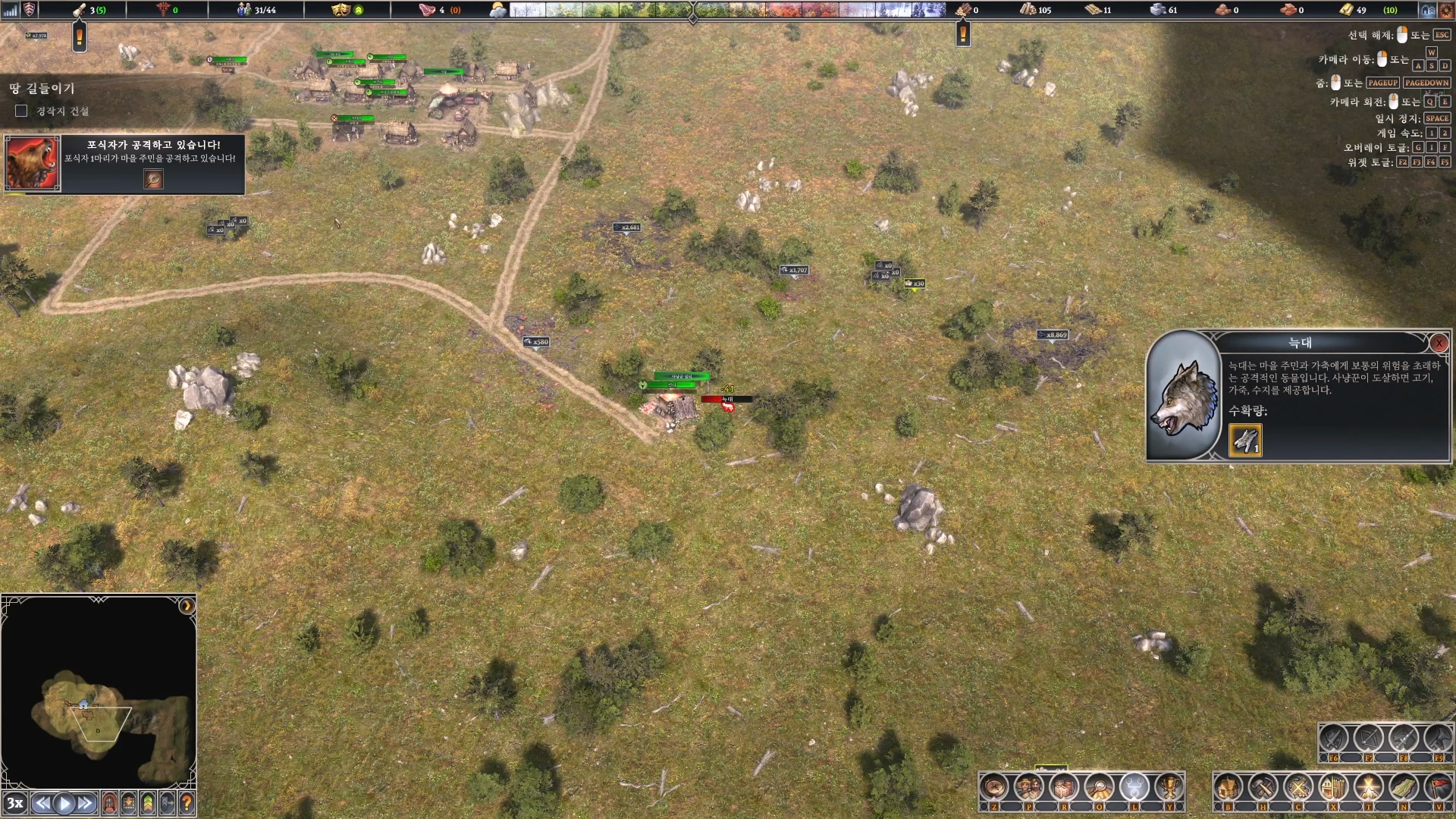
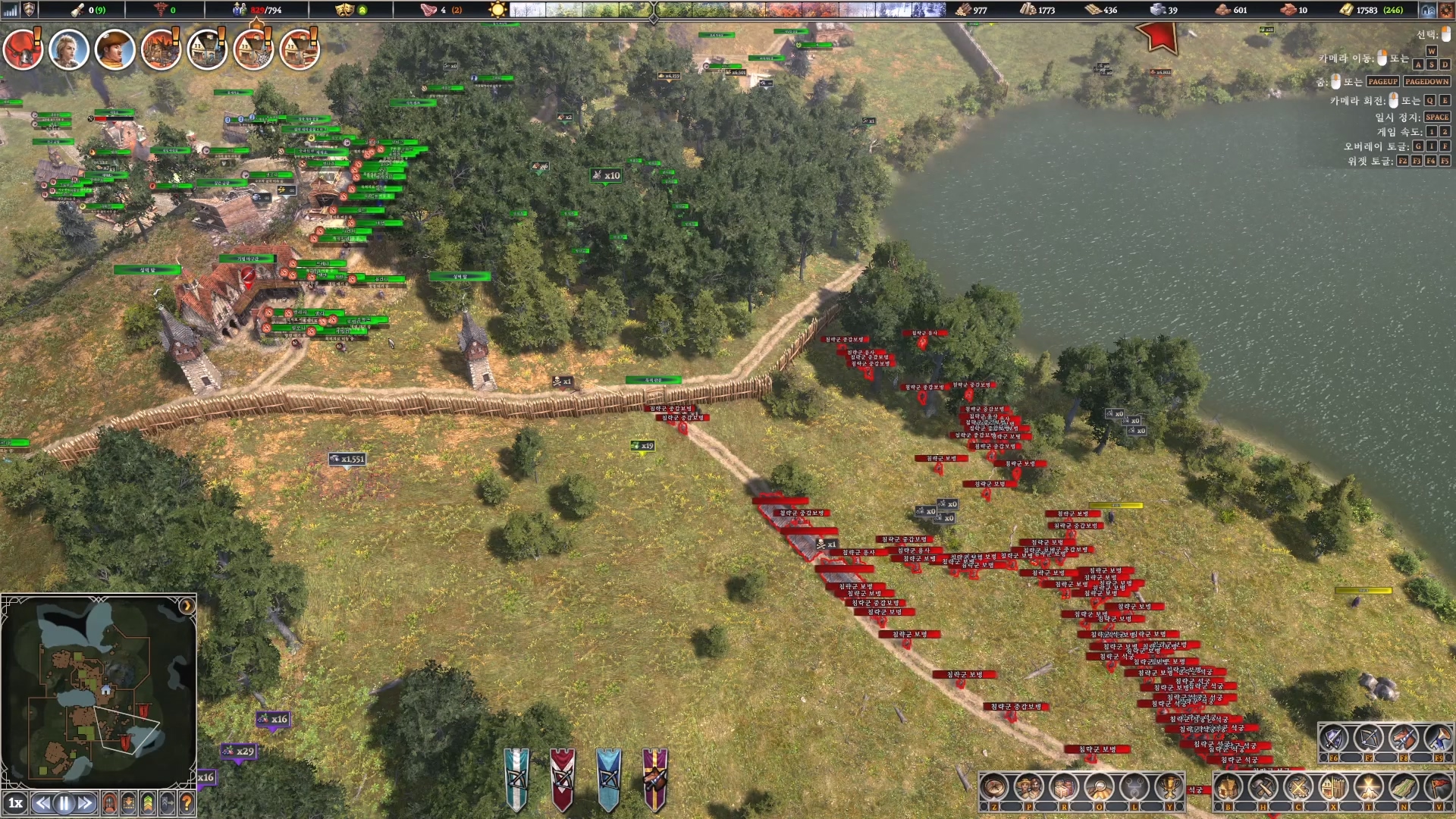
Raiders are tense at first too, but once you have defenses and troops you gradually become able to deal with them. Because villagers can be moved directly, I could respond by using them as combat troops when the situation called for it, or by pulling them out of dangerous places.
In the end, what felt bigger than the difficulty itself was that the time needed to grow is a little long and the waiting drags on. I spent more time waiting for the needed population, resources, or construction to finish than I did getting stuck because I did not understand the systems.
There was also one point that left me stuck because of how a system was explained. I was looking for the setting related to the population limit, and there was no separate button on the game screen. The population limit option was inside the general settings of the game menu.
Given how much information the game provides within the game itself, I think it would have been better if this had been pointed out so it was easier to find. In any case, once I understood the systems, the difficulty never blocked me in a major way.
2.4. Play Time
My total play time in ‘Farthest Frontier’ is 84.9 hours. It turned out to be a game I played for quite a long time, longer than I expected. Personally, if I play one game for about 40~50 hours I tend to feel I have enjoyed it enough, and I sailed well past that mark.
The first playthrough itself, of course, reached a city victory in about 20 hours. If I had stopped there, it would have been a game I enjoyed in moderation and finished. The problem was what came after.
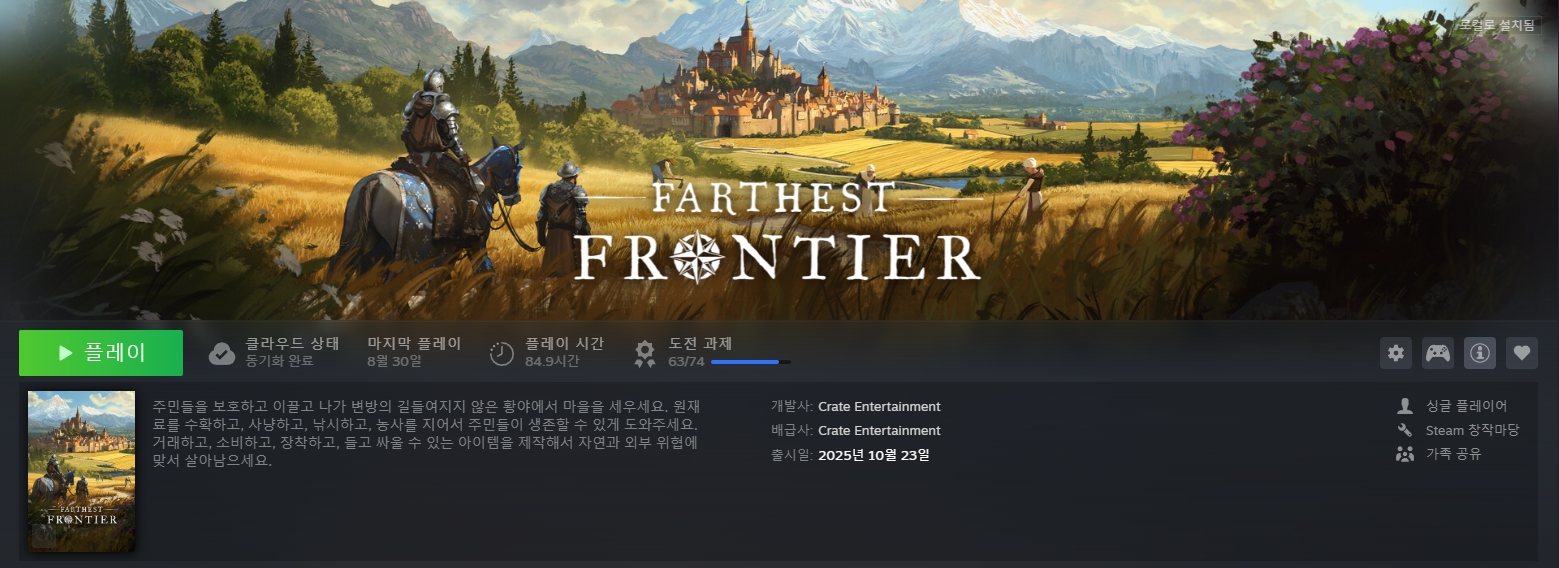
Even after I confirmed the victory, I wanted to grow the village a little more, and some of the challenges looked worth trying. Playing a bit more like that, the hours added up. I was also curious how other terrain would feel, so I started a new map, and in the end I played that map through to the finish as well.
The second map was an arid region marked as high difficulty. When I started, I meant to play only until I had cleared every raider camp generated on the map at the beginning. At some point, though, I was going all the way to an economic victory, and I was growing the population to around 500 as well.
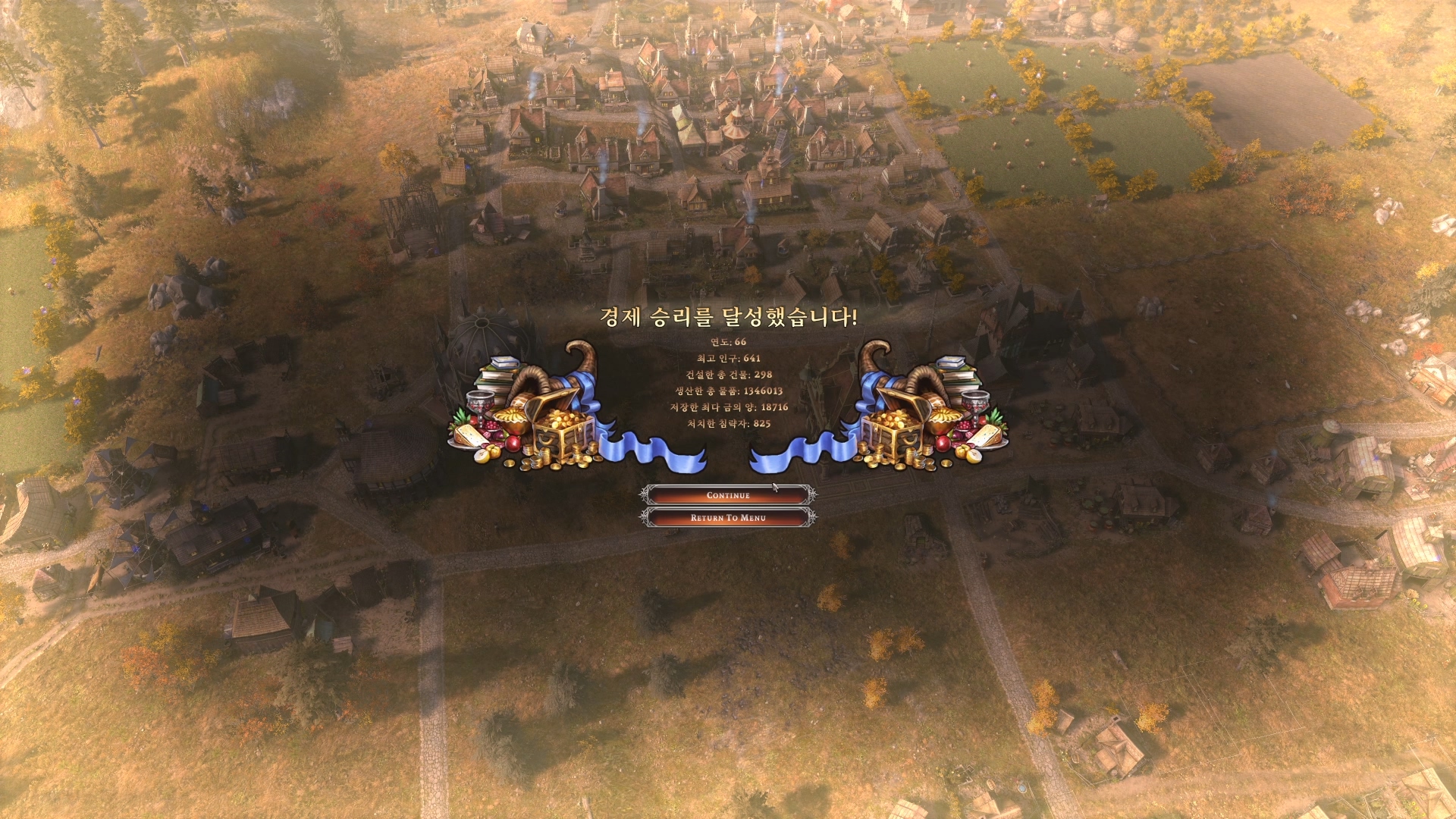
Personally, I think one of the biggest reasons play time stretches out in ‘Farthest Frontier’ is population growth. The population does not rise as fast as you might expect, and villagers coming in from outside are not frequent either, so a large village took a considerable amount of time.
On the first playthrough everything was new, and I was too busy figuring things out one by one, going “What is this?” and “How do you make this?”, to really notice that population growth was slow. From the second playthrough on, I felt it clearly. I would call it one of the main reasons the game’s hours grow.
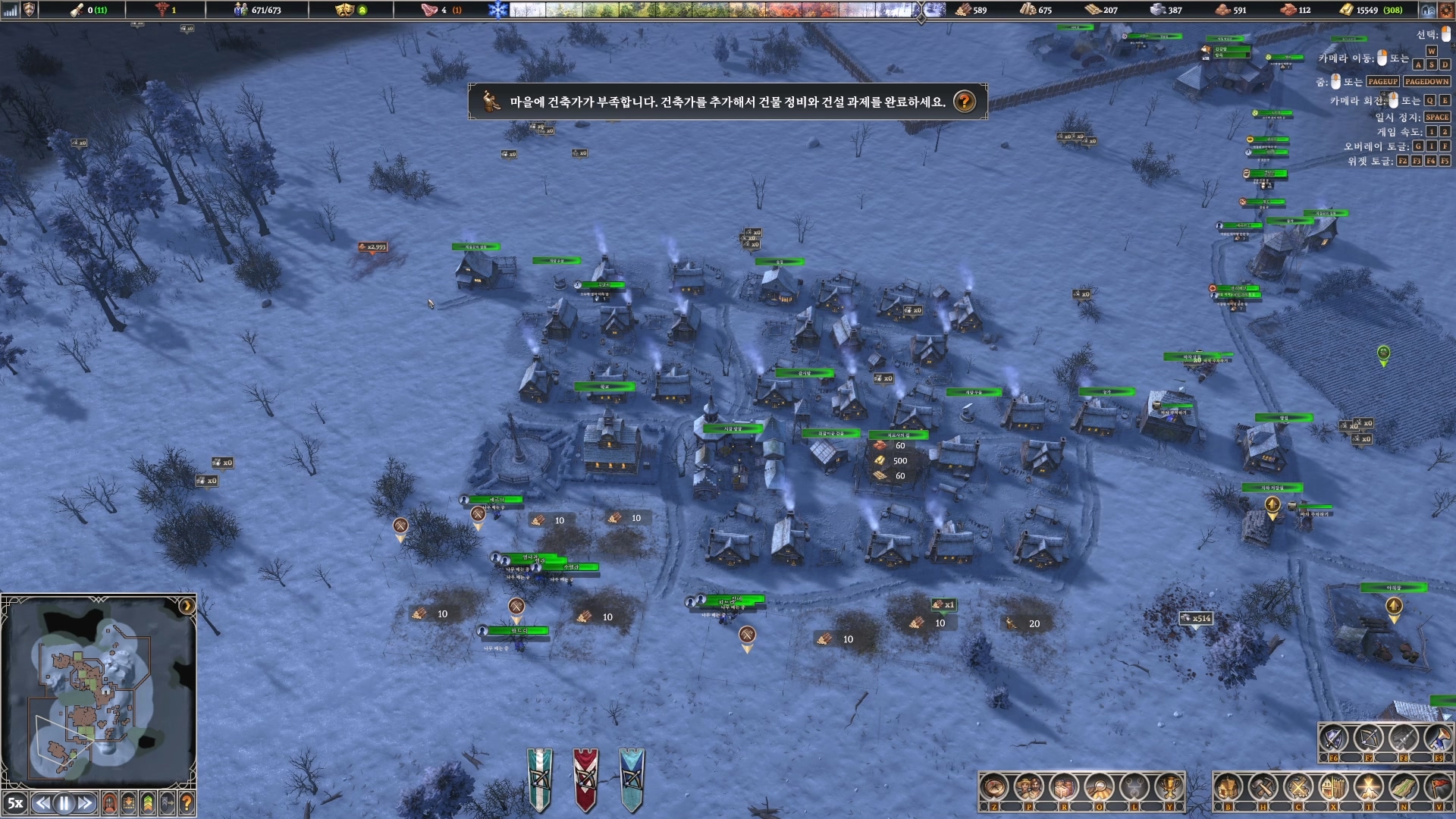
Even so, it is hard to call this entirely a shortcoming. Because the population grows slowly, you also get time to prepare housing, food, and production facilities for the new villagers. It can be read as giving the player time to prepare, compared with the population surging all at once until the village cannot cope.
So even while I thought it was slow, it fit the flow of the game to some degree. It was a truly ambiguous point.
As for immersion, it was quite strong. It felt less like a game that hits you with an enormous burst of immersion all at once, and more like one that quietly holds that immersion all the way to the moment you build the last monument.
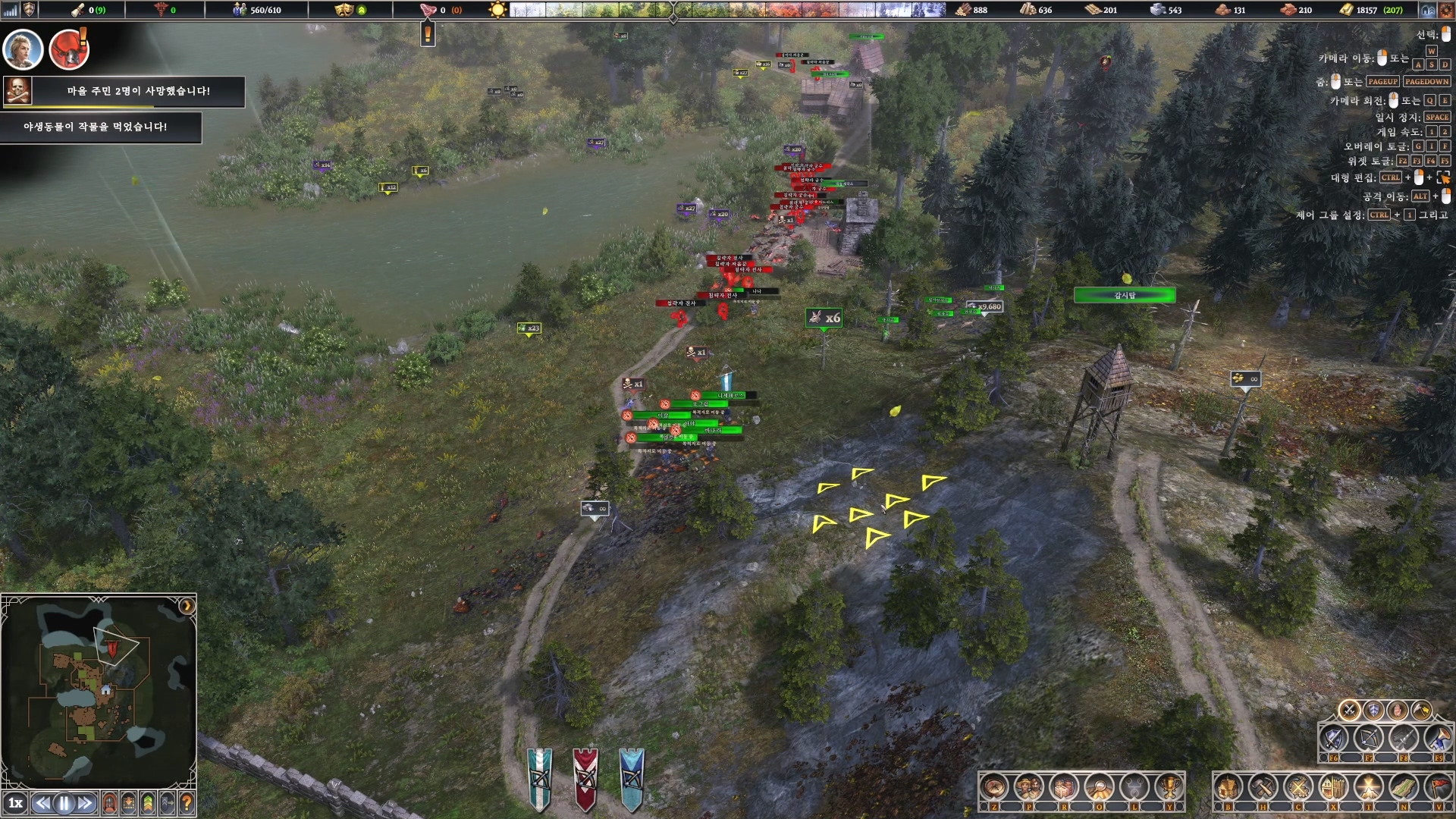
You need to put up one more building, you need to prepare a new production facility, and when the population grows something else becomes necessary. Then raiders show up and you shore up the defenses. Once one goal is done, the next thing to do appears naturally, and that structure kept me playing.
It was quite addictive for me as well. I started because I was curious how it would play on other terrain, and there was a spell to it that pulled me along with the immersion until I played it through to the end. After I finished the second playthrough, I even picked up enough confidence to take on Vanquisher difficulty.
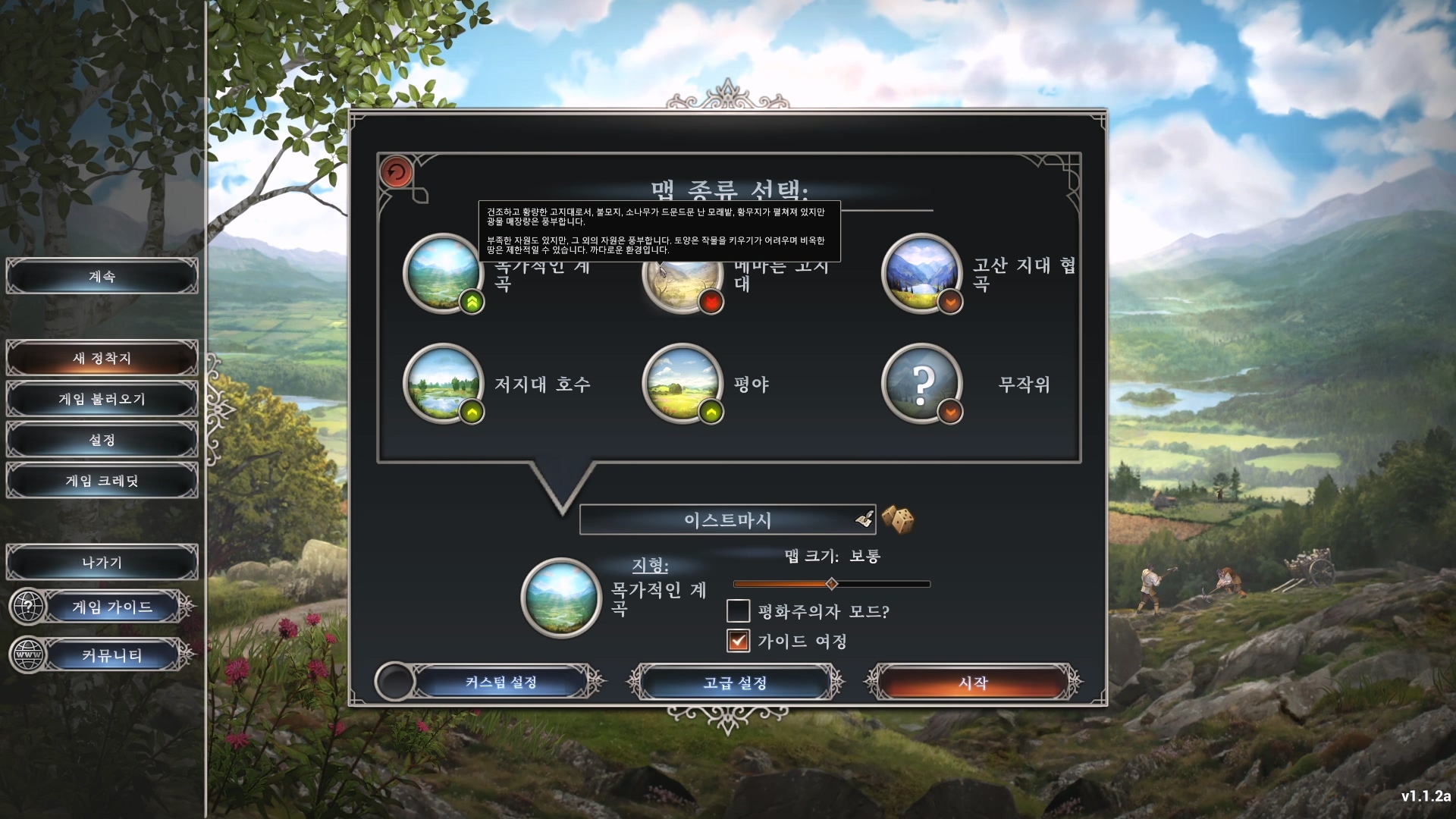
On top of that, looking at the challenges I thought, “I could probably do this much,” and I played a little more again. Poking at them one by one, the disaster of going past the 80 hours mentioned earlier unfolded.
In the end, if the only goal is the first victory, it is not that long a game. But once you set your sights on new terrain, new difficulty, challenges, and a larger village, it is a game whose play time can grow quite long.
3. ‘Farthest Frontier’ Closing
At first I thought it was a game I could play lightly and be done with. It is certainly not a game of combat that never lets up, and because it is a somewhat static construction and management game, you can enjoy it at an easy pace. Looking at the final play time, though, I have to wonder whether I really did enjoy it lightly.
In any case, I personally found it very fun. Starting from a small settlement, securing food and resources, expanding production facilities, and building a medieval manor was a process put together well. Raiders and wild animals gave a fitting tension to a game that otherwise flows peacefully, and the varied production structure and farming system brought out the feeling of running a manor even more.
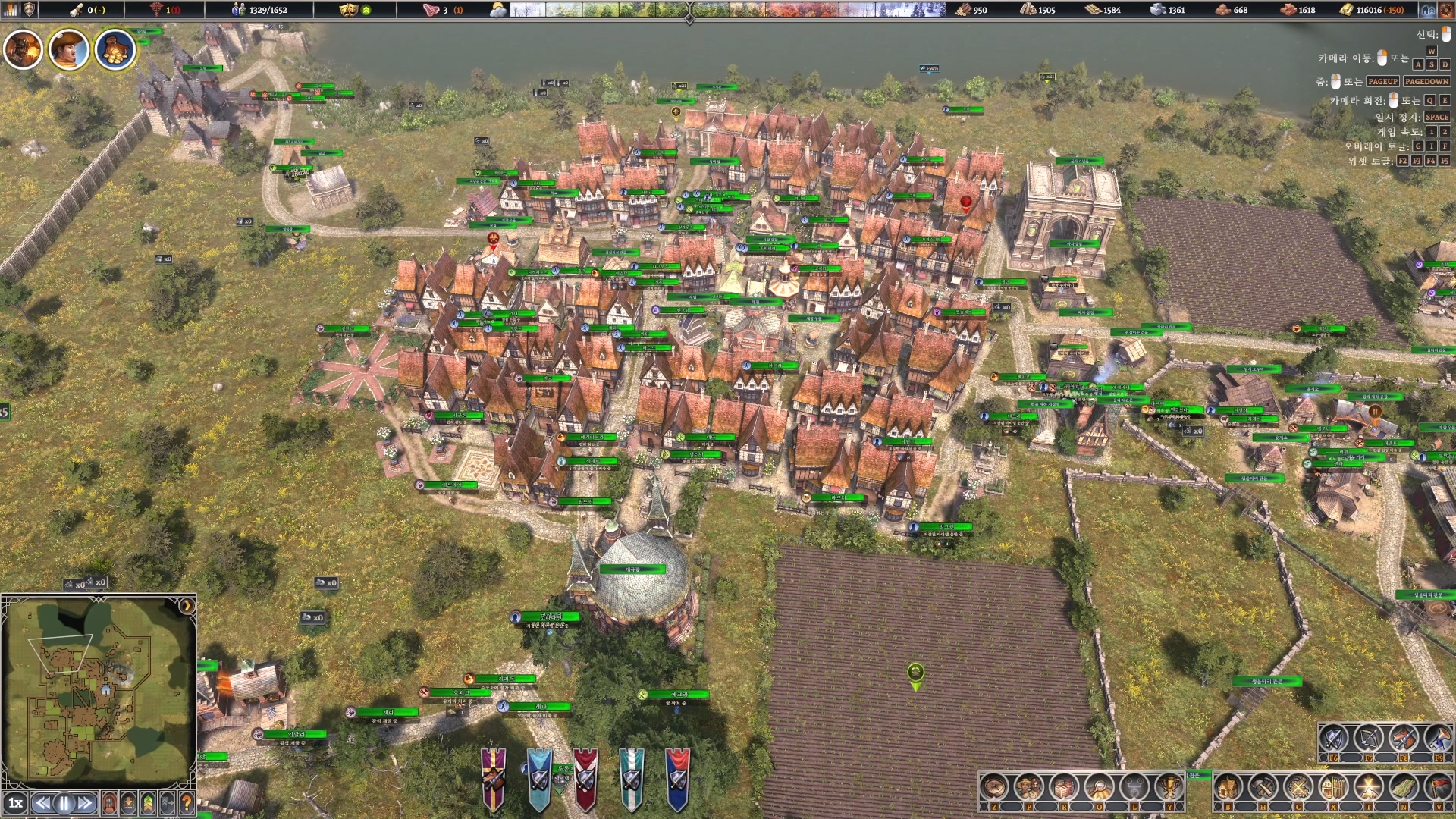
The part to watch is performance once the population is large. The game mentions this as well, but once the population starts to pass the basic limit, the load on the PC grows and frame drops can become quite severe.
You can also change the displayed information with F2, F3, F4, F5, and so on, and depending on which information is shown on screen, CPU usage sometimes rose considerably. If you want to build a large city and manage many villagers, I think the computer needs a certain level of performance as well.
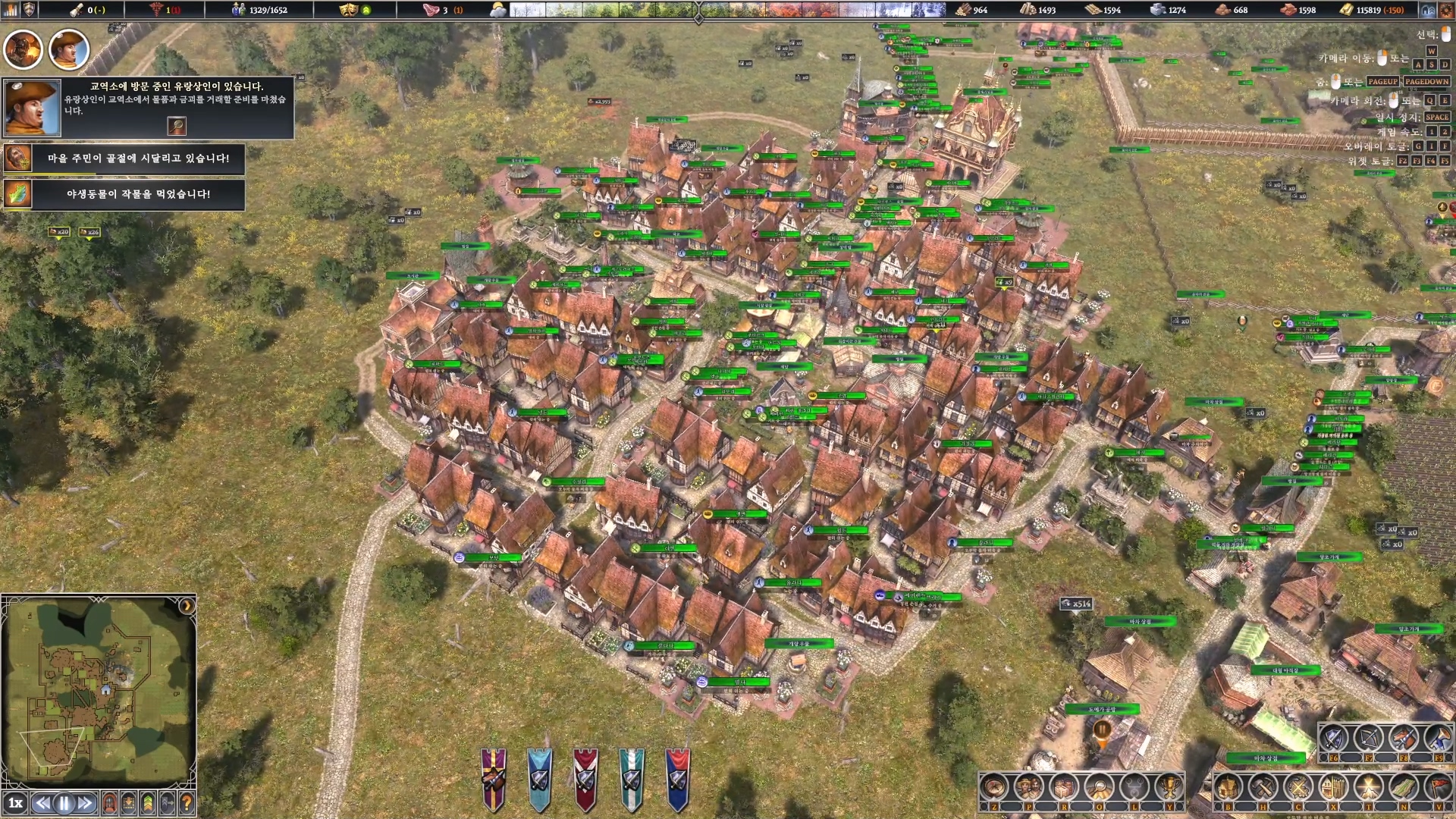
As a medieval construction and management game, it is one I personally want to recommend. Even thinking back on the similar games I have played, a composition at this level feels quite close to a finished form.
It also has a great many convenience features, but they sit naturally inside the game without greatly hurting the atmosphere of running a medieval manor. It is not overly complicated, and there is still plenty to think about: farming, production, trade, defense, research, and more.
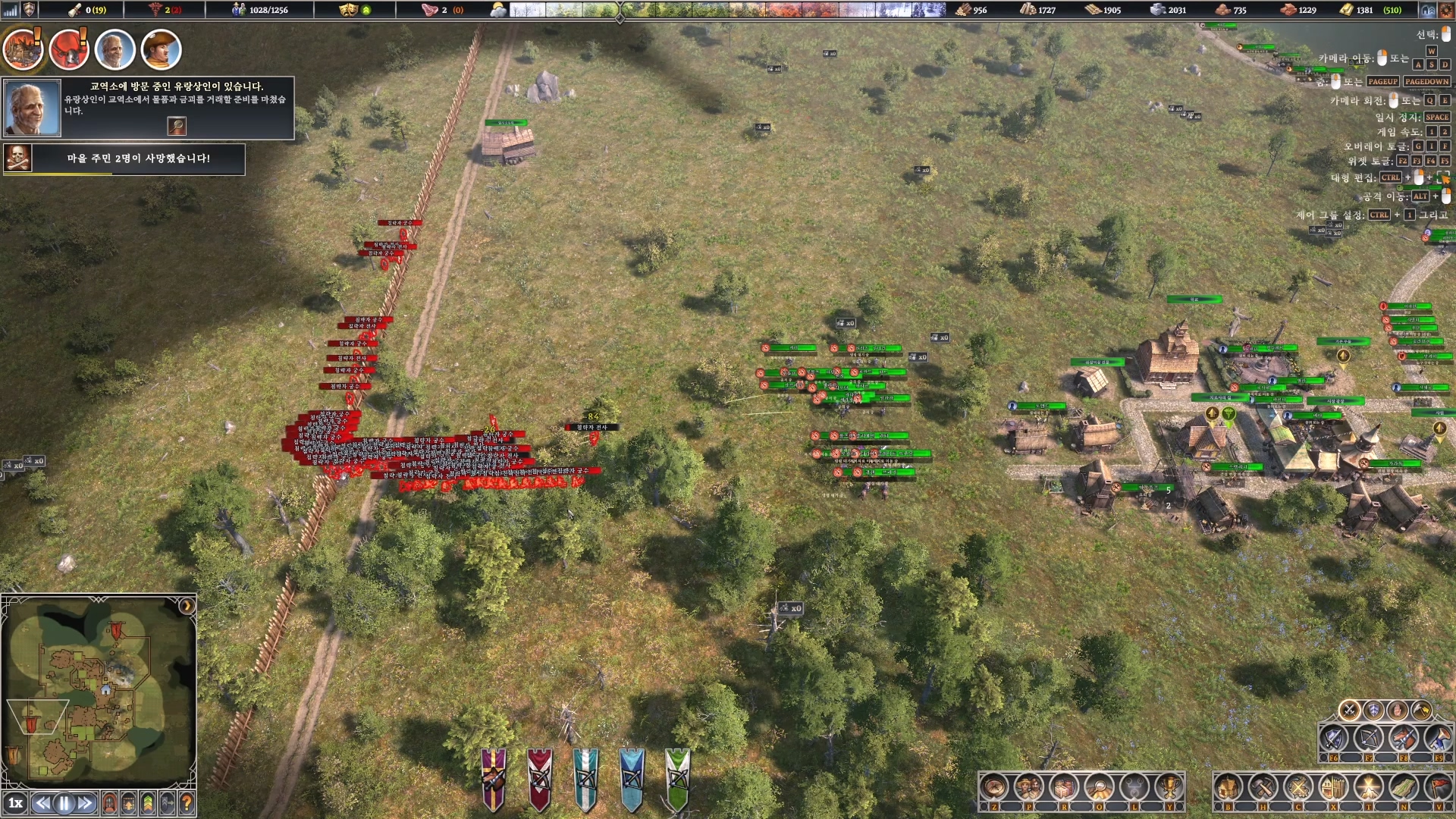
Above all, it was a game that gently melted my time away, and did it very well. If someone asked me to recommend one construction and management game about building and running a manor in the medieval period, I think ‘Farthest Frontier’ would be the first thing to come to mind now.
After I finished the first run, I started again meaning only to try a little of the other terrain, and next I even touched Vanquisher difficulty. In the end, the fact that I played for 84.9 hours seems to explain, better than anything, how fun this game was for me.
Of course, if you mean to build a large village, the computer will need to have a bit of performance behind it.
That is all. I wish you luck on the road ahead. Thank you.