

This review is an AI translation of the original Korean post. Proper nouns, and some game titles and expressions, may differ.
1. ‘Cliff Empire’ Overview
I personally tend to enjoy construction and management games. So the game I bought, one that looked reasonably fun and also simple, was ‘Cliff Empire’.
Looking back now as I finish the game and write this review, I felt that it was reasonably light, yet it had everything a construction and management game should have.
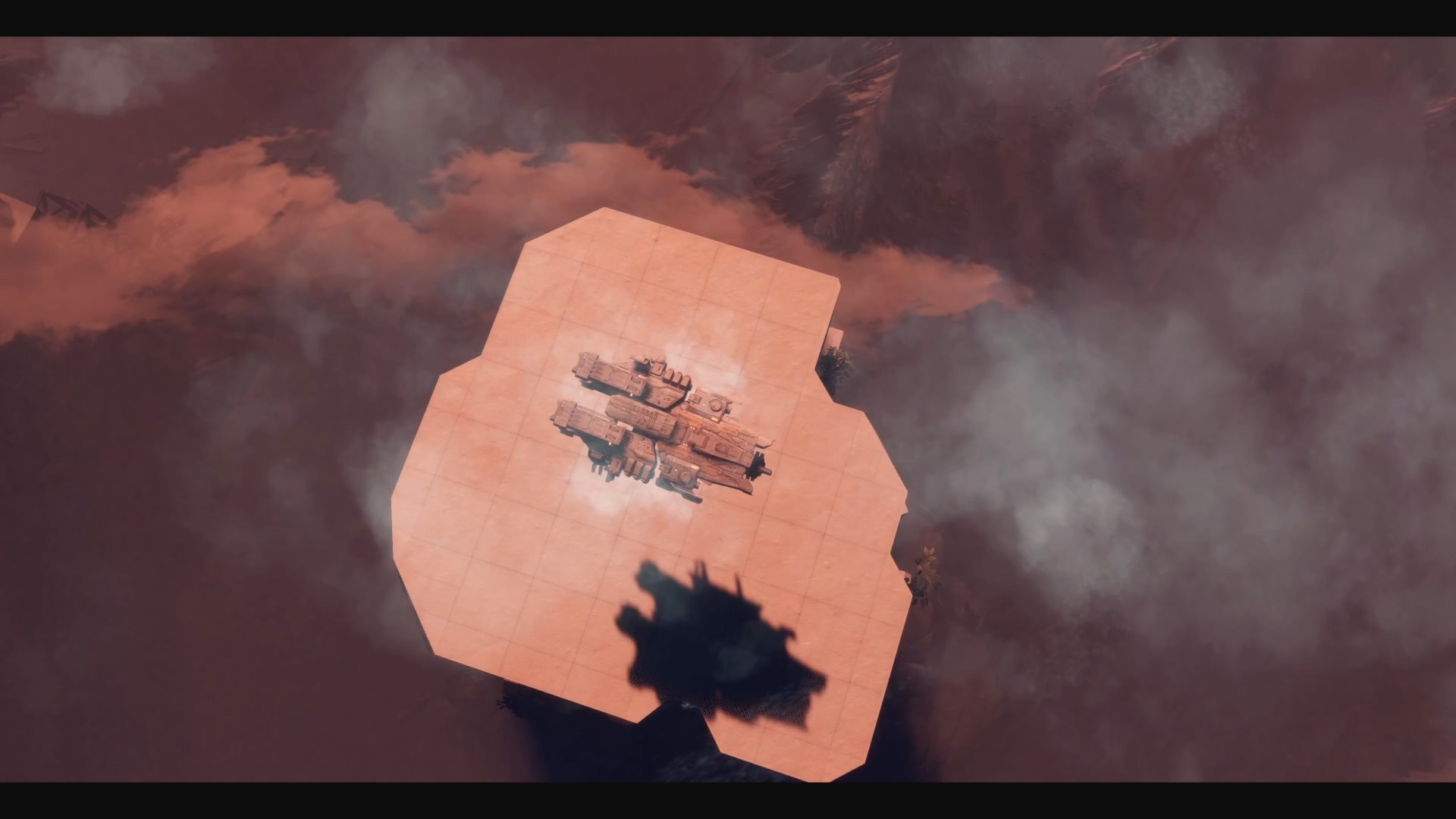
It officially supports Korean on the Steam platform, and I ran into no language problems while actually playing. It is a game that has background setting for moving play forward rather than a story, and there is not much explanation or text you have to read.
While playing, I did not find any bugs severe enough to stop progress. In that respect, it was a game I could play smoothly without major problems. Let’s go straight into the Review and look at the features I noticed while playing.
2. ‘Cliff Empire’ Review
2.1. Features
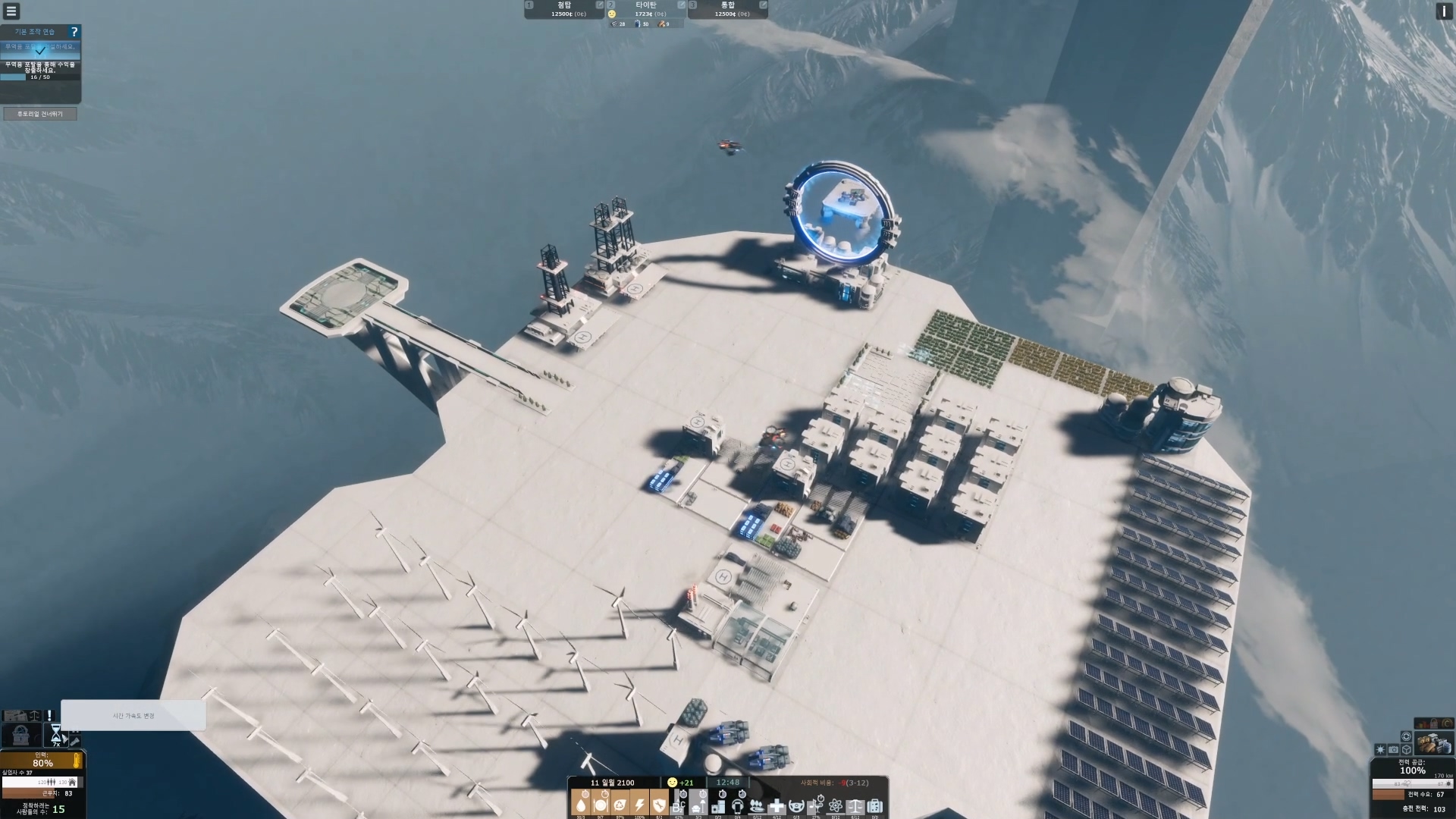
In its fundamentals, it is not greatly different from other construction and management games. It does have a distinctive premise: you build in the limited space atop a tall pillar and manage a settlement based on the resources produced there. In general, three construction zones are given.
On the map I played, the center was a region specialized in materials production. Of the remaining regions, one was specialized in energy resources such as uranium, solar power, and wind power, and the other was a food-production region where crops grew well.
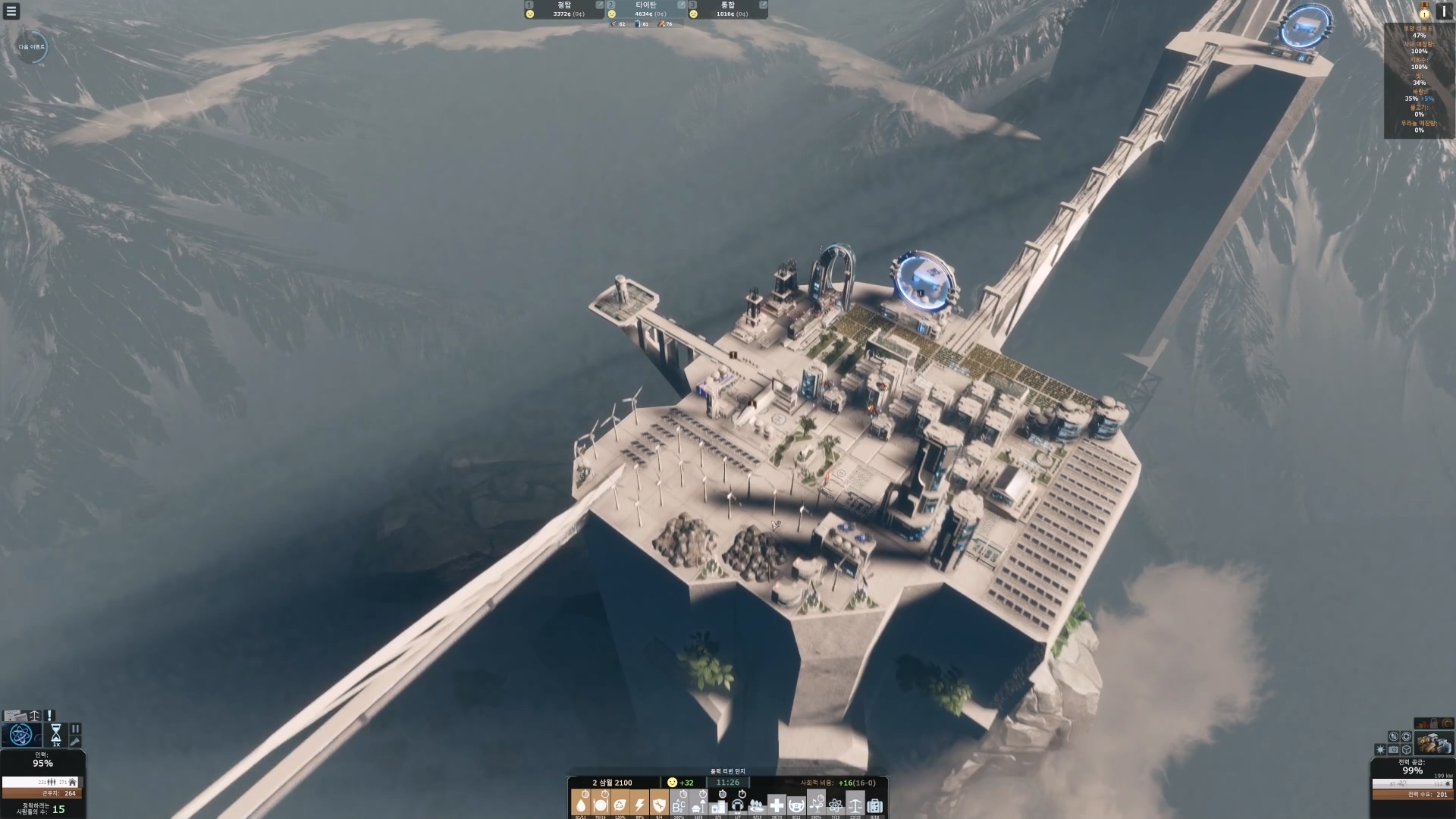
Because the character of the terrain is divided by zone in this way, there is fun in developing each region by playing to its strengths. Rather than handling everything in one zone, you have to give each zone a role, exchanging food, materials, and energy with one another.
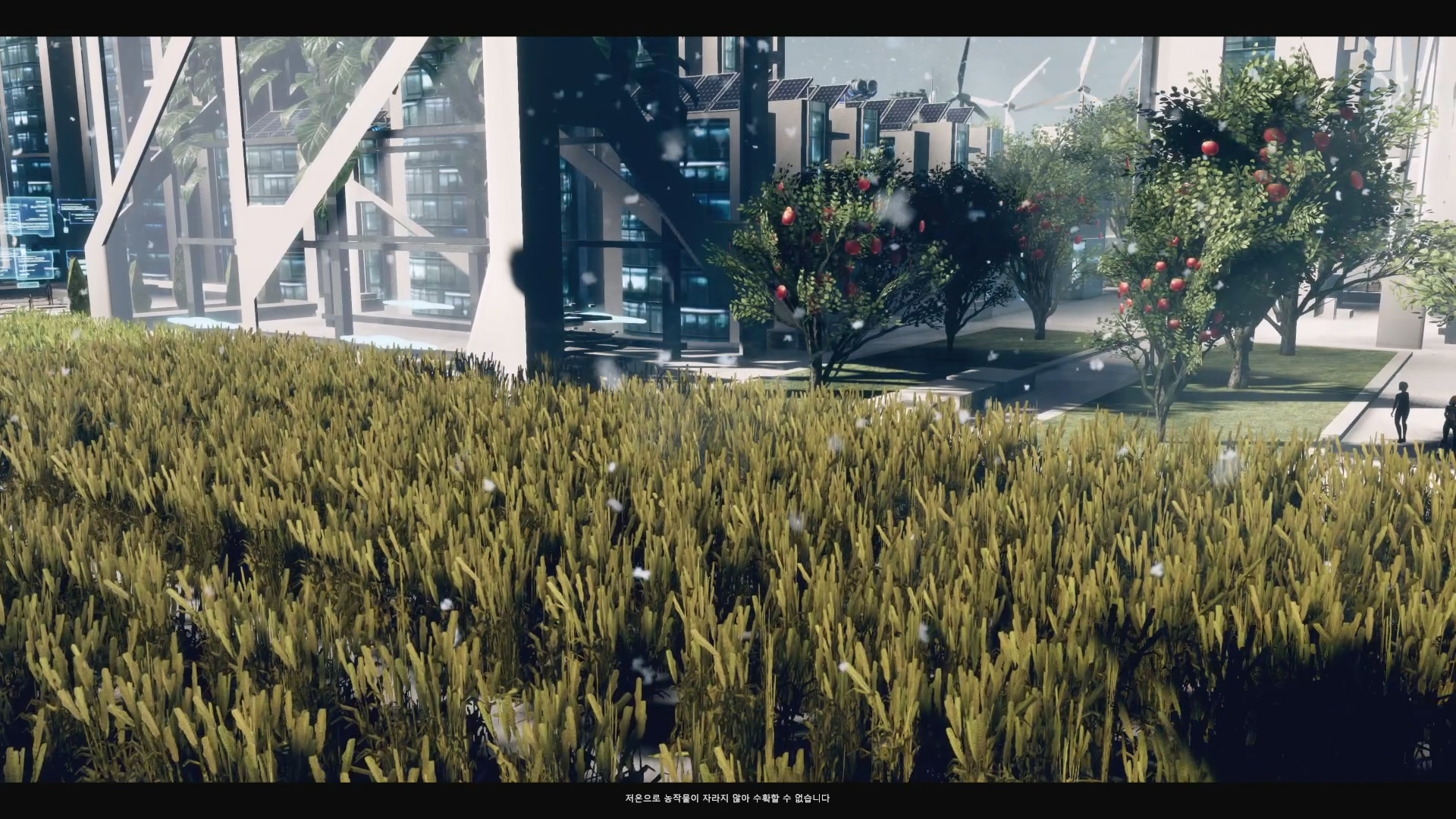
Natural disasters do occur at regular intervals, however, and interfere with managing the settlement. Some disasters lower the efficiency of solar power, and others interfere with wind power. There are also disasters that reduce the efficiency of growing food.
The main way the game progresses is preparing in advance so the settlement can hold out even while you face these disruptions. While you overcome the disasters, various tasks are given as well. It is a system in which completing a task rewards you with funds, but failing one means you have to pay a fine.
To earn money, you need to trade through portals or deal with orbital spacecraft. Buildings require money as well as materials, so trade is essential if you are to keep developing new regions.
Besides management through trade, raising settler satisfaction lets you collect taxes. According to the hours settlers work, income generally comes in by the hour while the sun is up. Conversely, if settlers are not satisfied, money actually decreases.
The trickiest part of ‘Cliff Empire’ was matching supply and demand for the resources that were needed. The three zones differ from one another in character, and their production efficiency differs greatly as well, so you have to set each one’s role and then develop it. After that, you can also make a profit through trade between zones.
If you sell a resource that has no supply but high demand, you can earn a substantial profit. Using that, you can make money and develop that region a great deal. In a food-specialized region you sell food, and in a materials-specialized zone you sell materials.
In an energy-specialized region, you can sell uranium. Uranium is used not only for nuclear power plants but also as fuel for trade ships, so each region has an essential demand for it. Between the zones there are bridges as well as trade ships, and trade by bridge is also important.
That is because trade by bridge and trade by trade ship each have their own restrictions. Trade ships cannot carry the uranium they use as fuel. The game explains that it cannot be traded because of the danger of uranium, but in practice it looks like a gameplay element meant to place a constraint on transport between zones.
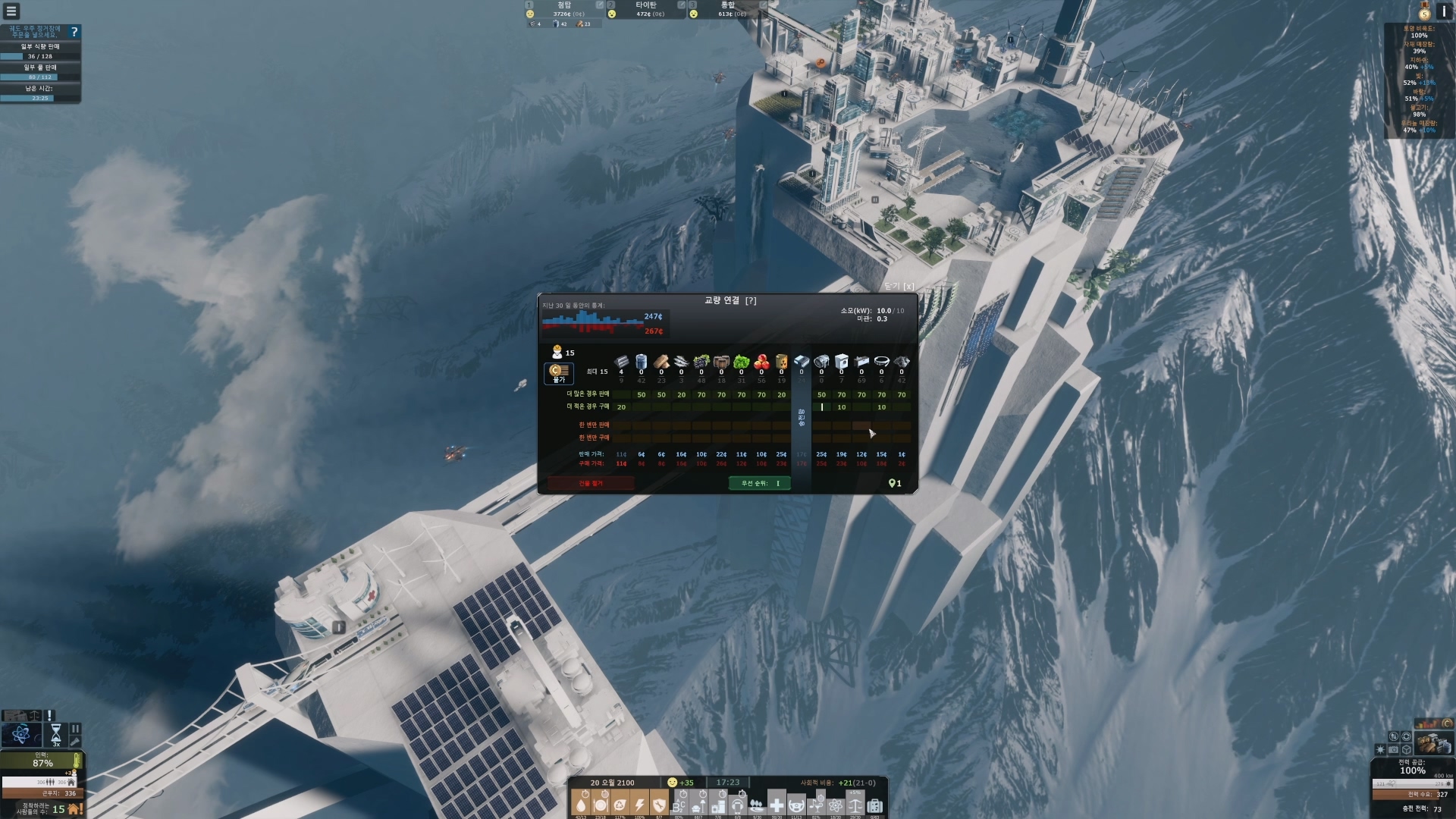
Bridges, by contrast, can move uranium. The three regions are not structured so that all of them can trade directly with one another, so sometimes you have to pass through an intermediate zone. A time gap occurs in that process, so there were often headaches when resources were not supplied properly at the moment they were needed.
There is also an awkward limit on the volume you can move at one time. The land you can develop in each zone is limited as well, so it is not easy to increase the number of bridges or trade ships without restraint. In the end, the appeal of this game lies in how efficiently you place production buildings and resource facilities on scarce land.
In that respect it felt a little like solving a puzzle, and I had a great deal of fun. As you place the facilities you need in limited space and match production volume with transport volume, you keep running into new problems.
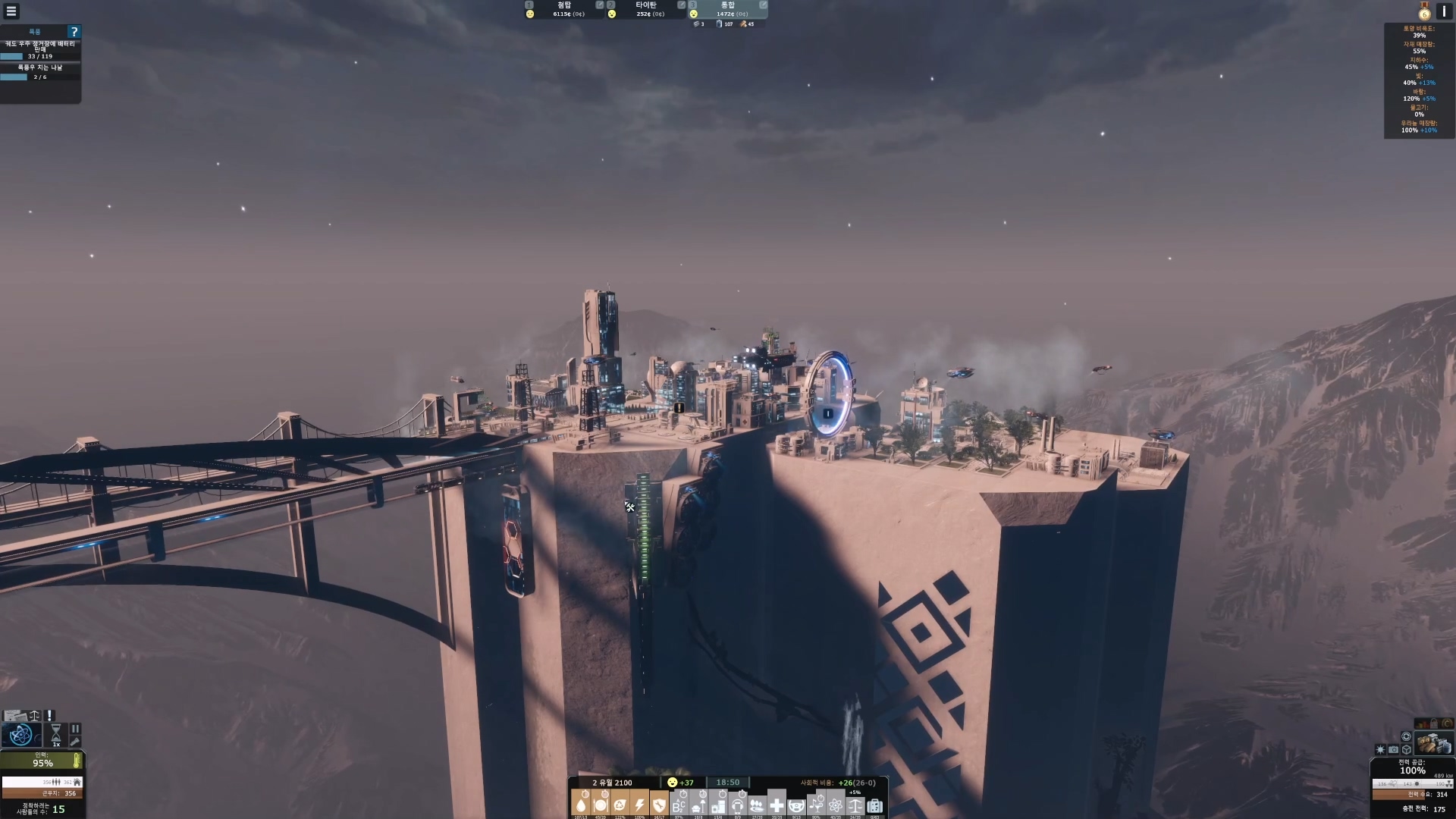
Even so, the later stages provide research and additional content that can improve or overcome those existing limits. Rather than only repeating the same problems in a narrow space, I could keep feeling the fun of progressing by unlocking new methods little by little.
As you progress through the game and complete tasks, your reputation rises. Some elements unlock according to reputation, and others become available through research, so there is fun in meeting the conditions one by one and opening new features.
At first only three zones are given, but when reputation rises, additional zones unlock. After that, you can enjoy developing the newly opened zones.
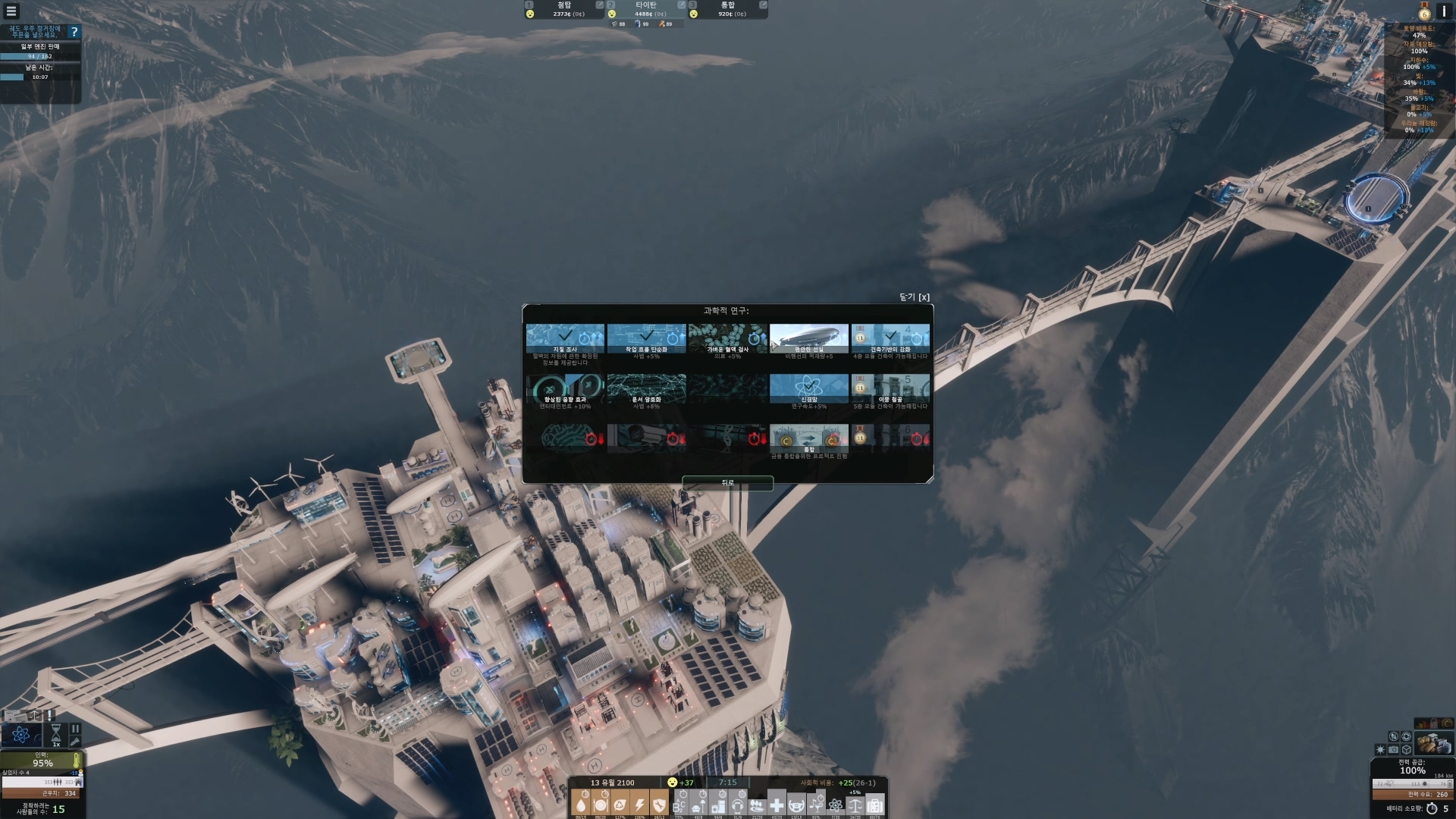
The final zone provides wide land so you can develop more freely. I would call it content that lets you blow off the stress of struggling over building placement on the narrow pillars until then.
I felt that the game guides its overall progression well in this way, and that the structure is put together quite well. In that respect, I thought it was a game that had been made really well.
As I followed the tasks, though, I thought the end would include something that clearly showed the game had been cleared. Even after I finished all of the content, it felt as if I had not received a direct statement that this was the end, so the final chapter left me a little disappointed.
2.2. Graphics and Sound
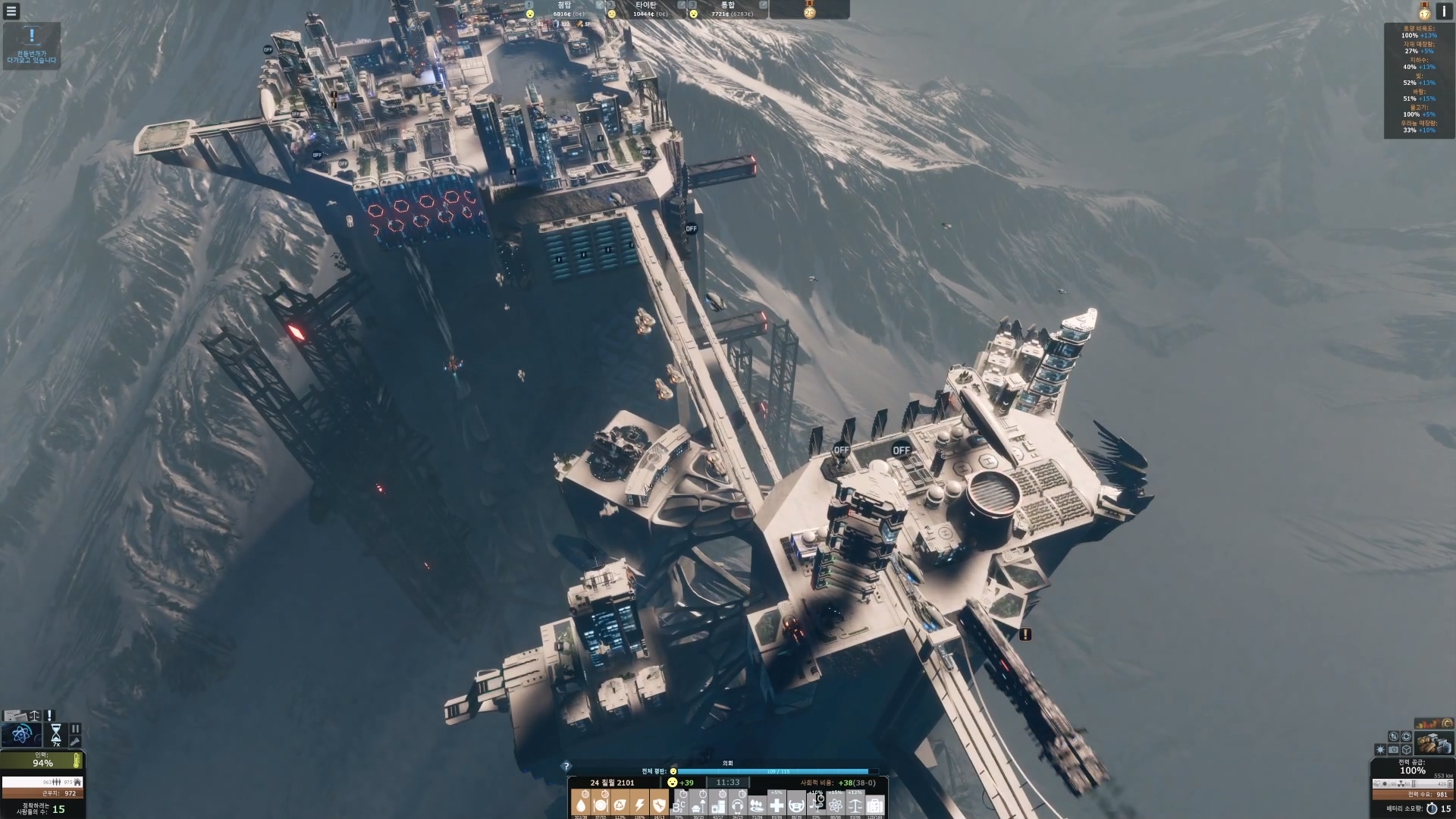
I think the graphics are quite good in their own right. What surprised me more than I expected about the graphics was the optimization. There are more elements on screen than I had anticipated. A large number of drones fly around carrying goods, and the various buildings are depicted in detail.
Even so, I was able to finish the game without running into a major drop in performance. It was impressive that I could still play relatively smoothly in the later stages, when buildings were packed onto the limited pillars and countless drones were coming and going.
The sound had a relaxed mood overall, and it even brought on a little drowsiness. While playing, there are times when you cannot get on with the work until resources have gathered and you have to wait in a daze, and honestly I would say I dozed a little during that process myself.
If there was a part of the sound that grated a little, it was the sound heard when settlers were supplied, or when residents left because a problem had arisen in the settlement. When the population kept growing and shrinking, the same sound played often and felt more irritating than I expected.
The other warning sounds and the sound effects needed for play had no particular problems. They also caused no real trouble in grasping the situation and getting on with the game.
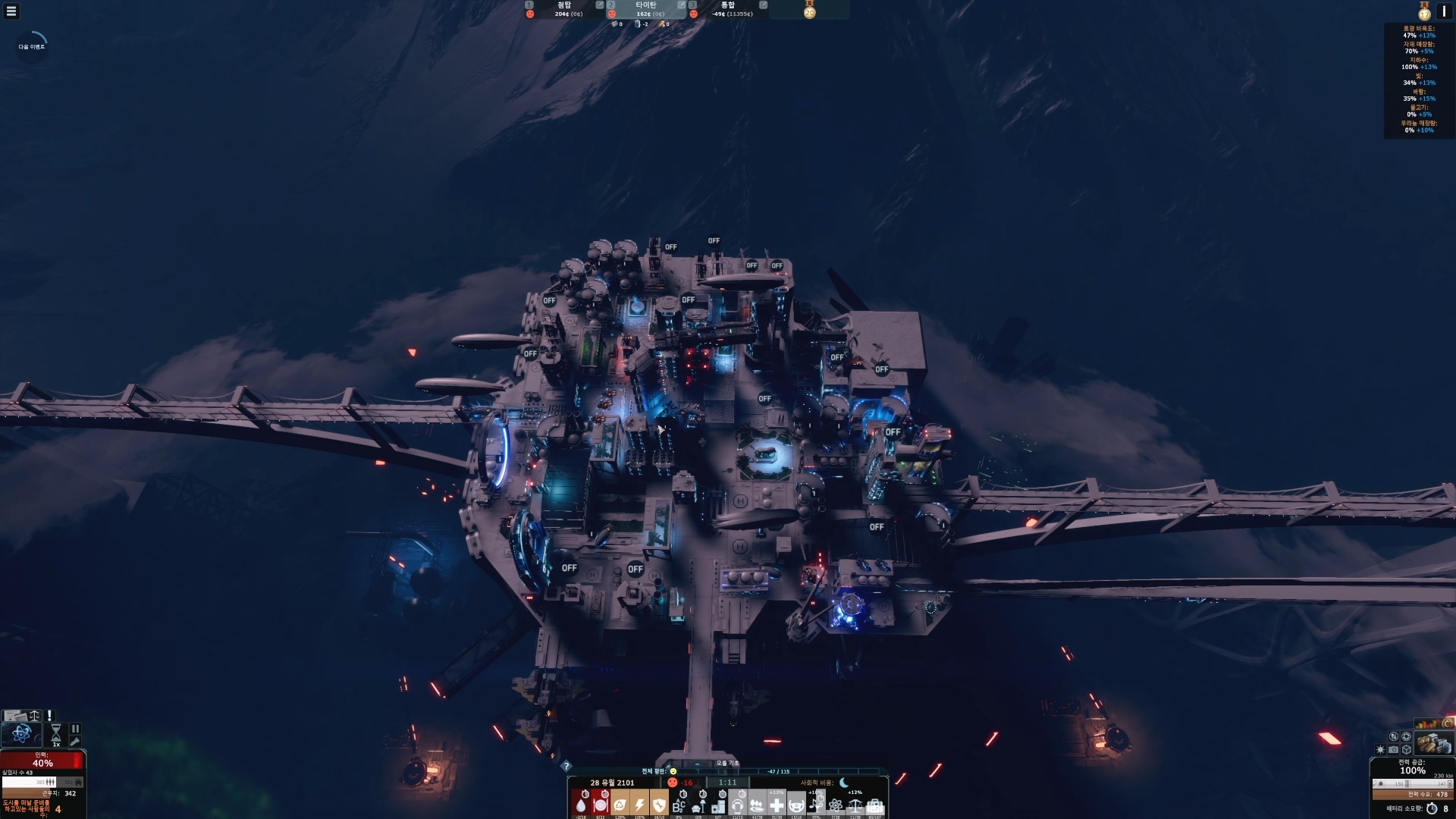
One thing that suddenly comes to mind is the presentation when a disaster occurs. When a disaster draws near, that region is enlarged and an explanation of the effect appears. At first I looked, to learn what kind of disruptive effect was occurring, but in the later stages, when I kept seeing the same sequence, it felt a little tiresome.
I was also a little disappointed that the effect currently applied is not shown intuitively on screen while a disaster is underway. A presentation and an explanation for the disaster are provided, but during actual play it was inconvenient to check right away which production factor was being hindered.
2.3. Difficulty
If you asked whether I set a difficulty when I first started the game, I do not remember any separate setting. I do not remember whether it is built as a single difficulty or whether I selected a difficulty. I also remember starting the game right away without choosing a map separately.
When you start the game, you can learn the basic controls and systems through simple images and explanations. The tutorial continues naturally through the first disaster and on to connecting other zones and developing them.
Now that I have finished the game, I do not think the overall difficulty was all that high. If a disaster breaks the resource balance and the settlement falls into a vicious cycle, however, a situation can arise that is very hard to recover from.
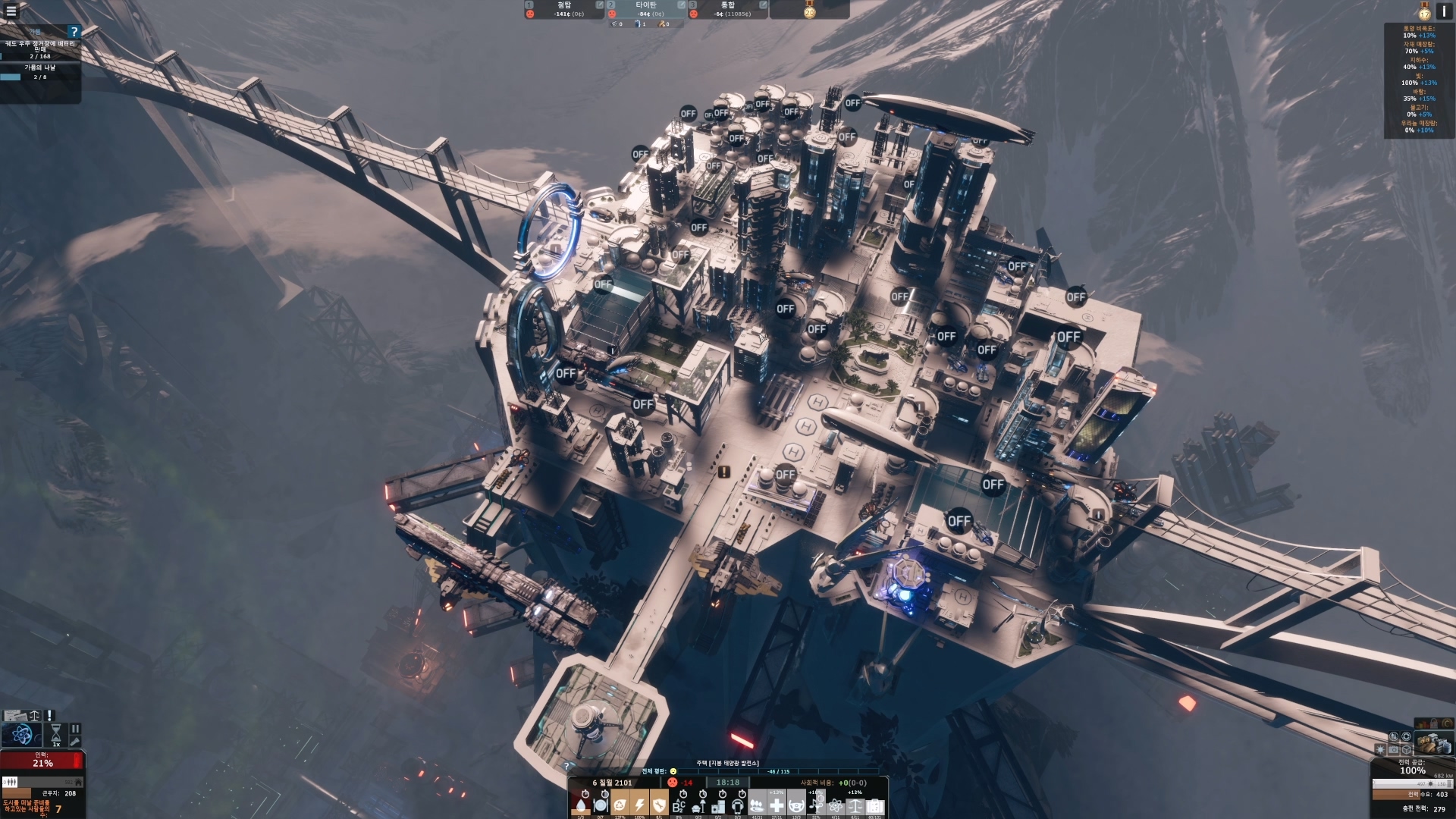
In my view, the most important resources in the game are food, water, and energy. Among them, if the supply of food and water runs into trouble, you can easily be left with no way out.
Food and water have a large effect on settler satisfaction. If the resources that are needed are not supplied properly and satisfaction becomes negative, a large-scale departure of settlers begins.
Running production facilities and resource-gathering facilities requires labor. Once settlers start leaving, however, the labor force shrinks, and when labor runs short, output falls again. You cannot produce the resources you lack, so satisfaction falls even further, and you fall into a vicious cycle in which settlers leave once more.
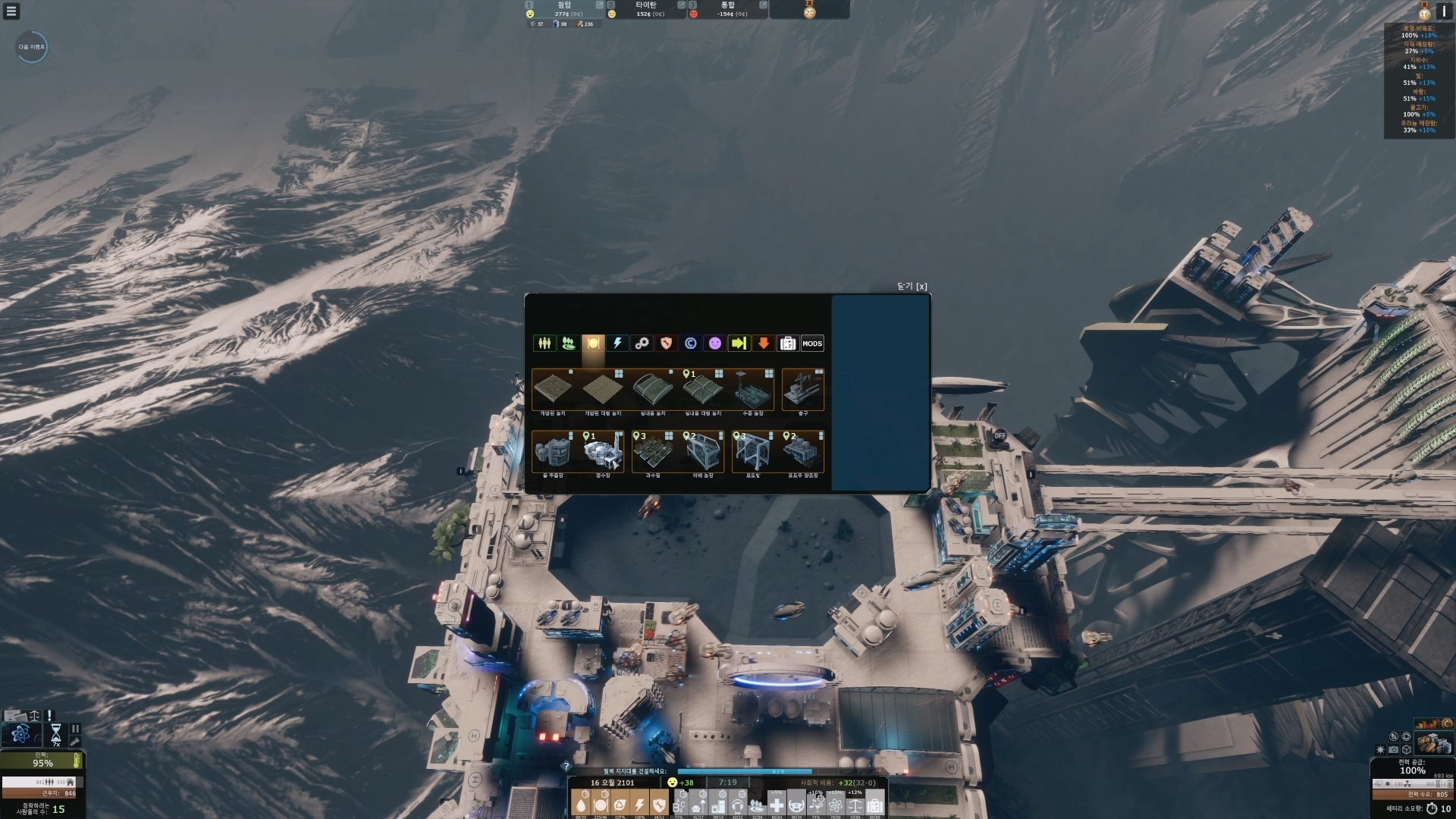
The problem can grow especially large when you have set one zone up to supply the resources another zone needs. If production in one region stops, the other regions that were receiving resources from it are affected as well. If a large-scale departure of settlers happens in every region at the same time, recovery becomes truly difficult.
So even if production efficiency is somewhat low, you need to have at least one zone that can endure this death spiral. If even a single zone enters a recovery phase, you can use that zone as a base and work toward recovering the other regions.
For recovery, it is important to concentrate labor on the water and food production facilities that are absolutely necessary. Once settler discontent begins, not only labor but your finances deteriorate rapidly, so the supply of food and water can be called the last line of defense for protecting the settlement.
What is additionally important for producing food and water in a stable way is power. Because most facilities require energy, a shortage of power can stop food and water production as well. In the end, managing the three resources of food, water, and energy in a stable way matters more than anything.
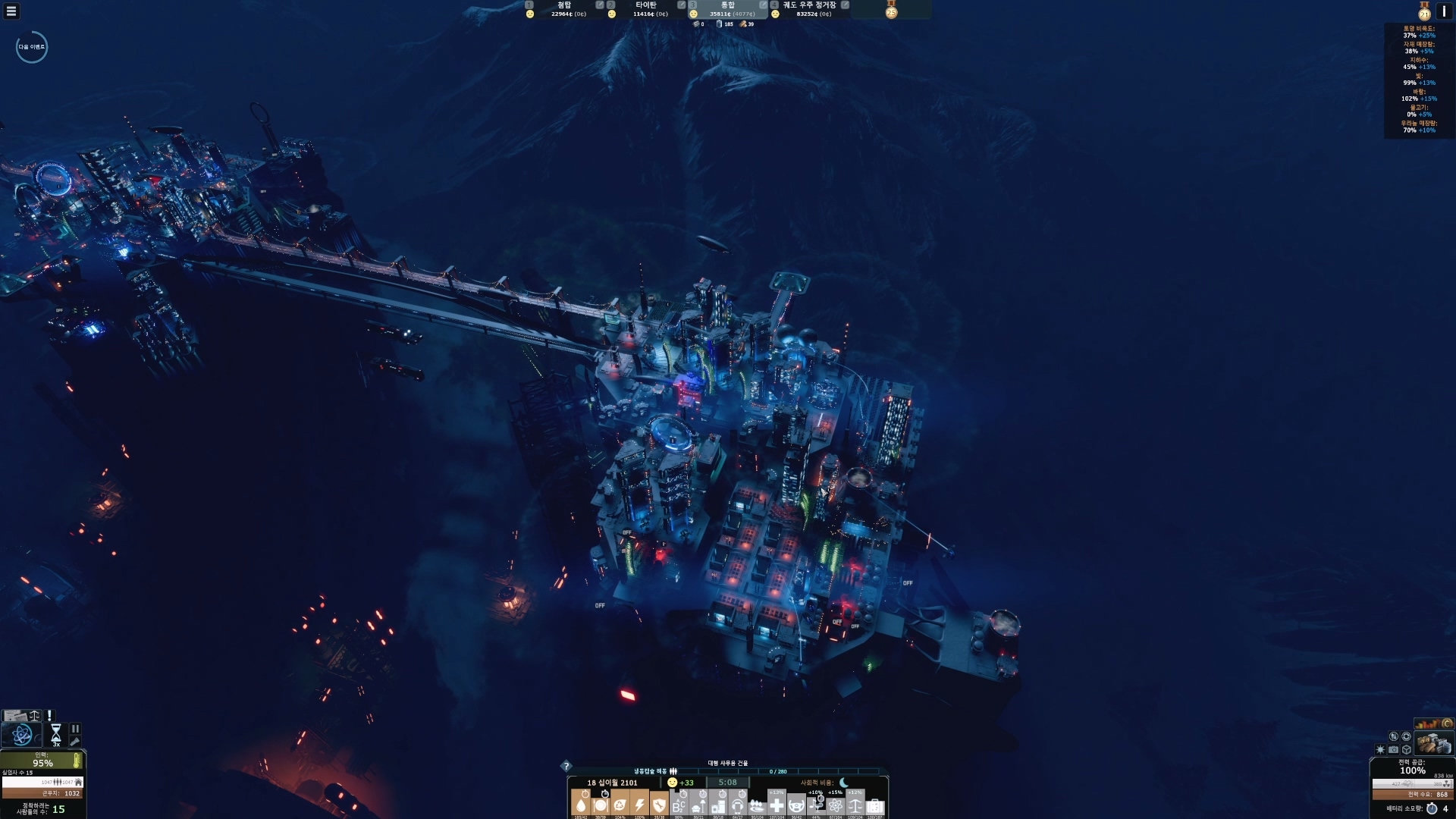
The point when this resource management becomes smooth and the settlement turns comfortable is nearly the mid-to-late portion. In particular, once you get free of the energy problem, you can feel a moving sense of release from the frustration of everything up to then.
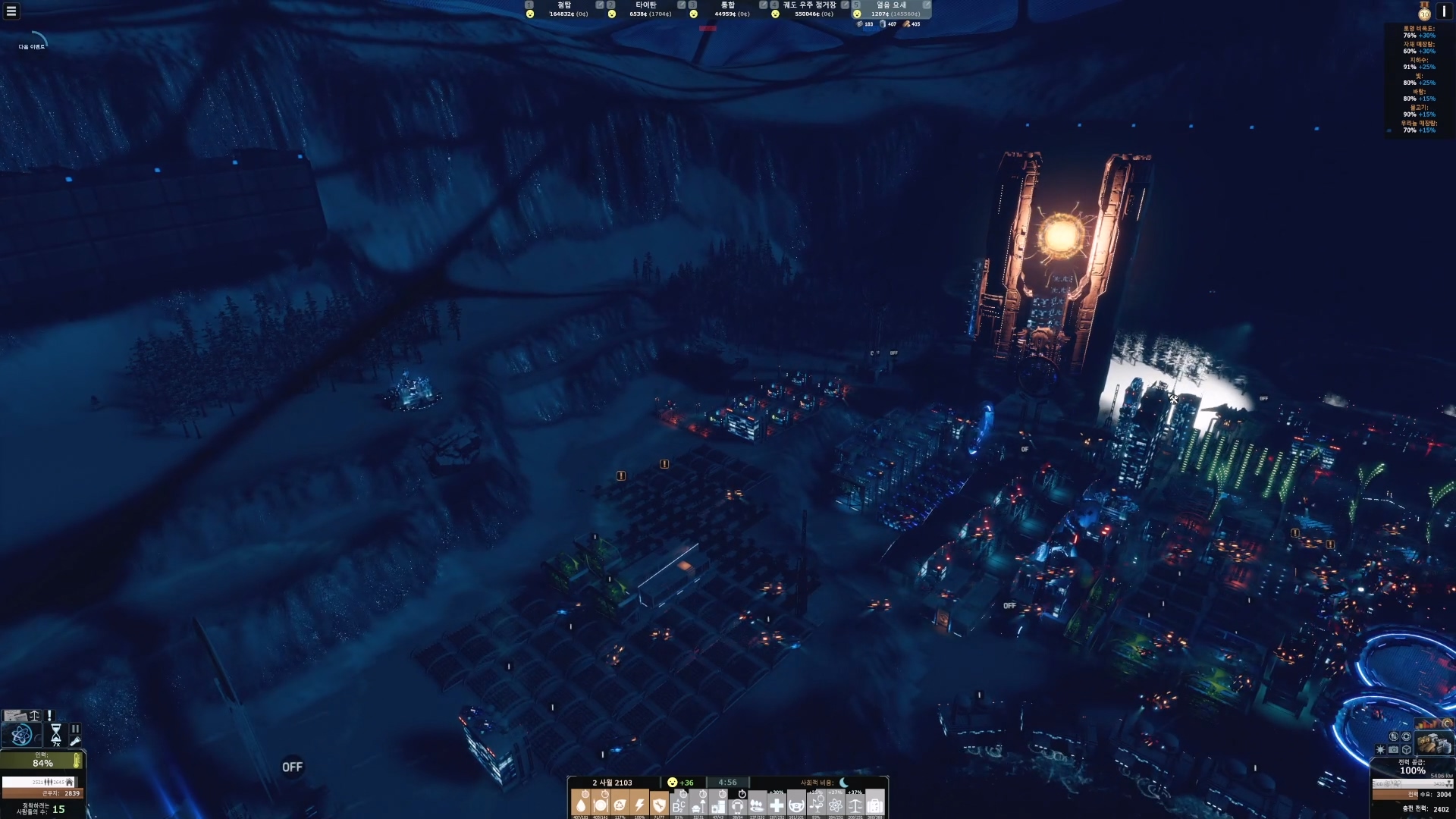
What brings that about is geothermal power carried out on the toxin-filled surface, not the settlement on the pillars. If you supply enough energy through geothermal power, an environment takes shape in which each region can hold on independently.
From the point when each region’s energy problem is solved, the game proceeds much more smoothly. The process of reaching that state, however, was by no means easy.
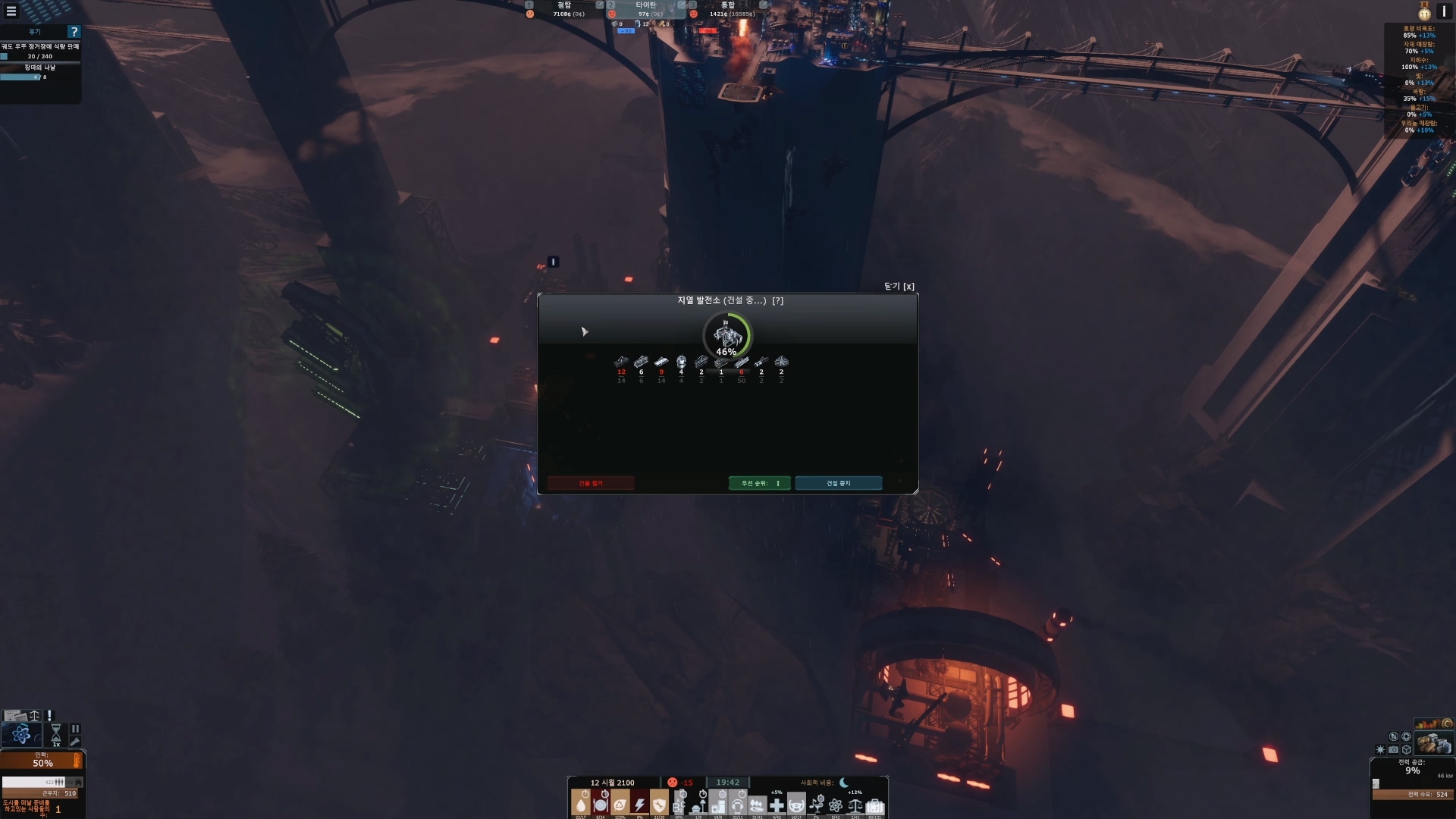
I played without looking at a separate guide. I felt that even checking a guide would not be decisive help in getting through the game. The problems change depending on the terrain you are given and the current resource situation, so until they are solved you have no choice but to find the most efficient method you can and apply it.
Even so, there was no stretch so blocked that I could not go any further. Considering that, the overall difficulty can be rated as ordinary. The vicious cycle that occurs when resource management fails is quite threatening, though, so you always need to maintain at least a minimum supply network for food, water, and power.
2.4. Play Time
My total play time in ‘Cliff Empire’ is 36.5 hours. I fully enjoyed the content the game provides, and I felt that it would be fine to stop playing now.
I think the overall play time was sufficient. In the later stages, relatively comfortable play becomes possible, enough to overshadow how hard it was to run the settlement in the early and middle stages.

If settler satisfaction stays high, you can earn a considerable amount of money through taxes. Late-stage content even includes regions where you can, literally, pull money out quickly. The early and middle stages felt arduous, and sometimes dull, because funds and resources were short, but the later stages proceeded all too easily.
During play, however, the limited construction zones and the volume of resource production sometimes mean you have to wait until the materials and funds you need have gathered. Because of that waiting time, there was a side of things where immersion dropped a little.
Developing the surface, which is mid-to-late content, also required a considerable amount of time to construct the facilities. For me, this process felt a little tedious.
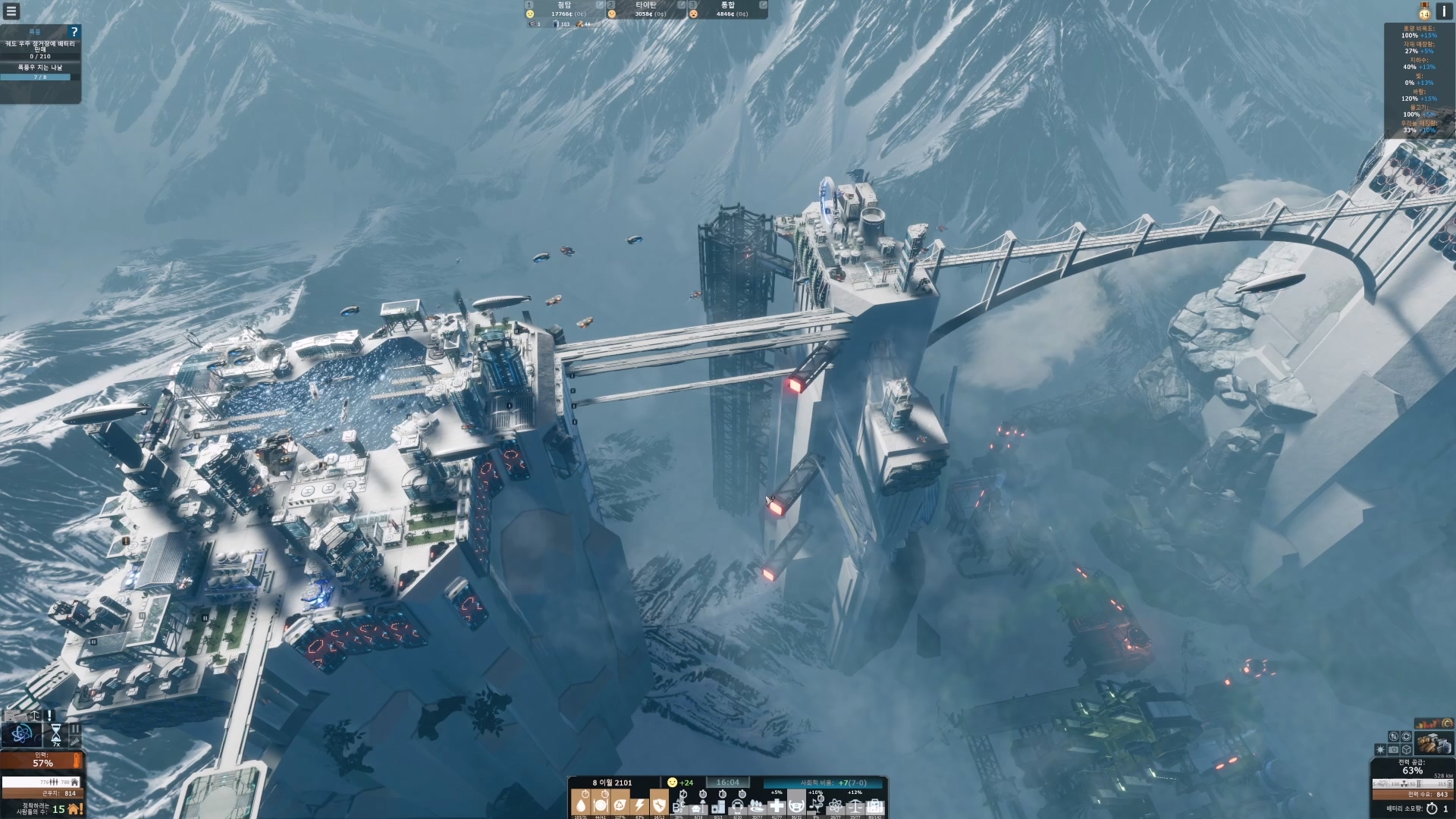
Disasters keep arriving, and to maintain the settlement you cannot easily give up any one resource. Add the time that manufacturing and construction take, and you end up waiting more than you might expect. Because of this structure, play can feel somewhat dull and immersion can drop.
Speaking of addictiveness, there do not seem to be many additional factors that would make you play the game again. You can get absorbed in unlocking and developing new zones within a single scenario, but the appeal of starting over and playing through several times is somewhat lacking.
I finished the game by raising my reputation as high as I could, in my own way, and building the structure that looked like the final wonder. I was satisfied that I had fully enjoyed the main content over 36.5 hours, but I did not feel like starting a new game and repeating the same process.
3. ‘Cliff Empire’ Closing
I think it is a game reasonably well equipped with construction and management elements. Because the construction regions are limited and each zone has a specialized environment, the trade goods that are good to produce differ, and the trade element of having to exchange them with one another is brought out well.
Natural disasters are an element that can feel a little irritating while you play. They add variables to a construction and management process that could otherwise flow along all too simply, and they create the fun of overcoming that difficulty. Looking back after finishing the game, I think the natural disasters also played the role of an essential seasoning in the overall structure.
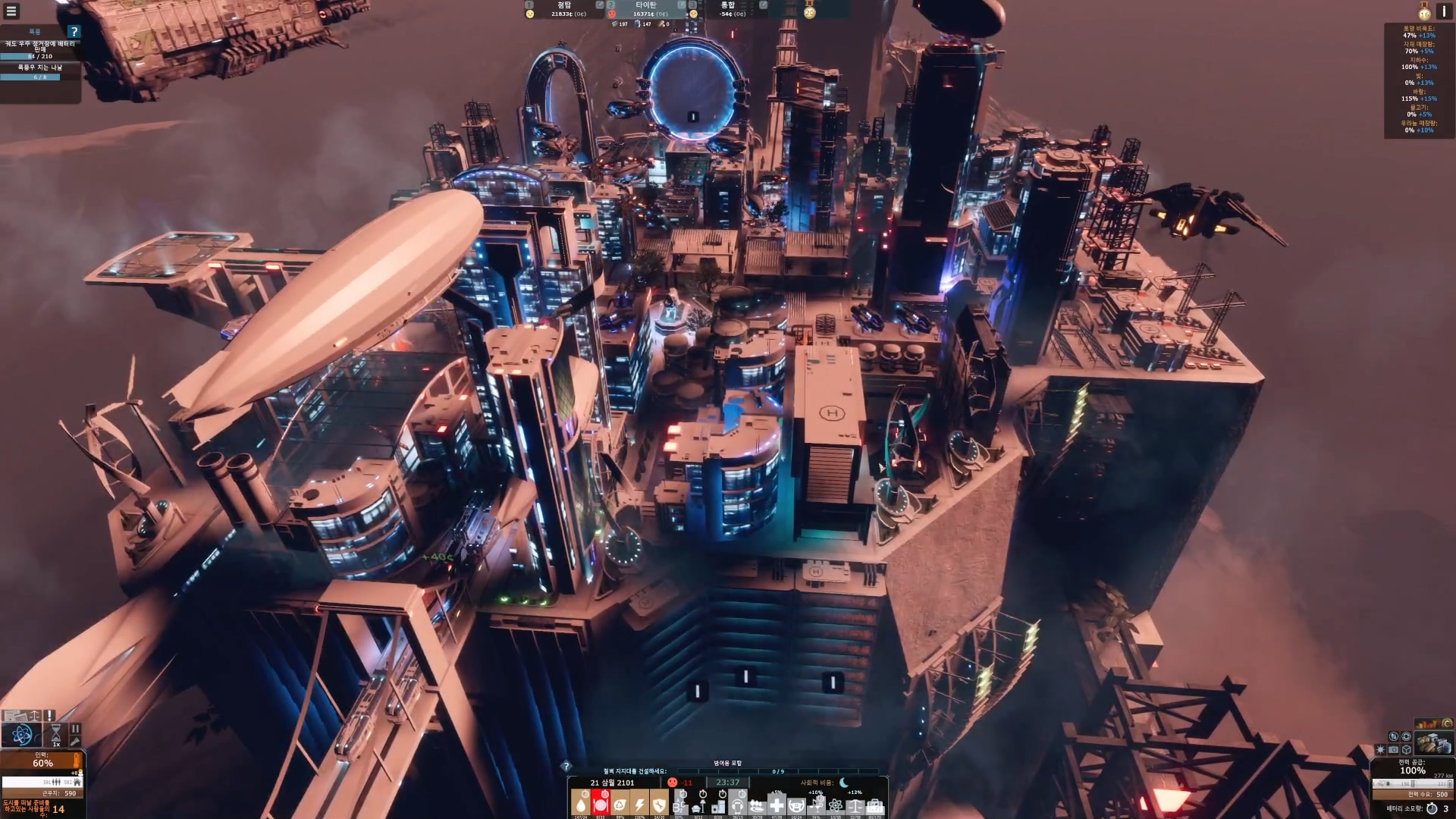
It was a game I had left sitting unplayed in my Steam library for a long time, but once I actually started it, the fun was not bad. The game’s basic structure is fairly solid, and the feature of building a settlement in a narrow space atop a cliff is well reflected in the play.
Using the different traits of each zone and placing facilities efficiently in limited space is fun in a way that feels like solving a puzzle. Connecting each region through trade, making up for the resources that are lacking, and completing one vast settlement was also impressive.
In the stretches where you have to wait for resources and construction time, on the other hand, you can feel somewhat bored. As you move further into the later stages, management becomes excessively easy, and the lack of a closing that clearly makes you feel the game has ended also remained a disappointment.
Even so, I would not go so far as to recommend it strongly, but I would rate it as a construction and management game you can play while expecting a moderate amount of fun. The structure is reasonably solid, and if you like this genre it was a game well worth enjoying.
That is all. I hope good fortune lies on the road ahead of you. Thank you.