

This review is an AI translation of the original Korean post. Proper nouns, and some game titles and expressions, may differ.
1. ‘Timberborn’ Overview
This was a game I had really been keeping an eye on, and I have finally finished playing it. The genre is outright construction and management. It is a construction and management game that uniquely uses beavers as the protagonists. Since beavers appear, it was obvious this would be a game about water and dams, and that was unmistakably an interesting premise.
After actually playing it, I can say it is definitely an interesting and well-put-together game. The work that came to mind right away while I was playing was ‘[PC Game Review] Terra Nil‘. Terra Nil is a game you can enjoy very lightly, so if you play it yourself, you will immediately see why I thought of it.
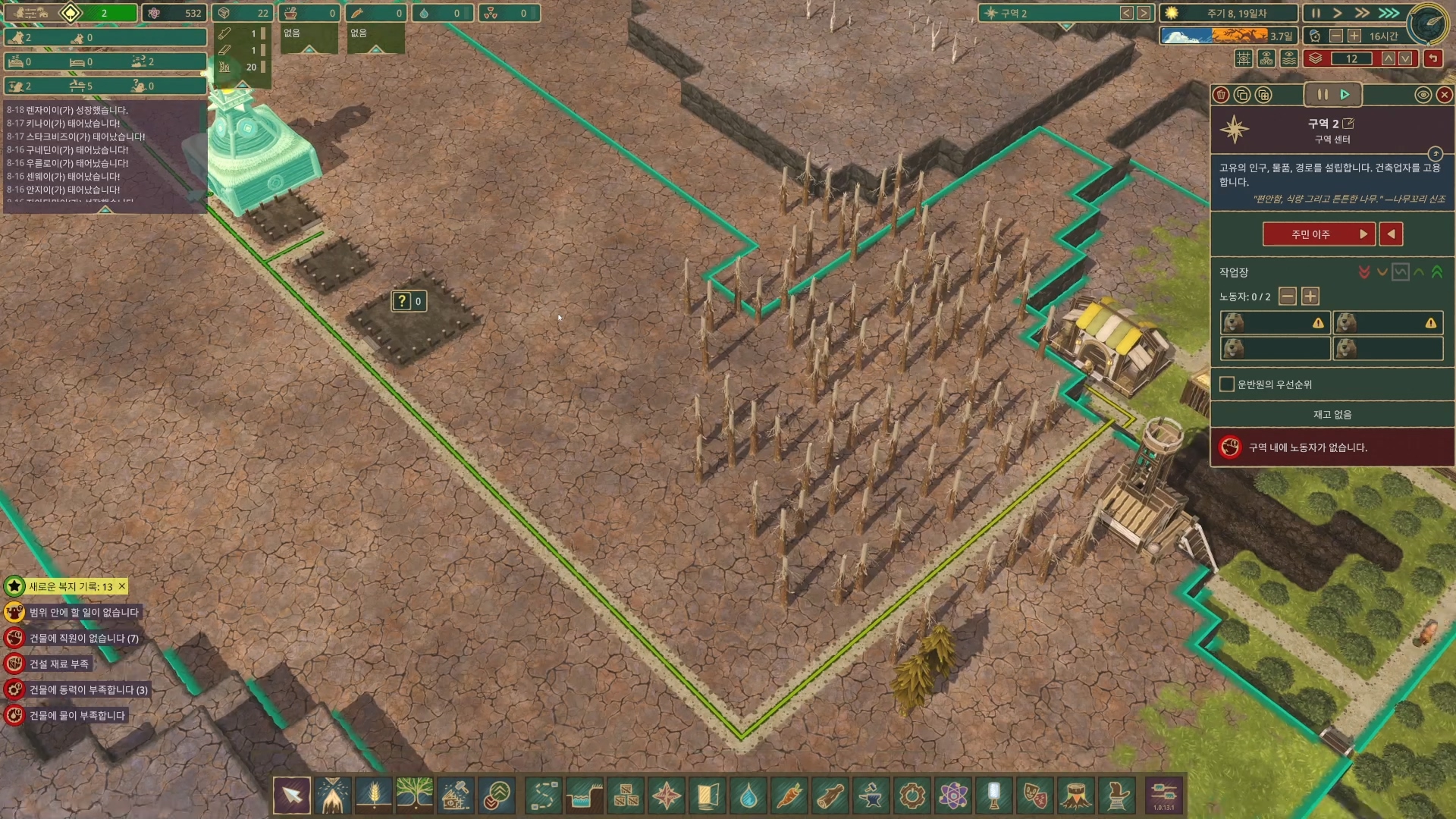
It officially provides a Korean localization, so I had no major trouble playing it. Fortunately, I also have no memory of struggling much because of the translation. I also never ran into a bug bad enough to stop me from progressing through the game.
I will move straight on to the review.
2. ‘Timberborn’ Review
2.1. Features
I want to call it a unique construction and management game with beavers as the protagonists, but thinking about it now, I also wonder whether it would have been fine if they were humans instead of beavers. Still, beavers can work much more flexibly underwater, and I think that is a good thing about them being beavers.
On the other hand, I also wonder whether beavers should be living on land for this long. In any case, the biggest feature that sets this game apart from other construction and management games is that you have to manage water quite relentlessly.
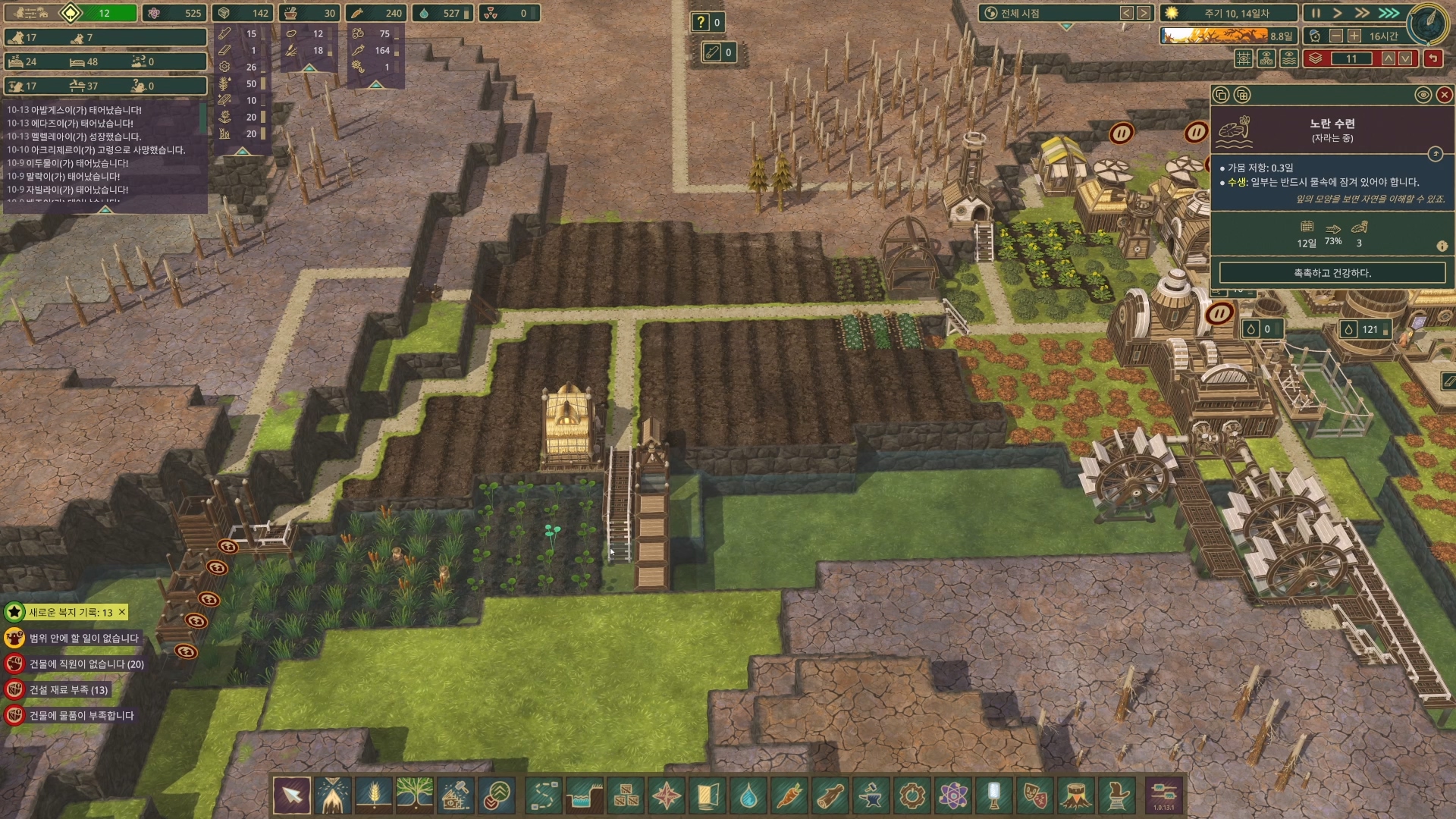
Managing water brought back the experience I had as a child, making my own waterways in a playground or in the mountains, pouring water in, and watching how the water actually moved. Thanks to that, it felt truly refreshing.
There is also a system where the surrounding wasteland turns green if you make a waterway and let the water flow. That part reminded me of the Terra Nil I mentioned earlier, and I was able to play with a bit more immersion.
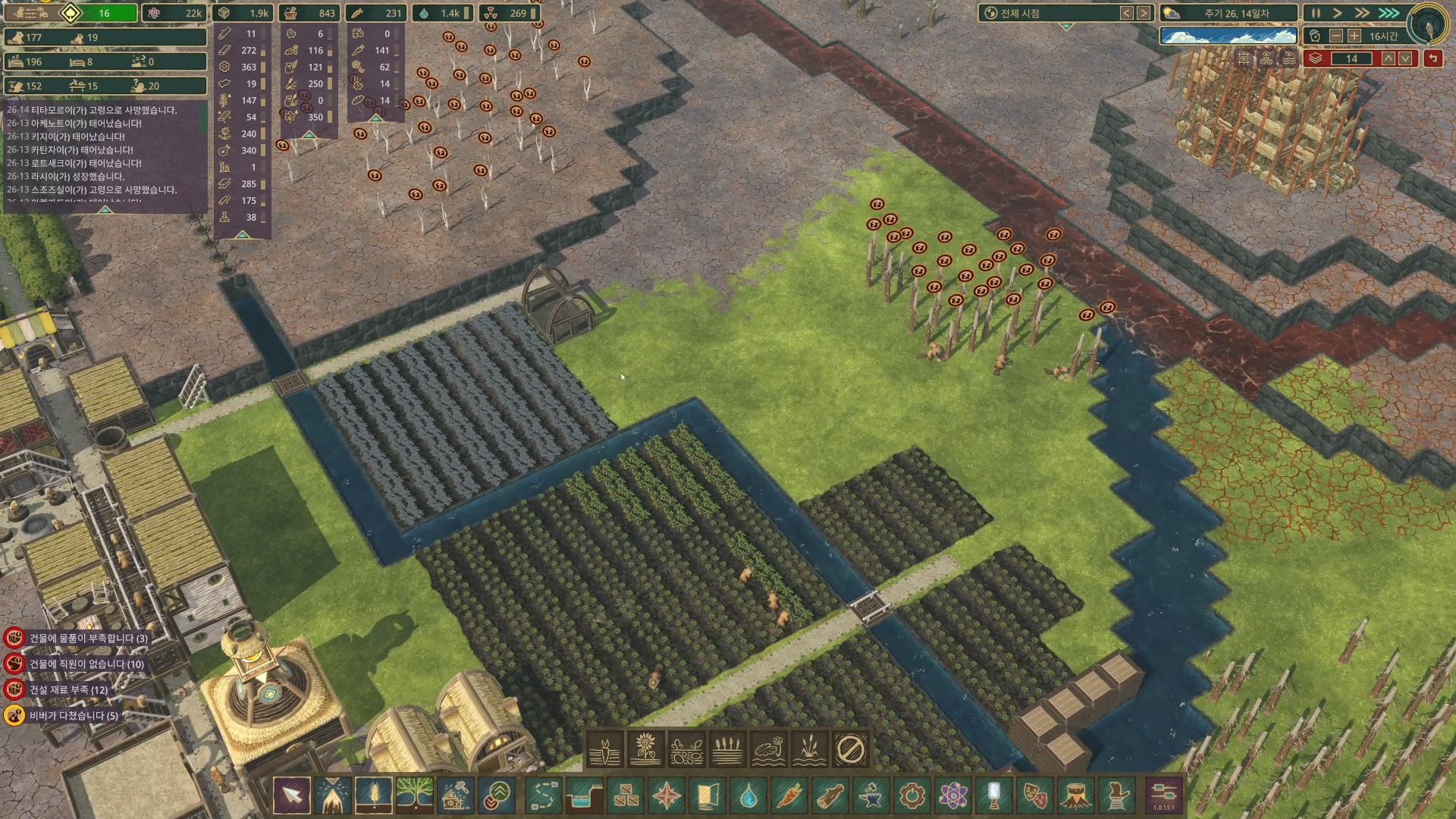
The game also has a survival side to it, and among those elements, water and food are very important. In that respect, ‘[PC Game Review] Endzone – A World Apart‘ also came to mind. Even so, it is more casual than ‘Endzone – A World Apart’.
Of course I called it casual, but I too went through a disaster in which many beavers died during a great famine because food and water ran short. Even so, beavers (the population) do not take long to increase compared with other games, so I was able to recover relatively quickly.
Whatever else may be lacking, if you just secure food and water well, there is no major problem progressing through the game. You lay paths and raise houses, and you build water wheels to use water power. It is also possible to get power from wind generation that uses the wind.
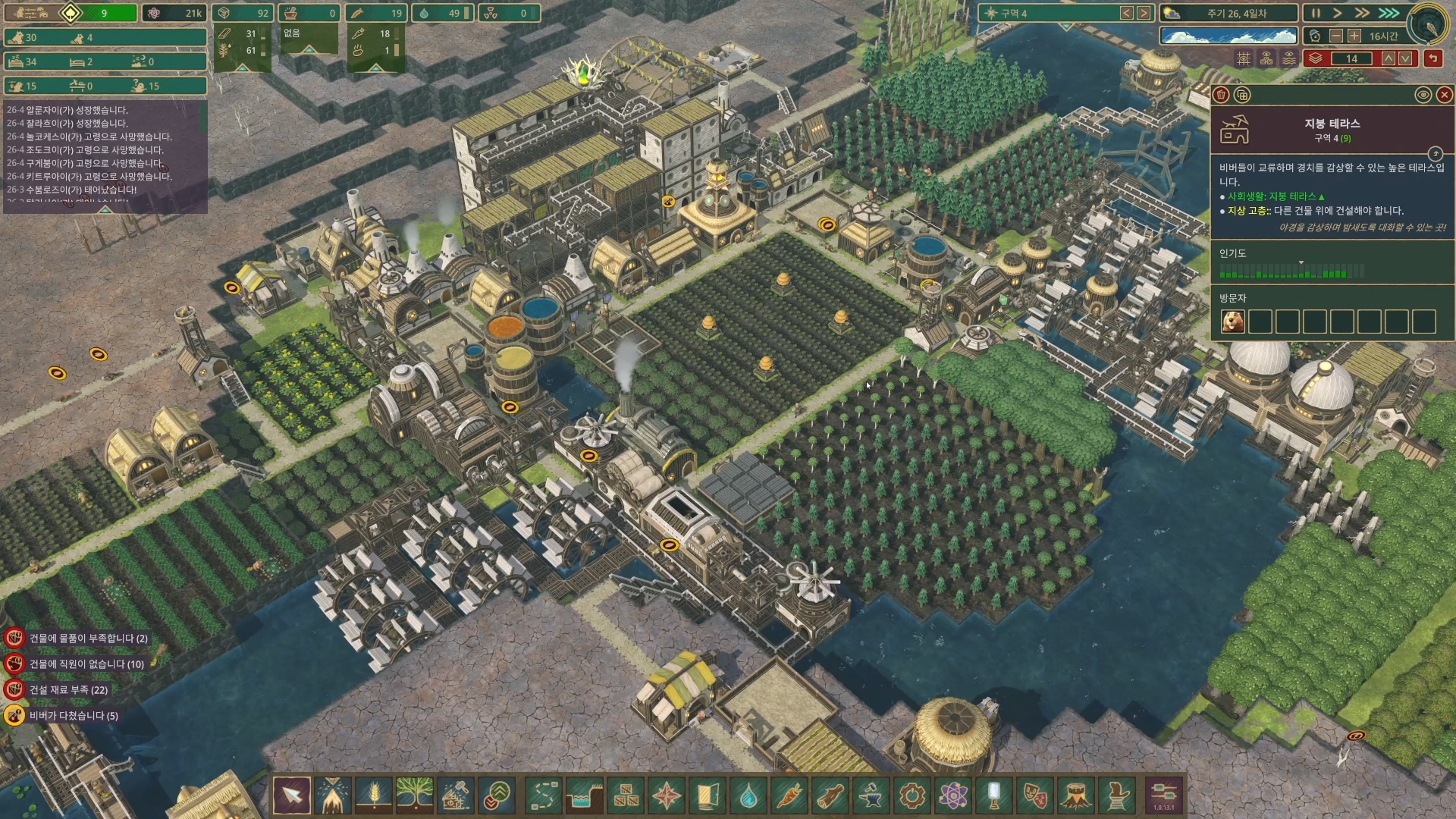
What matters most is controlling the waterways. The freedom in this part was higher than I expected, which was a real relief. In Timberborn, two natural disasters occur, meant to extend the length of the game while also bringing freshness to how it progresses.
One is drought, and the other is a flood of contaminated water. When a drought occurs, water no longer flows, for a set period, from the source that produces water. Our beaver friends need to store enough water in advance to endure the drought.
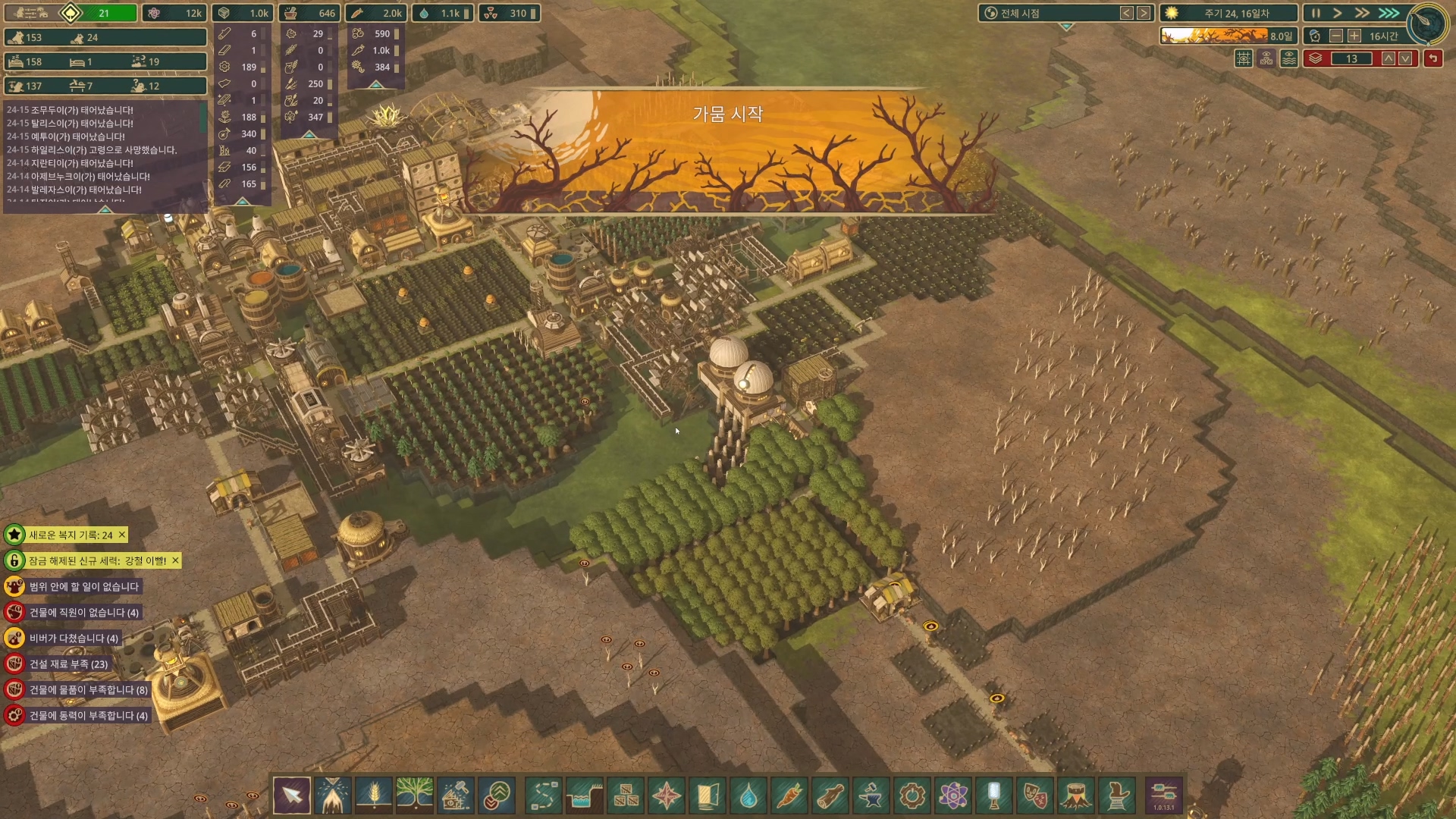
You can get through the drought with the water stored inside a dam built on a sufficient scale. Simply stocking plenty of food and water in warehouses and water tanks would also do, but if you properly block only certain waterways in the terrain, you can secure a great deal of water much more efficiently. Which approach you choose is up to the player.
There is another reason you need to secure water through dams. Around a channel where water flows, land is created where crops can be grown. If the water disappears from the terrain during a drought, the crops you worked to grow will wither and die. That can waste more time than you might expect, so it is truly important to build dams and manage the water the way the developers intended.
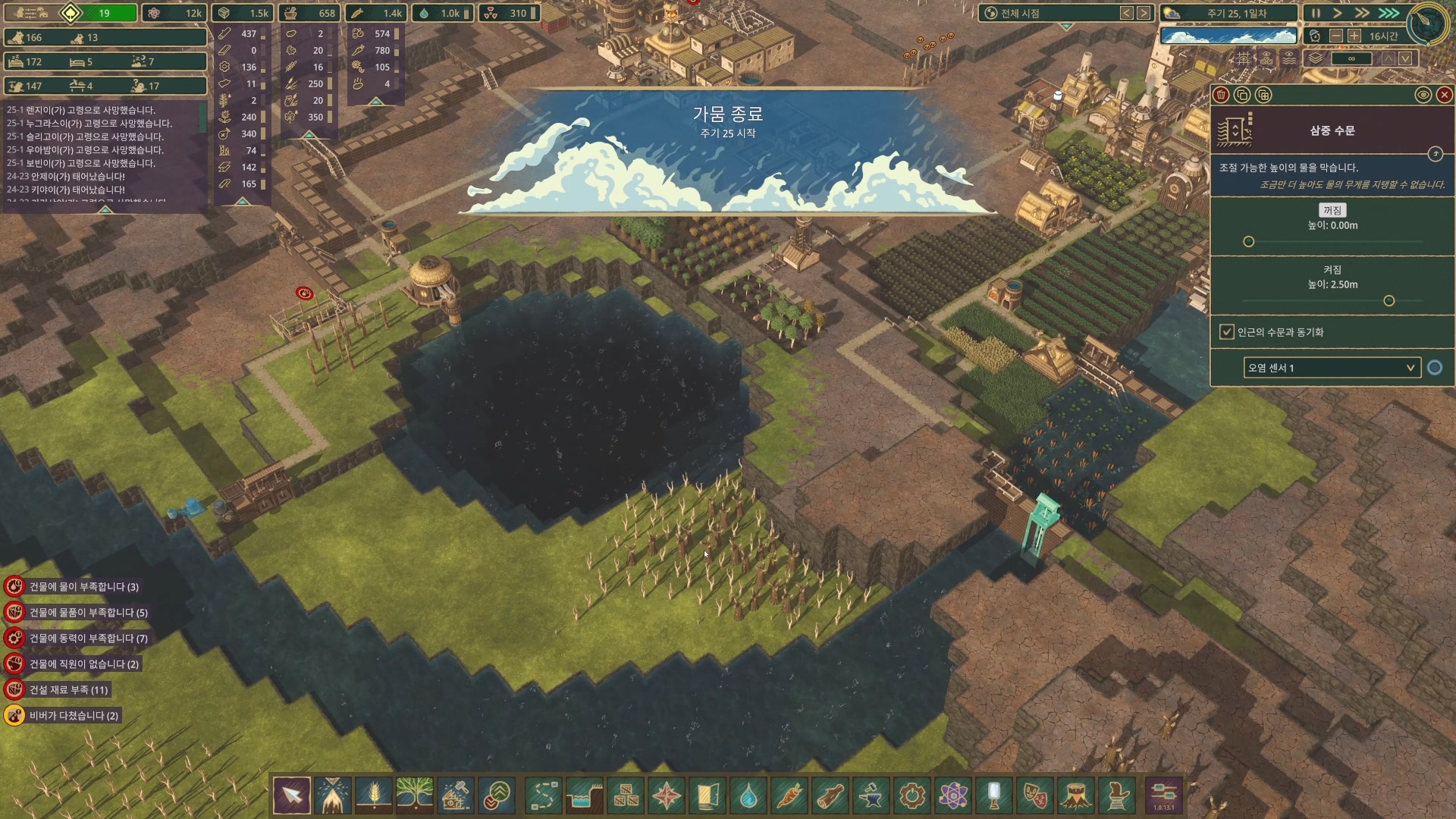
The other disaster, the contaminated water flood, is an extreme disaster in which contaminated water flows from both the existing water sources and the contaminated water sources. Beavers exposed to contaminated water fall ill, and the existing water also becomes unusable, so it is a truly vicious disaster.
Even so, it can be overcome well enough, and you can find considerable fun in the civil engineering work of solving the contaminated water problem. When a contaminated water flood begins, you can adjust the floodgates or divert the path of the existing waterways so the contaminated water cannot enter the settlement. Finding these solutions yourself is the real pleasure of this game.
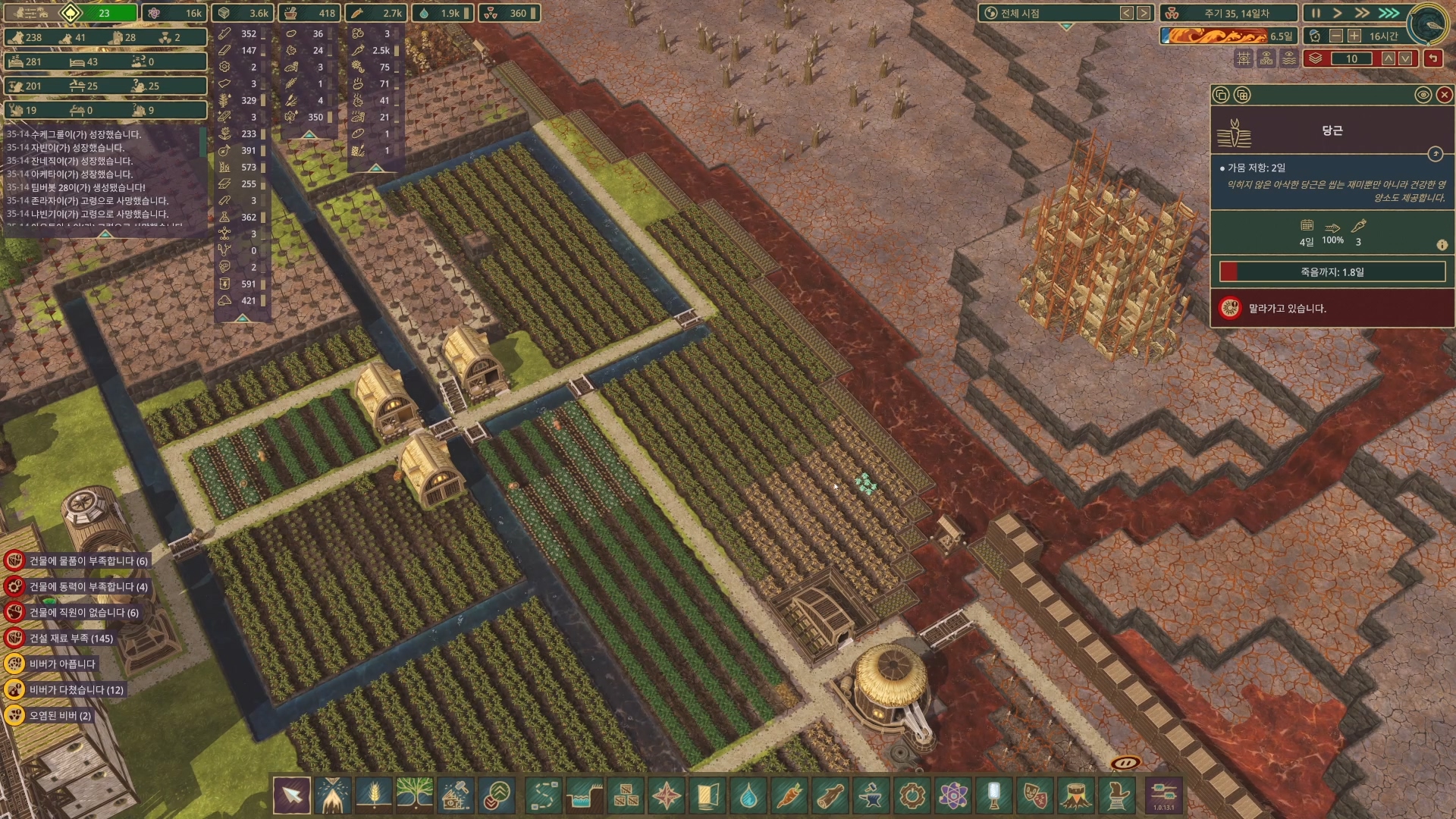
While overcoming disasters that way, you gradually work on raising the beavers’ satisfaction, and in the end you can finish the game by building the beavers’ wonder. For my part, I also felt an urge to make the terrain a little greener, beyond simply achieving the set goals.
The further you progress, the more you can provide the beavers with a considerable level of welfare. For food, you start by having them eat only carrots, and later you can offer sunflower seeds, grilled potatoes, bread, cattail crackers, grilled chestnuts, and even maple syrup and pastries. There is quite a variety of food.
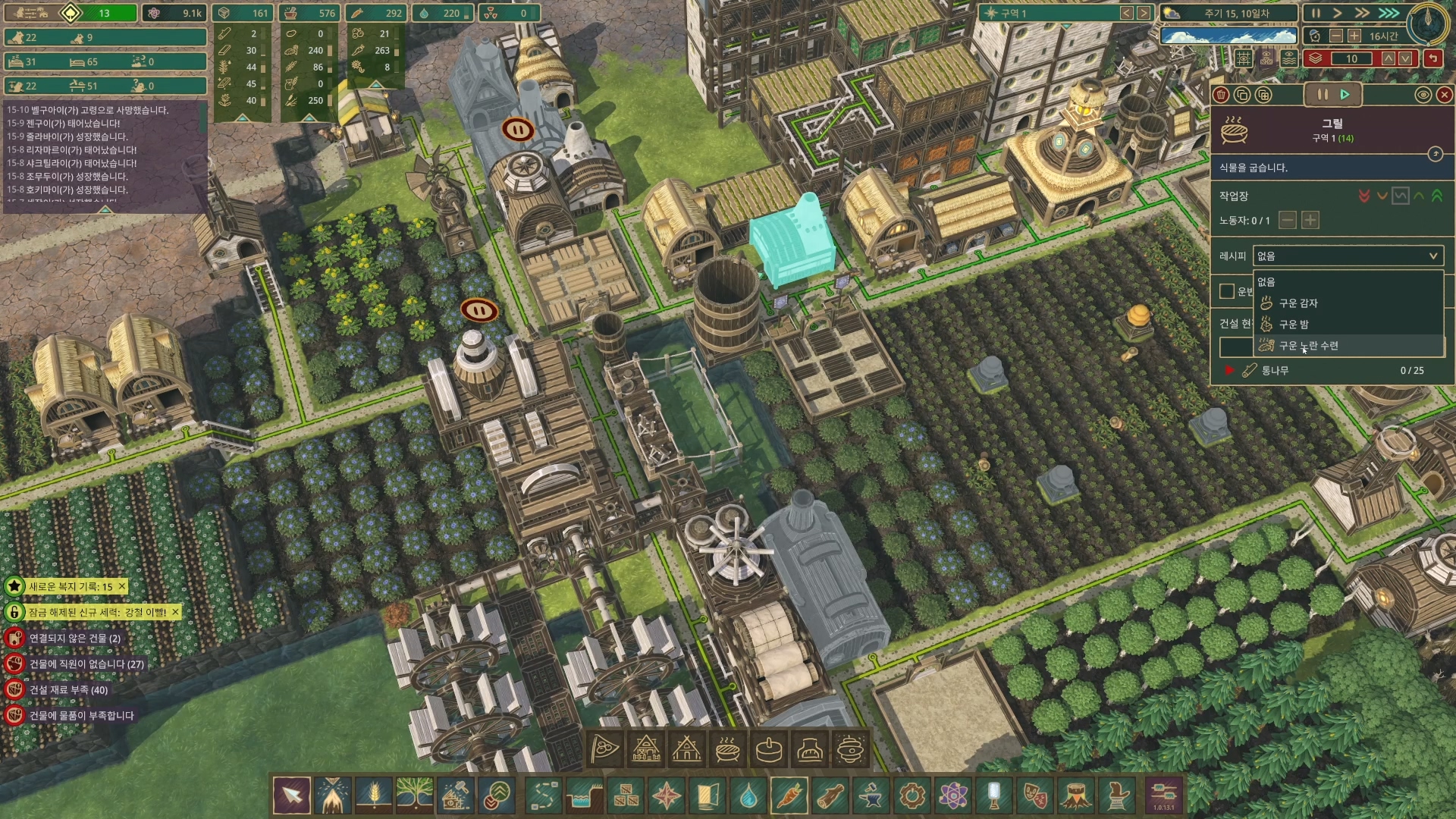
Later on, it also becomes possible to create or destroy terrain. Rather than simply using the waterways that already exist on the map, you can shape new terrain and make a place to live that is more artificial—or rather, more beaver-like.
Personally, I really liked that you can stack buildings in layers above and below, even though a maximum height is set. If you have enough materials, you can build without being greatly bound by the limits of the existing terrain.
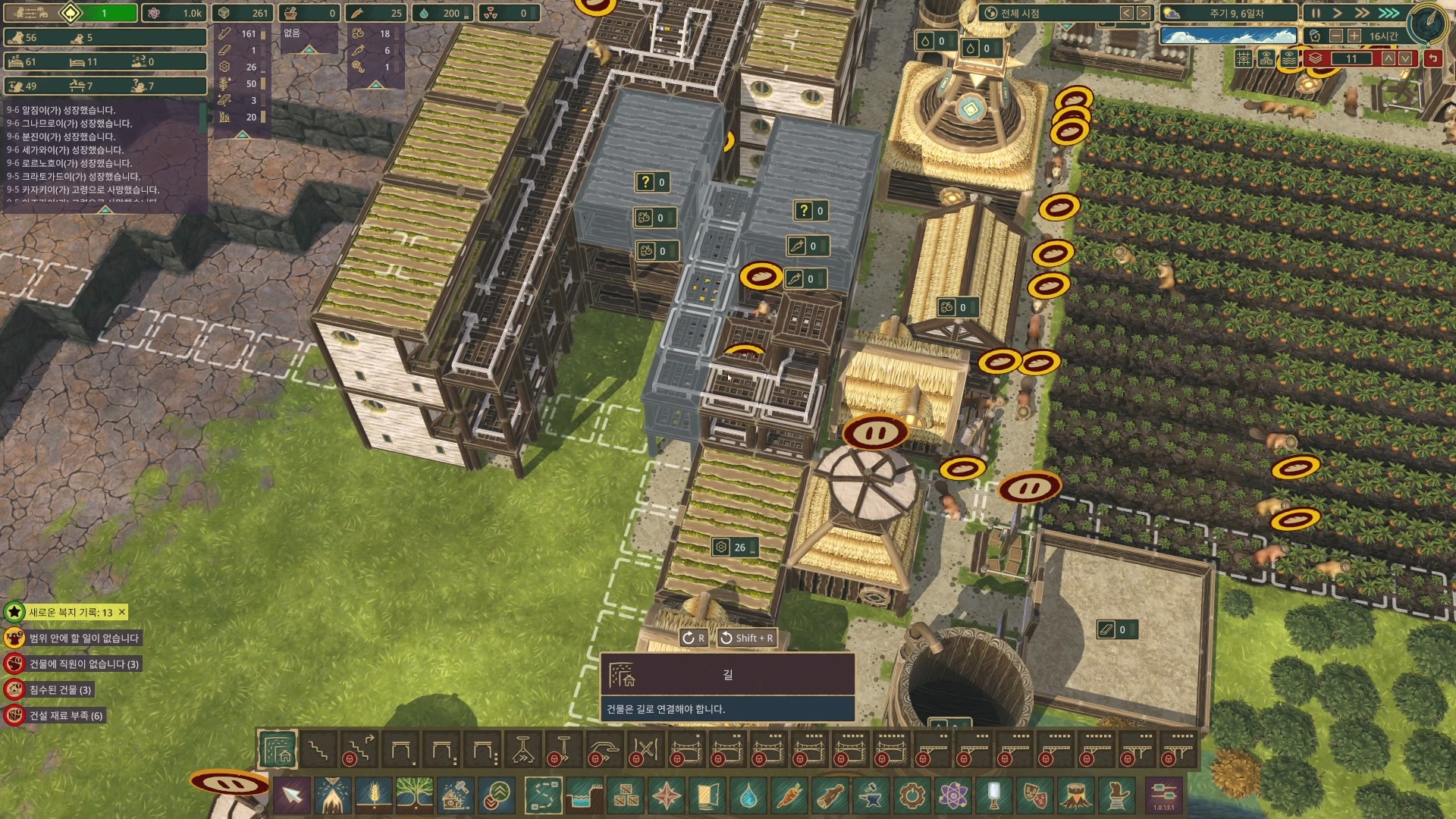
Personally, I feel I need to test it a little more. Fortunately I picked a large map at the start, but I got the sense that you could play well enough even if the map were not large. The tasks and goals the game itself presents, though, are a bit lacking.
Even so, there is a definite pleasure in overcoming disasters, expanding your place to live, and turning the terrain into a more livable place. Even without a major assigned goal, I was able to keep going and enjoy it well enough with only the goal of making a better space myself.
2.2. Graphics and Sound
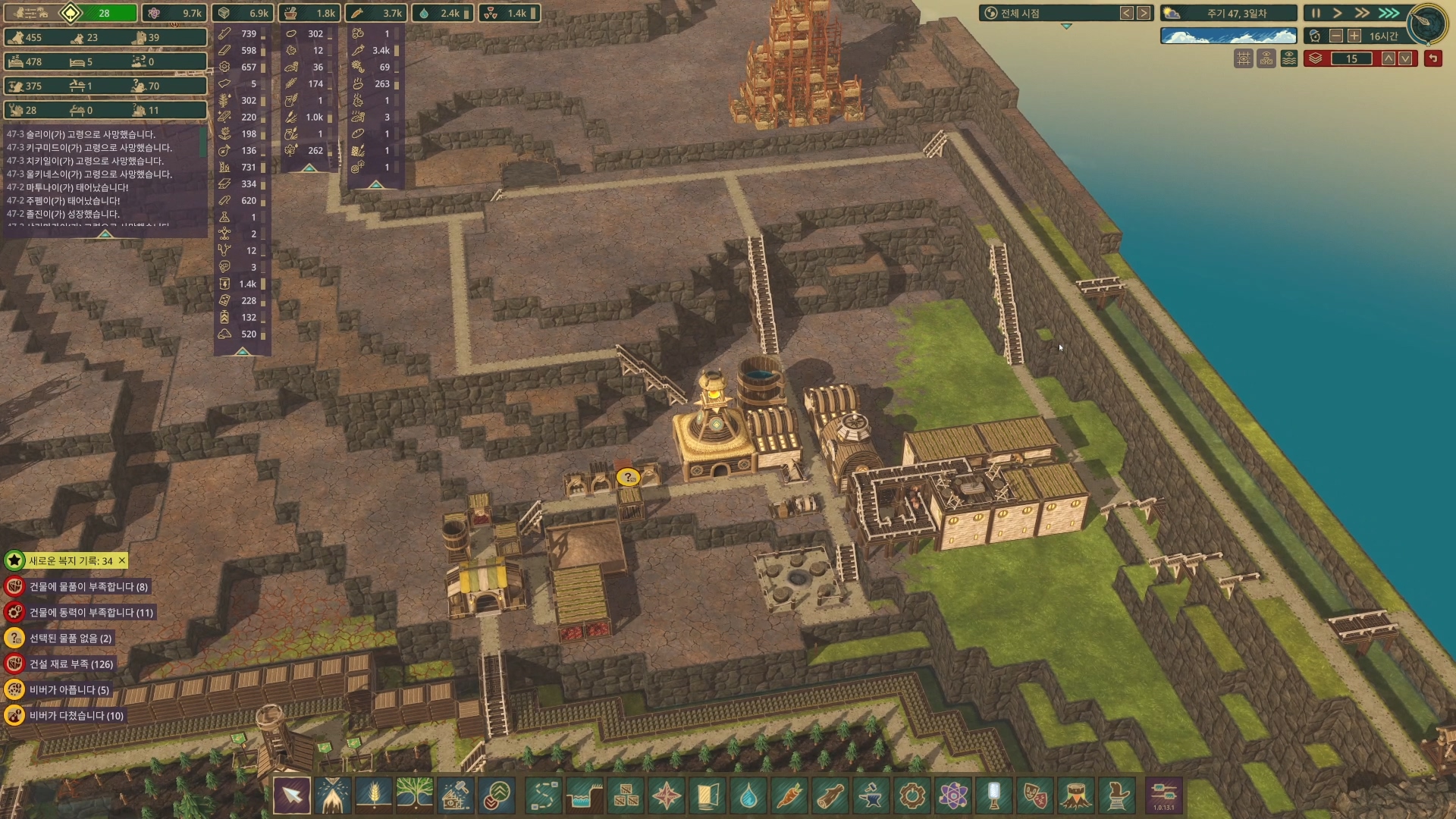
Given the nature of a construction and management game, where you look down from the sky and check a wide area, you will rarely look closely at the characters’ traits and personalities, or at the fine details of buildings and natural objects. Even so, while raising building heights and working the terrain, I was able to see the detail in the graphics.
I would not say the graphic depiction is outstanding, but the detail is alive, and I think it reaches a level where you can fully feel how cute the beavers are. More than that, this is a game where the depiction and accuracy of the water catch the eye.
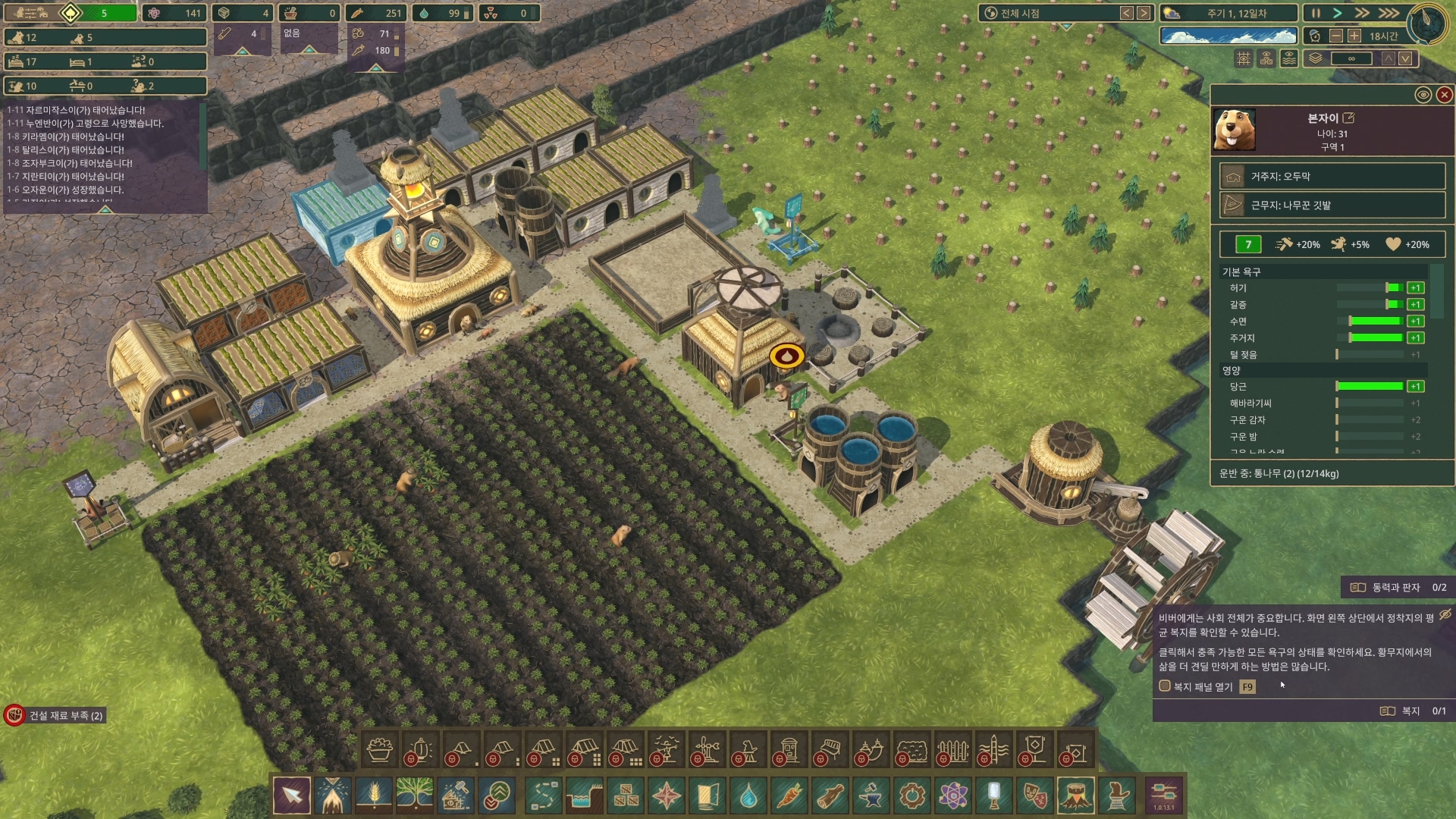
In short, this is a game that is truly serious about water. The expressiveness of the water was surprisingly good, enough to make me wonder how the physics was applied. There is a setting that lets you change the flow and transparency of the water, and if you adjust it, you can feel the depth and the blue of the water more clearly.
The red rendering of the contaminated water also made a strong contrast with the blue water, and it came across as even more striking. If you watch the water and the contaminated water moving along the channels, you can visually tell which way they are flowing at the moment.
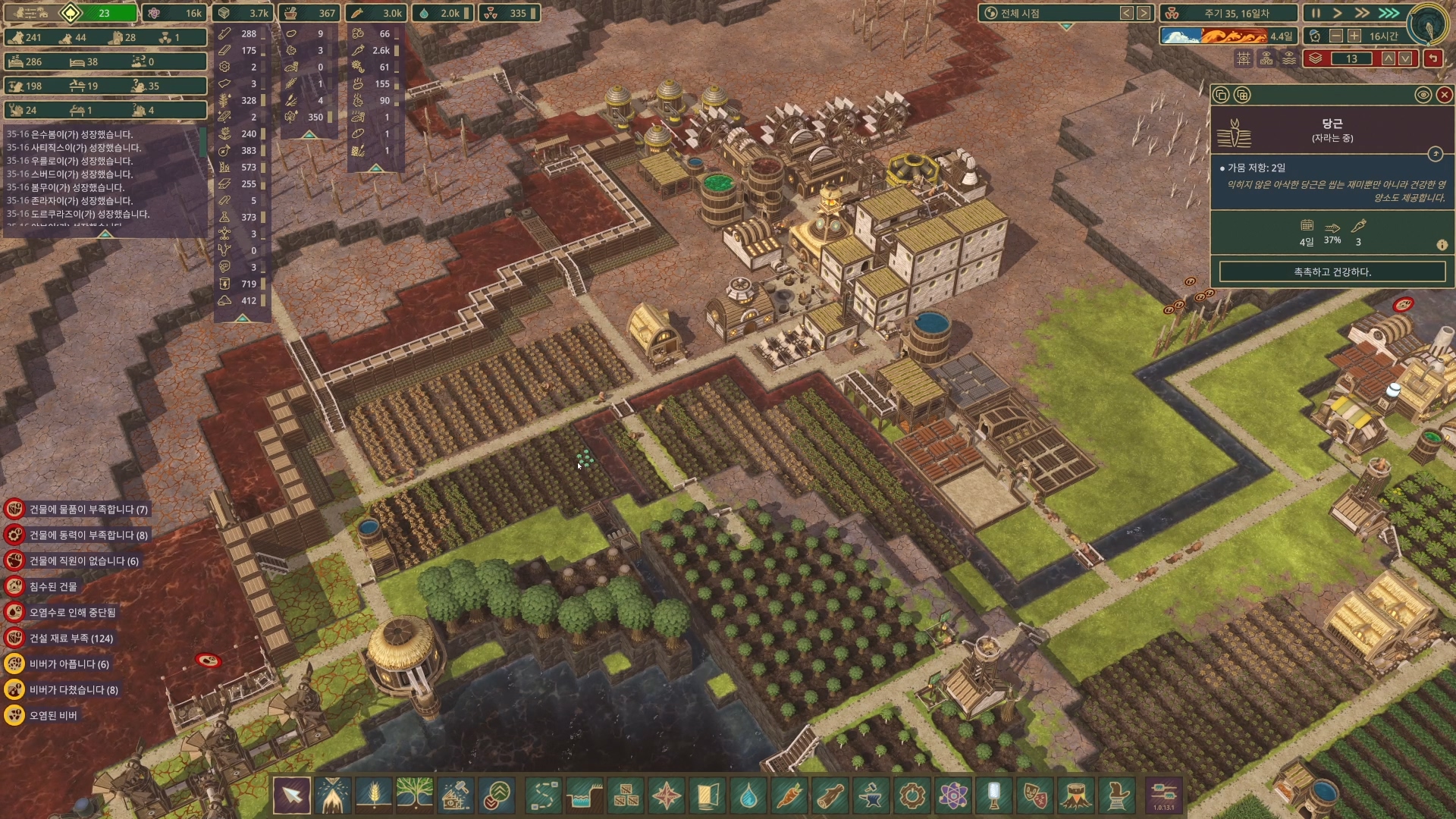
Beyond that, I was really impressed that the stock in storage buildings and warehouses is depicted graphically according to how many resources are stored. The changed state of a tree after it has been harvested, and the look of trees that still have fruit or sap, are also shown with images that match the current situation. This kind of detailed depiction is definitely good.
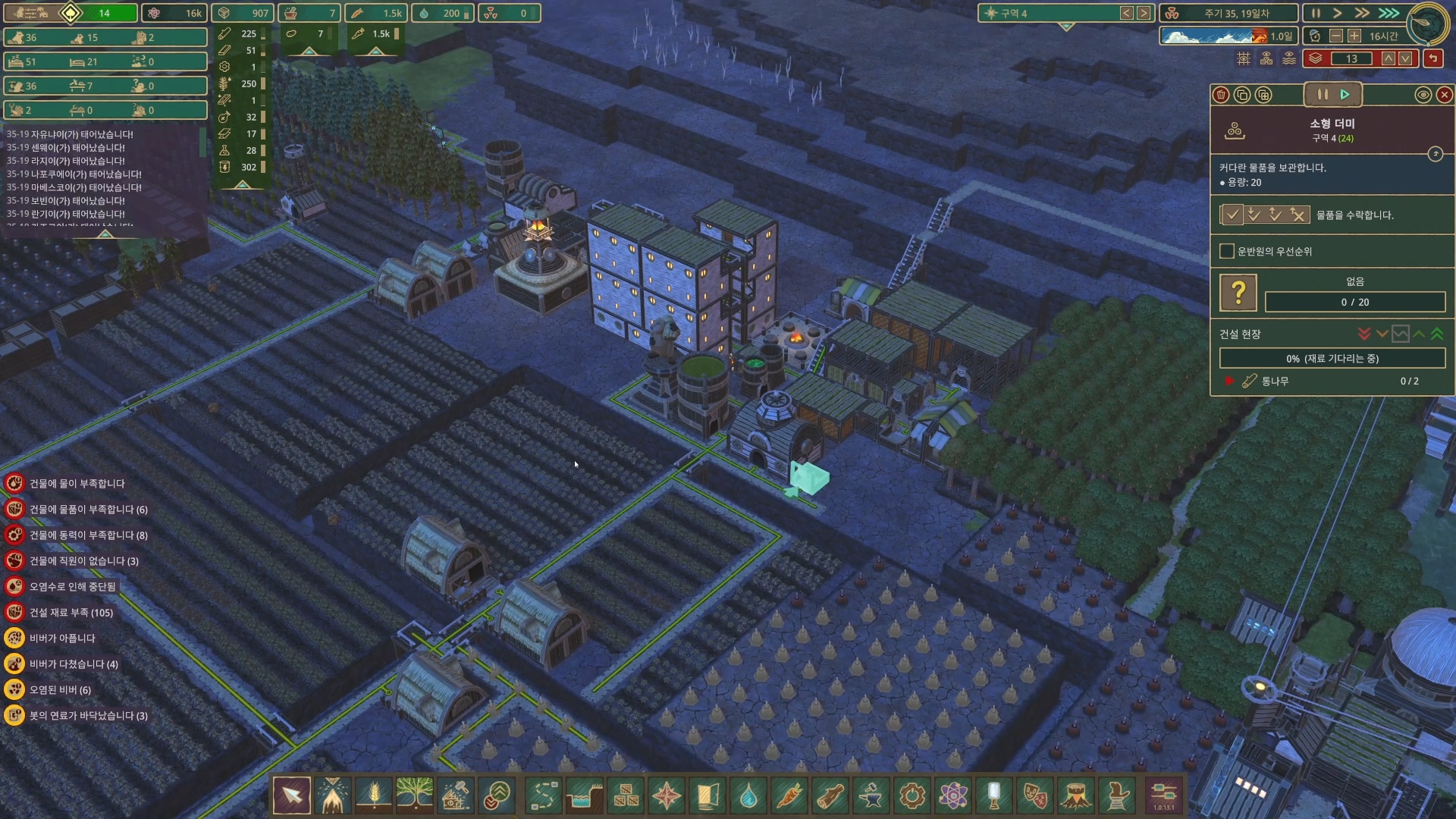
The sound was calm as well, but better than I expected. Perhaps because I was concentrating on drawing up a blueprint for what lay ahead as I played, I did not feel particularly sleepy even though the music is calm.
The warning sounds that alert you when something negative happens felt a little lacking. Personally, though, I would say it was better not to have strong warning sounds. This is a game where a lot of notifications appear at once when a problem occurs, so if warning sounds had kept ringing on top of that, it would have felt cluttered instead.
Overall, the sound had nothing particularly irritating either, so it deserves a decent assessment.
2.3. Difficulty
The difficulty was not as high as I expected. Building freedom is high, so when improving the environment there were many parts I could realize the way I had imagined, and the progression was also less demanding than I expected, which was nice. Games like this often have considerable building restrictions based on height, and Timberborn has relatively few of those restrictions.
Freedom was also high when building dams and levees. I especially liked that levees can be built even in high places without being greatly constrained by height.
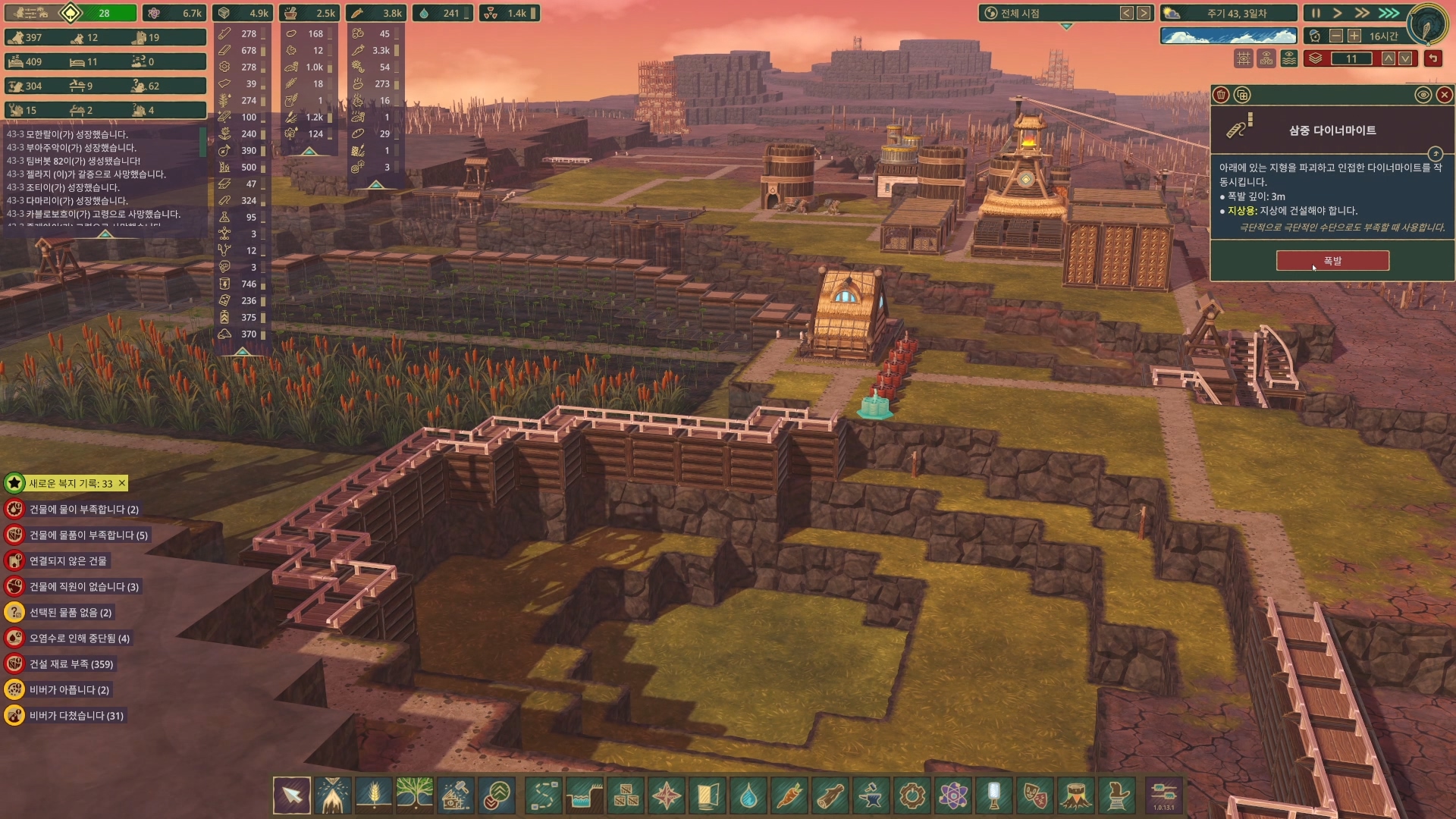
The usable range of the power transmission devices is also quite wide. If you think of a 3×3×3 area centered on the device, you can connect buildings to the surrounding positions, excluding the center. I really liked that power can be transmitted not only horizontally, but also up and down and diagonally.
The buildable range was wider than I expected, so there was little preparatory work, such as making stairs and placing platforms, before starting a job. And the beavers move faster than I expected and are pretty good at finding paths, which was a real relief.
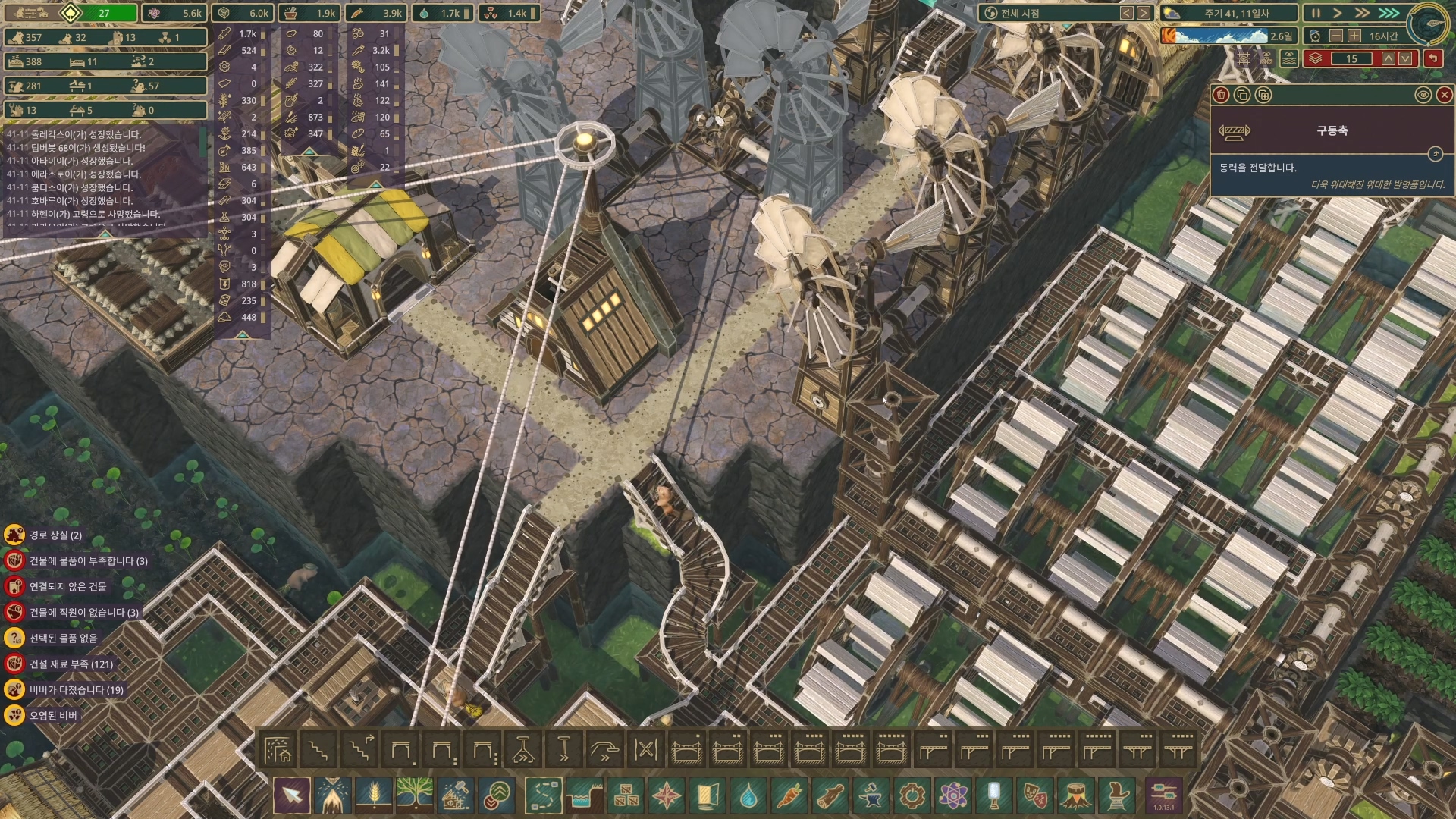
There was never a single case of them failing to find a path. Beavers did sometimes get trapped in an isolated spot because of a problem with the build order, but that did not happen often. In that sense, the difficulty that comes from the controls and from the beavers’ behavior was not great. A simple controls tutorial is also provided early in the game, and it was plenty of help in learning how to play.
Preventing the disasters, though, does take some trial and error. I would say the felt difficulty can change depending on the player’s civil engineering skill and preparation beforehand. Even so, I think the game itself is not very difficult as long as you can properly secure water and food.
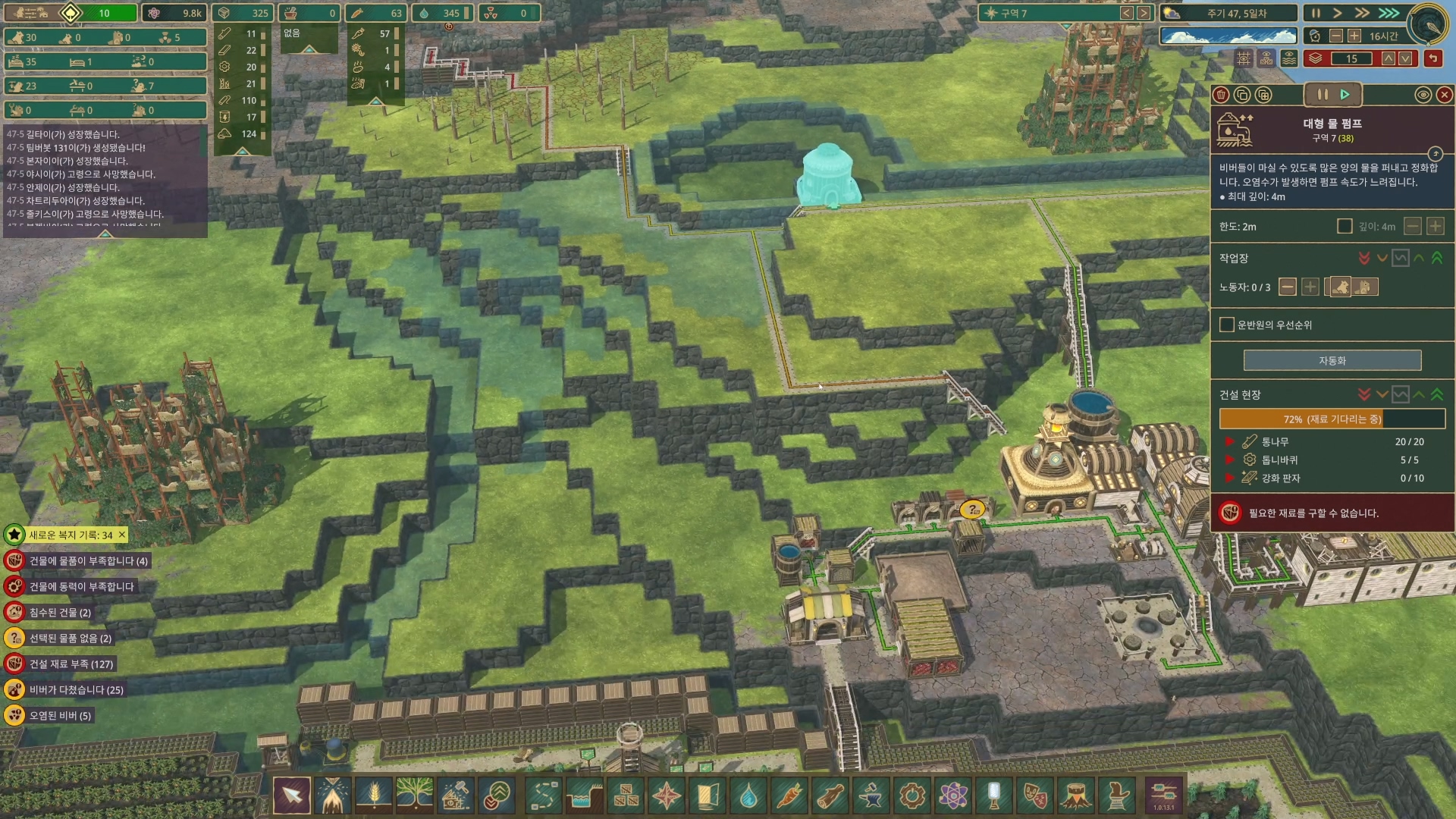
If anything, an excessive increase in beavers (the population) can become a problem, so you need to be careful when expanding the settlement. Aside from that, freedom is generally on the high side, so I think how you proceed is up to the player.
2.4. Play Time
My total play time in ‘Timberborn’ is 34.1 hours. There are several maps, and among them I chose the largest, a map of size 256×256, and played on it. That is the time it took to build a wonder that requires an enormous amount of materials, and then to finish the further work of putting in additional materials to make it operate.
I did not actually build every construction element, but I did carry research and development far enough. I unlocked every locked element, so I would say I reached a state where I could build every construction element if I wanted to.
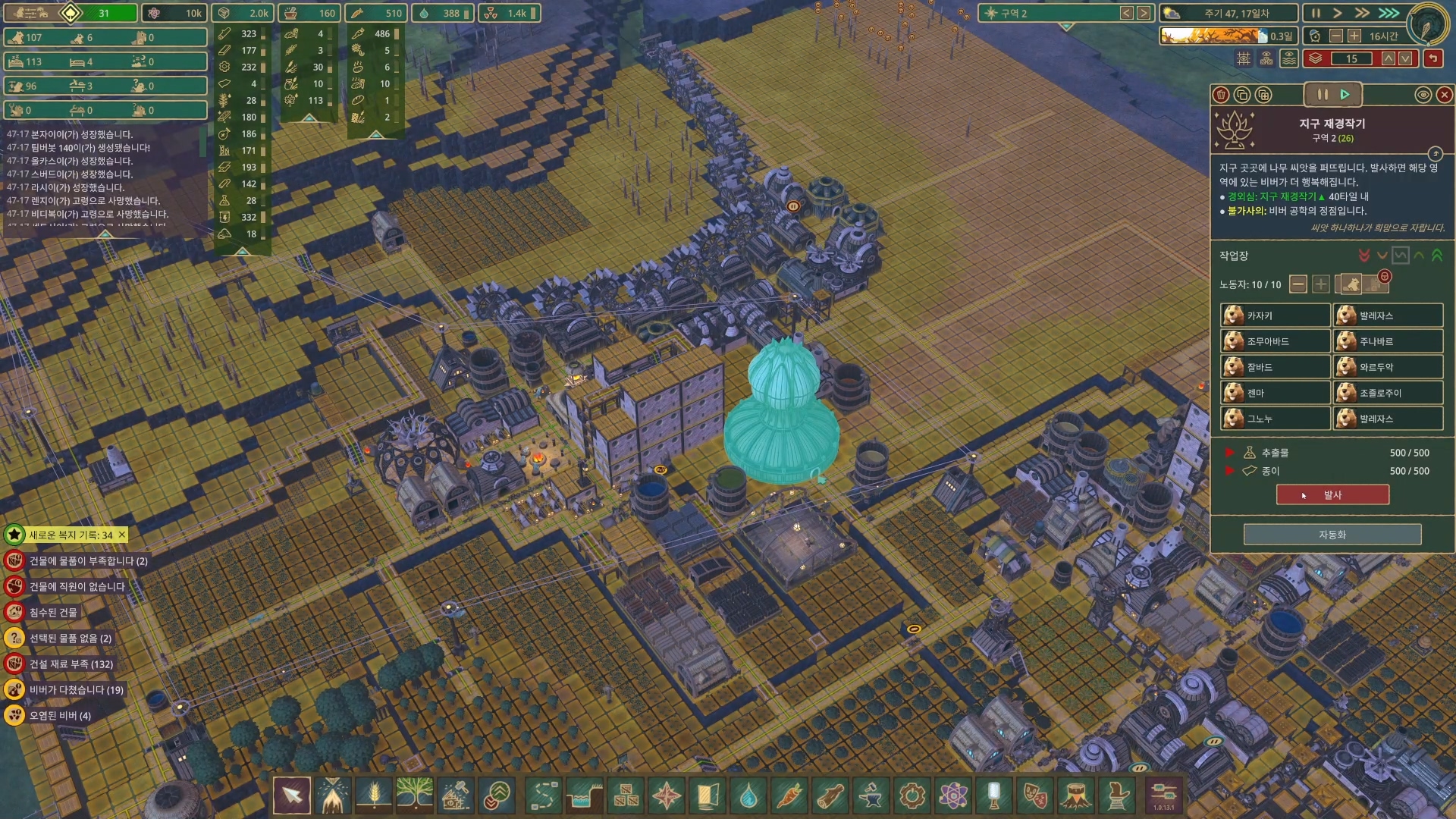
It was a game with quite good immersion. The feeling of being deeply drawn in was similar to the previously reviewed ‘[PC Game Review] Oxygen Not Included‘ when I played it.
‘Oxygen Not Included‘ was a bit difficult to progress in without a guide, but ‘Timberborn’ is easier than that, which was nice.
The later part was especially interesting and fun, where you cut the terrain, make waterways, and build new dams yourself. After turning wasteland into land where vegetation can grow through waterways I made myself, I could feel a clear sense of growth and a clear sense of achievement in growing and harvesting crops there.
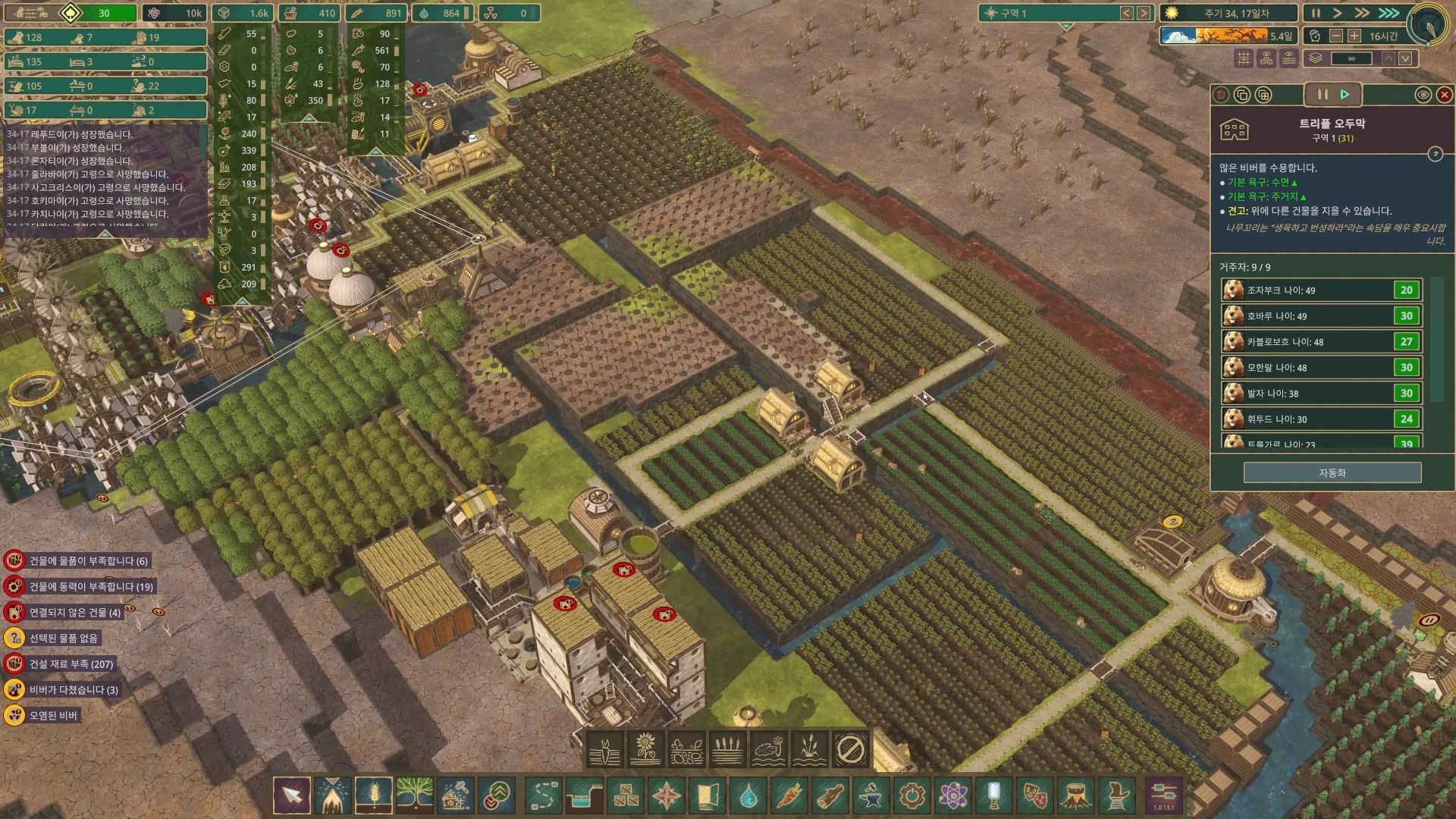
As for how addictive it is, I have finished one playthrough for now, but since buildings can be packed in tightly, I thought you might be able to play well enough even on a small map. Looking at the challenges, I also felt an urge to take them on, wondering whether I could reach an even higher level of mastery (?) if I refined the terrain more efficiently.
There are some unfriendly parts, but because three-dimensional building is possible, the freedom feels higher than in other building games. It shows the possibility of developing further, and it is a game that gives me the urge to play again.
It keeps making you think, “If I set it up this way, couldn’t it withstand a drought better?” and “If I do it this way, couldn’t it develop more efficiently?” I consider it a well-made work.
3. ‘Timberborn’ Closing
I had been keeping an eye on ‘Timberborn’ since its early access days and bought it, but in the end I only got to play it after the full release. After playing it myself, I think it is a really well-made game. The way it is put together is solid, too.
The game is a little lacking where it directly presents goals and leads you to solve tasks. Even so, the disasters prompt new work, and the desire to improve the environment naturally carries the play forward. That structure is truly good.
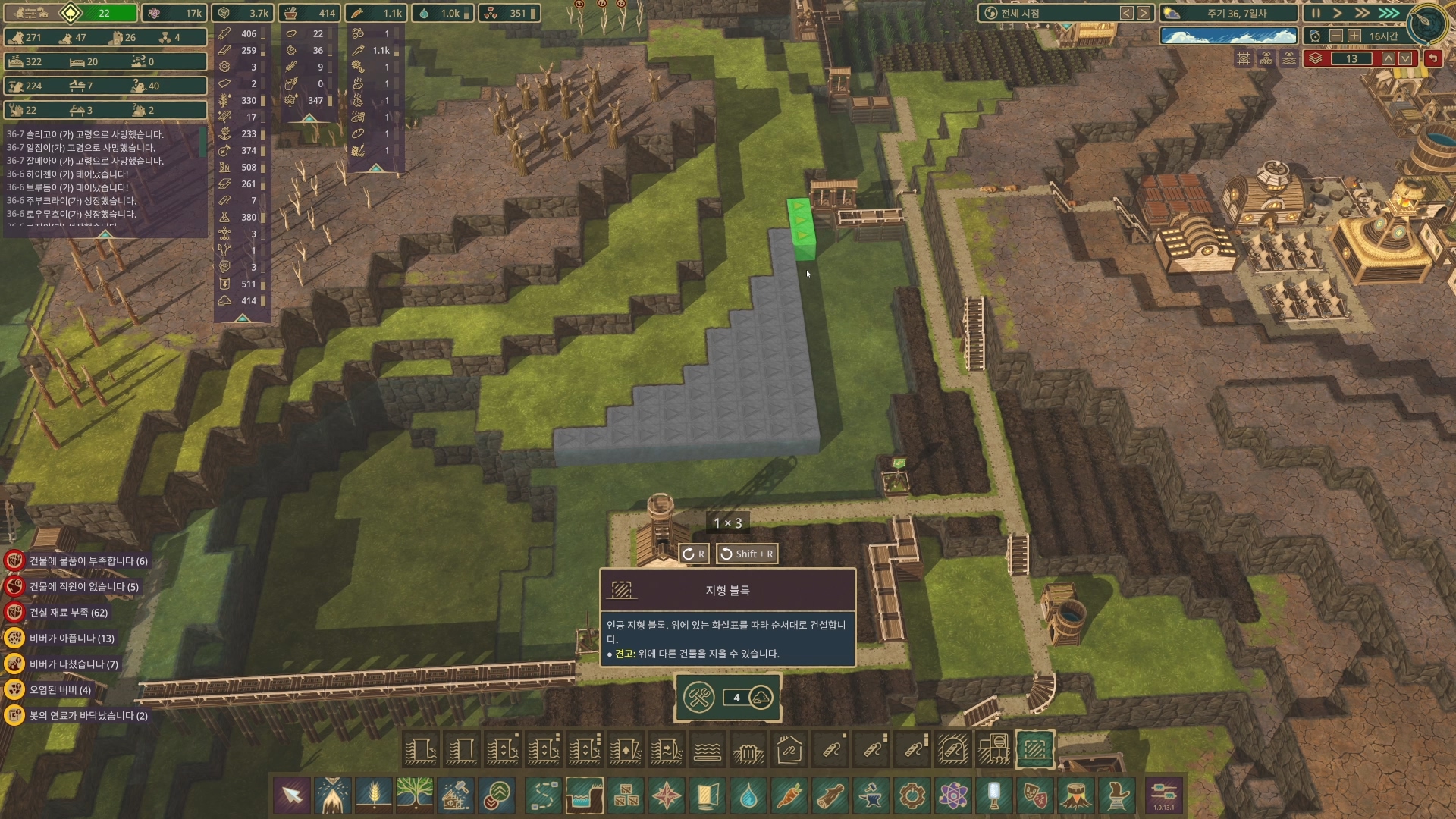
Depending on the player’s desire, it also seems possible to pursue peak efficiency by making a creation (?) so enormous that it is truly bizarre. Even with a limit on building height, it is a work that shows considerable possibility within that limit.
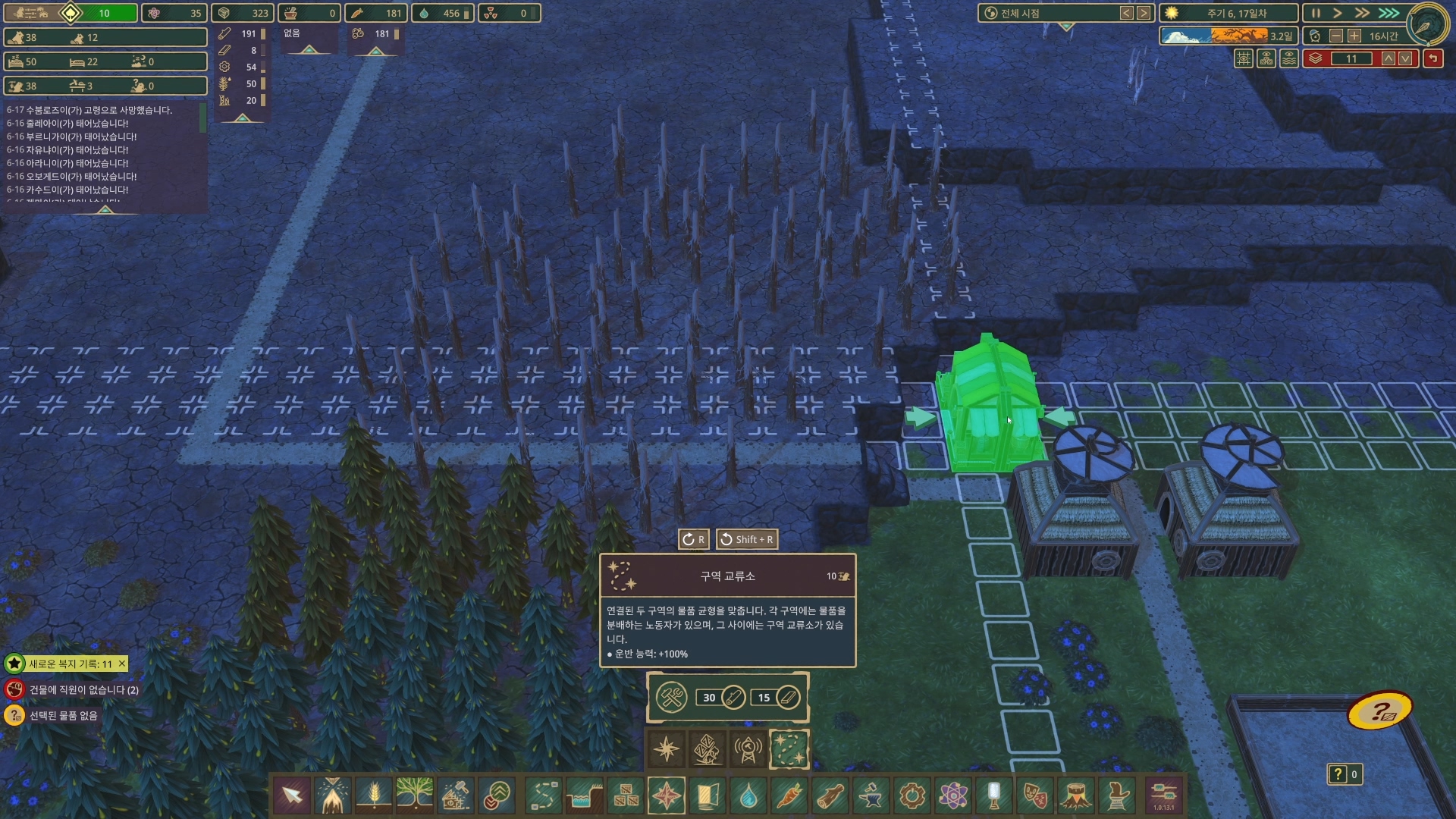
It also cleanly solved the movement-path problems that can occur on a wide map, by separating districts. Being able to divide and manage supplies and labor while developing several areas was a truly impressive and helpful element.
Personally, a few inconvenient points and disappointing points did catch my eye. Taken together, though, I think it is a really fine work, and it is a game I can readily recommend. The fun is definitely there. Of course, that is only for people who like the construction and management genre.
That is all. I hope good fortune lies on the road ahead of you. Thank you.