

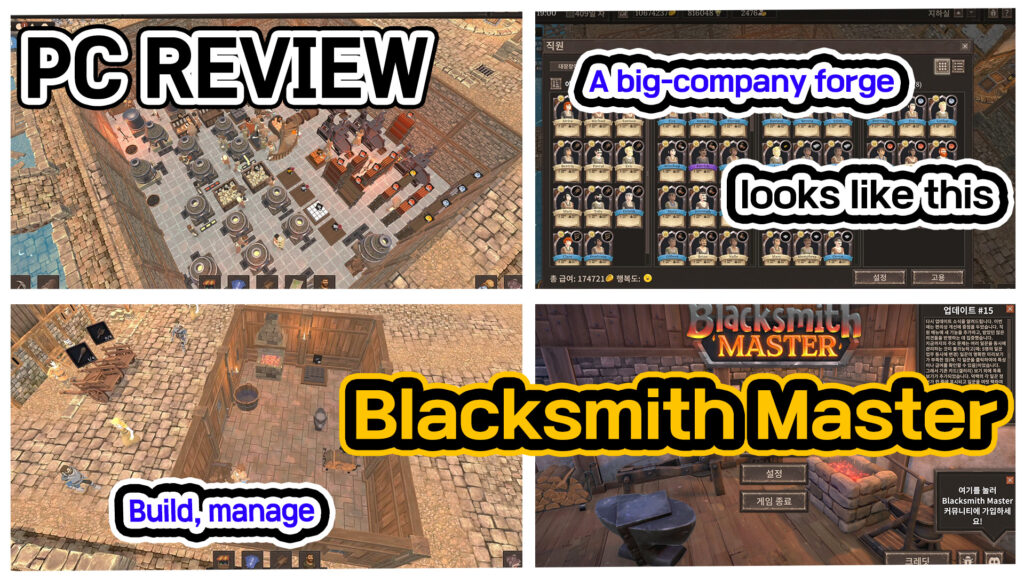
This review is an AI translation of the original Korean post. Proper nouns, and some game titles and expressions, may differ.
1. ‘Blacksmith Master’ Overview
While playing the previously reviewed ‘[PC Game Review] Tavern Master‘, I found out that ‘Blacksmith Master’ was on the way. A long time has passed since then.
I still had not played it when it launched in Early Access, and it remains in Early Access even now. Even so, I installed the game and left it unplayed for a long time, then launched it thinking, “Maybe I’ll try it for a bit?” and ended up finishing the playthrough.
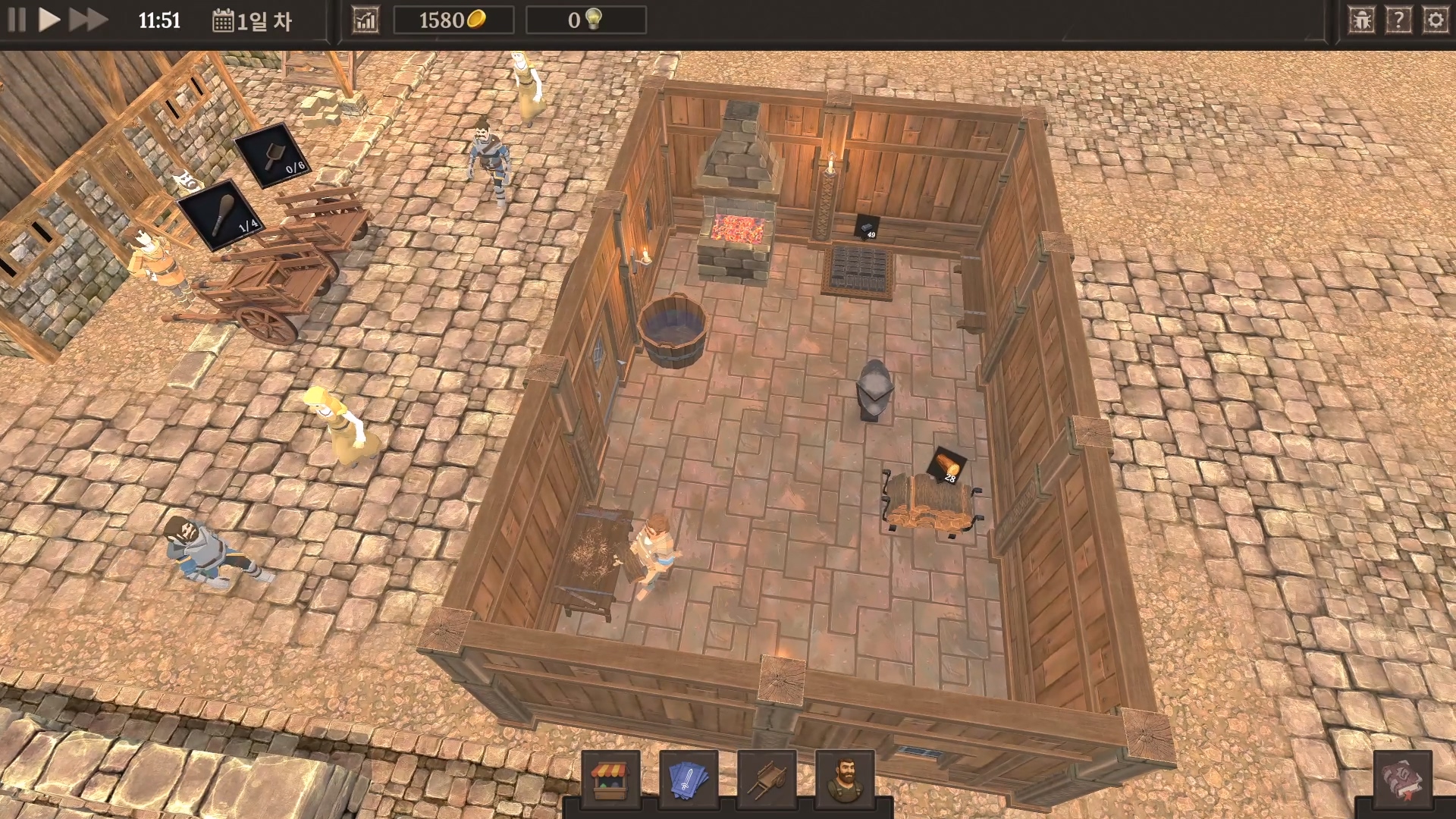
By genre, I would call it a construction and management game. Unlike the previous title, the Korean localization looked well done, with no broken characters. I finished without running into any major bug that got in the way of progress.
Let’s go straight into the review.
2. ‘Blacksmith Master’ Review
2.1. Features
It has many of the features of the previous title, ‘[PC Game Review] Tavern Master‘. The developer seems to have a talent for making games that are simple and fun while being less of a headache than you would expect. Even though this game is more complex than the previous one, it is very well made.
It starts as a simple setup, with one furnace and orders from merchants. You make the requested goods, load them onto a cart, and deliver them, and the money comes in. After that you hire blacksmiths and assistants, and as your earnings grow you can hire a scholar as well.
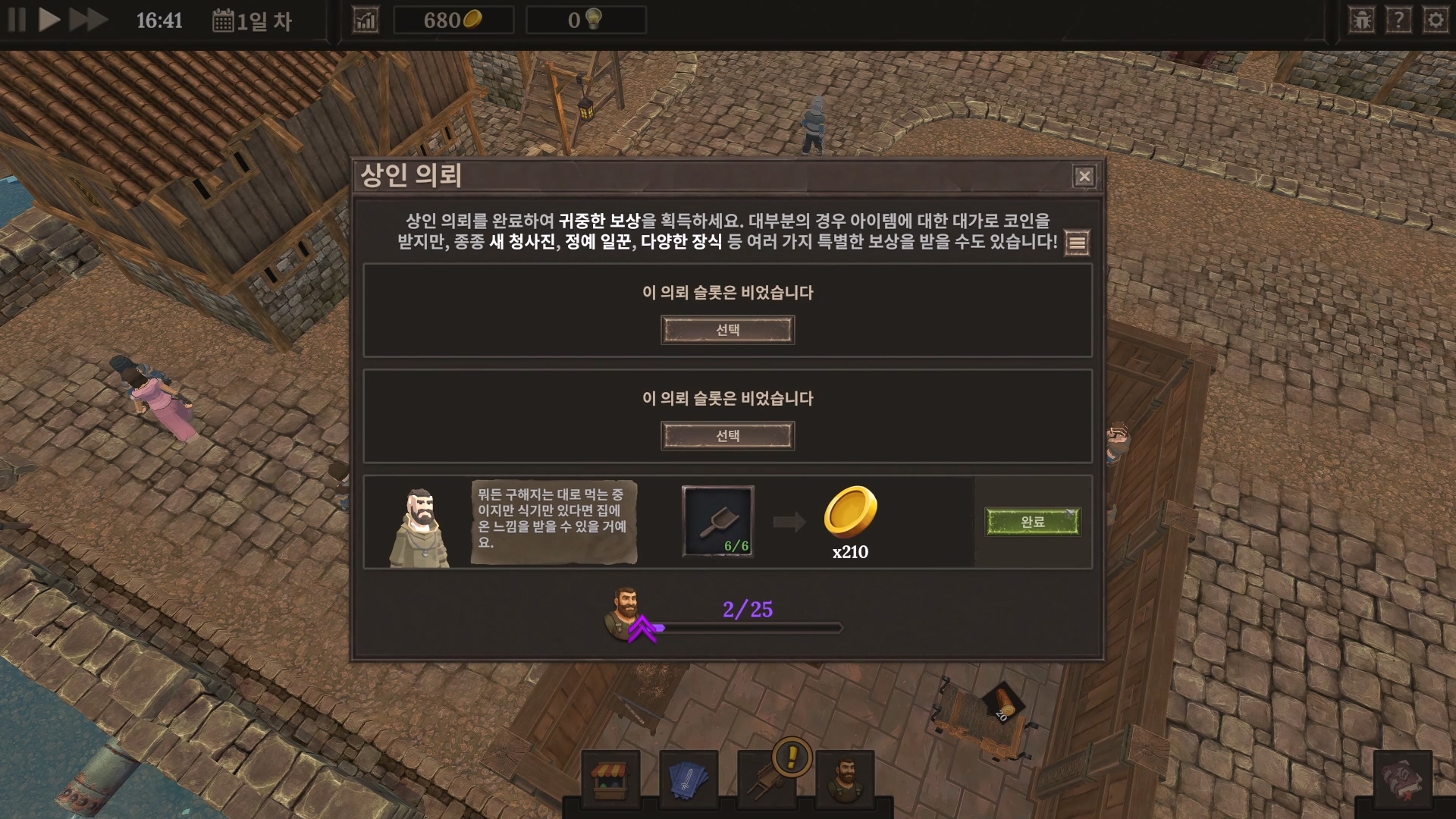
Unlike the earlier ‘Tavern Master’, this is not a game where research directly expands new systems or elements. Of course, ‘Tavern Master’ did lay out staged areas using special resources.
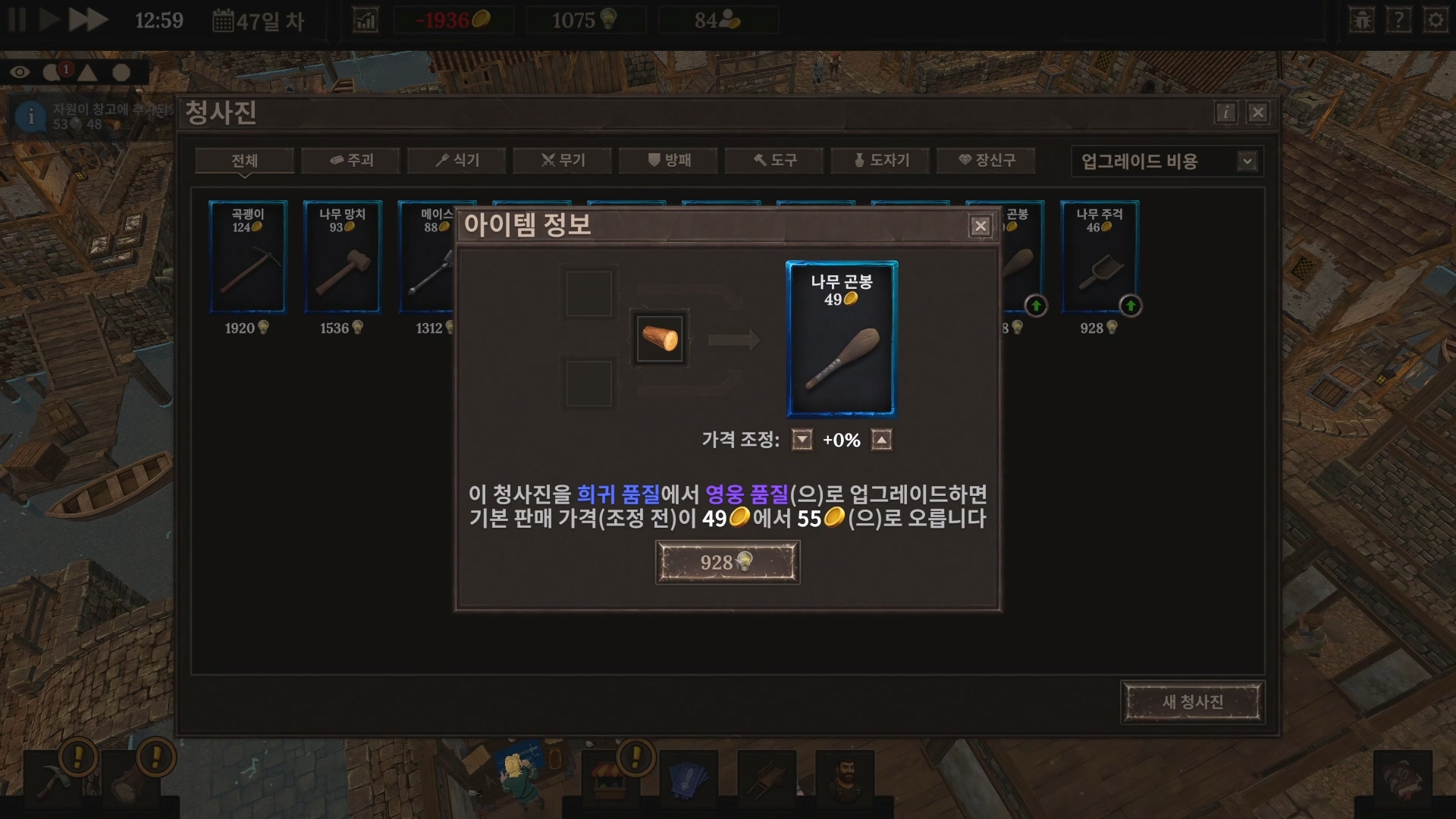
This ‘Blacksmith Master’ gives you fun and a sense of growth through three main elements. The first is research using the scholar mentioned earlier. When the scholar builds up research points, you can raise the grade of existing goods, and the final goal is Legendary grade. Passing through Rare grade, the higher a good’s grade becomes, the higher the price you can sell it for.
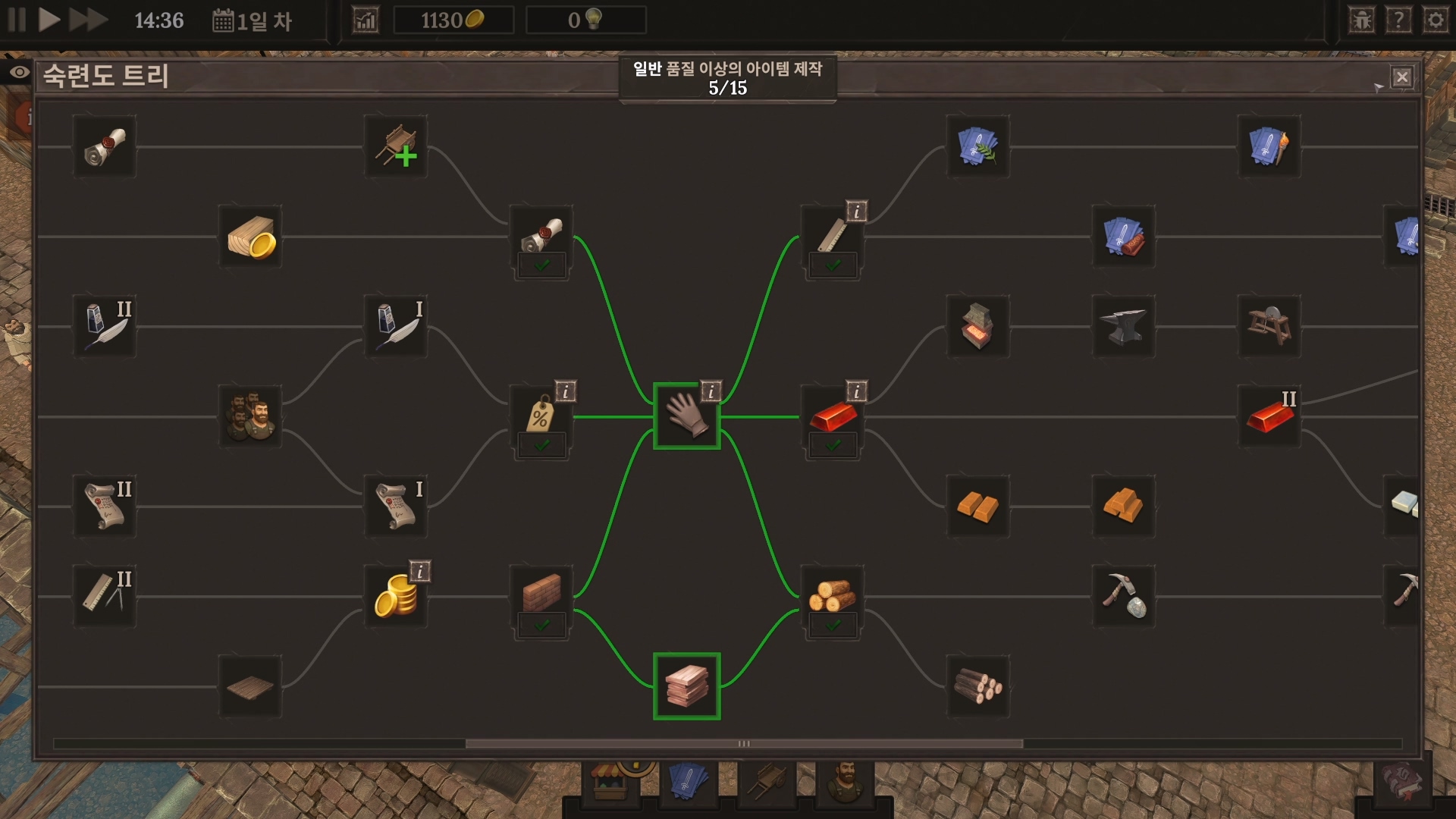
The second is the way standard items and systems expand according to how many goods you produce. Make at least a set quantity of a specific good, and you can unlock a new feature on the system tree. For example, you meet a production requirement and unlock a system related to trade.
After that you can open an underground area or a surface area to expand the forge, and you can also unlock a mine and a logging site where resources can be obtained. In this way, new areas and features open according to production volume. At first, producing Common-grade goods alone can meet the conditions, but later you have to produce higher-grade goods to satisfy the unlock requirements.
In short, simply making a lot of goods is not enough. The scholar’s research has to proceed alongside it.
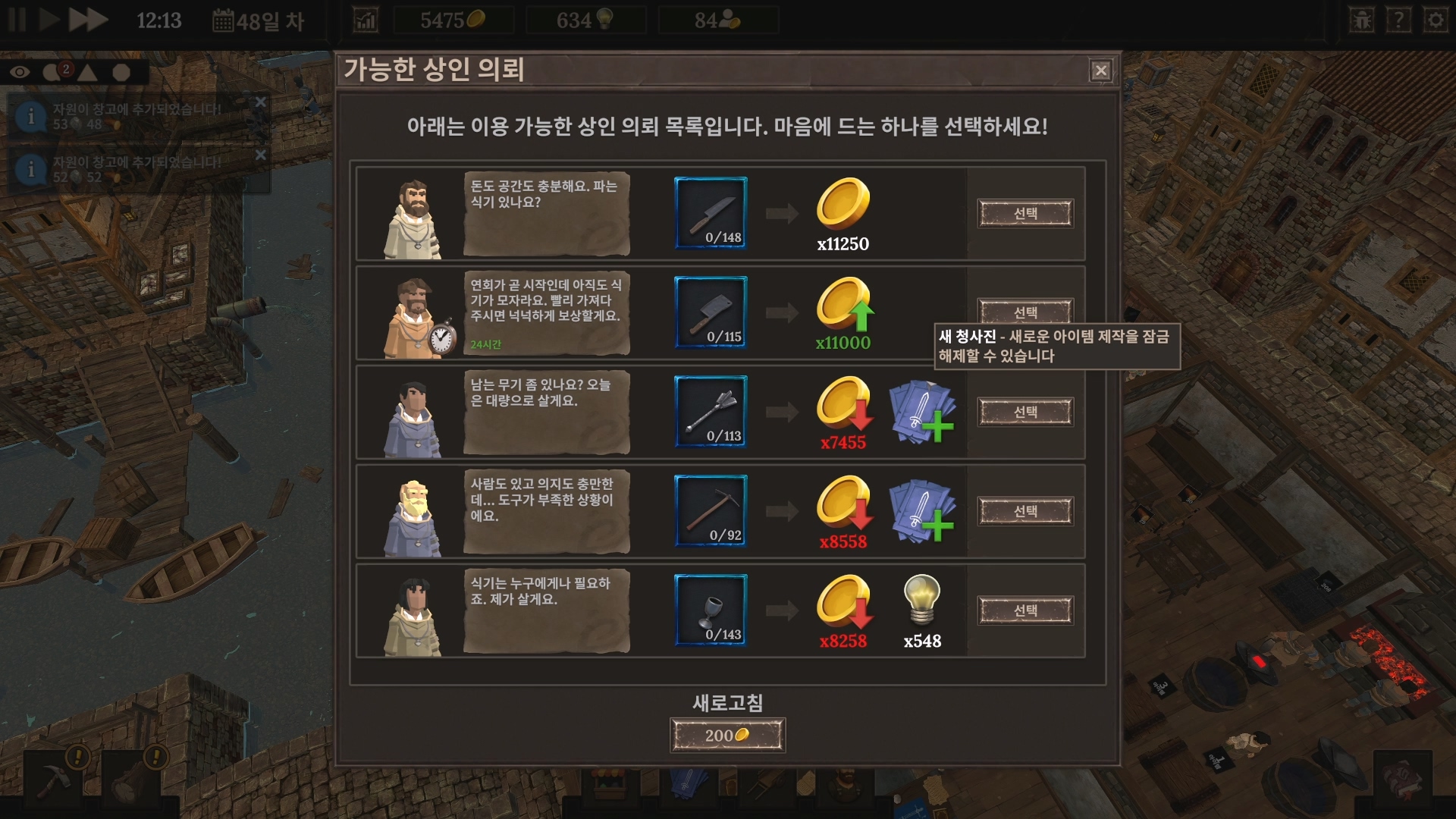
The third is a blueprint system that adds new goods to the forge’s production list. Once the features needed in the earlier stage are unlocked, orders related to blueprints appear. Blueprint orders are also carried out through merchant deliveries, which was how you made money at the start.
The reward is smaller than a normal delivery order, but it gives you a chance to bring the goods on the blueprint into the forge as new products. Complete those orders, and gradually increase what the forge can make.
In the end, raising goods grades through research, unlocking systems according to production volume, and expanding the product line through blueprints are the three great pillars of progress in ‘Blacksmith Master’.
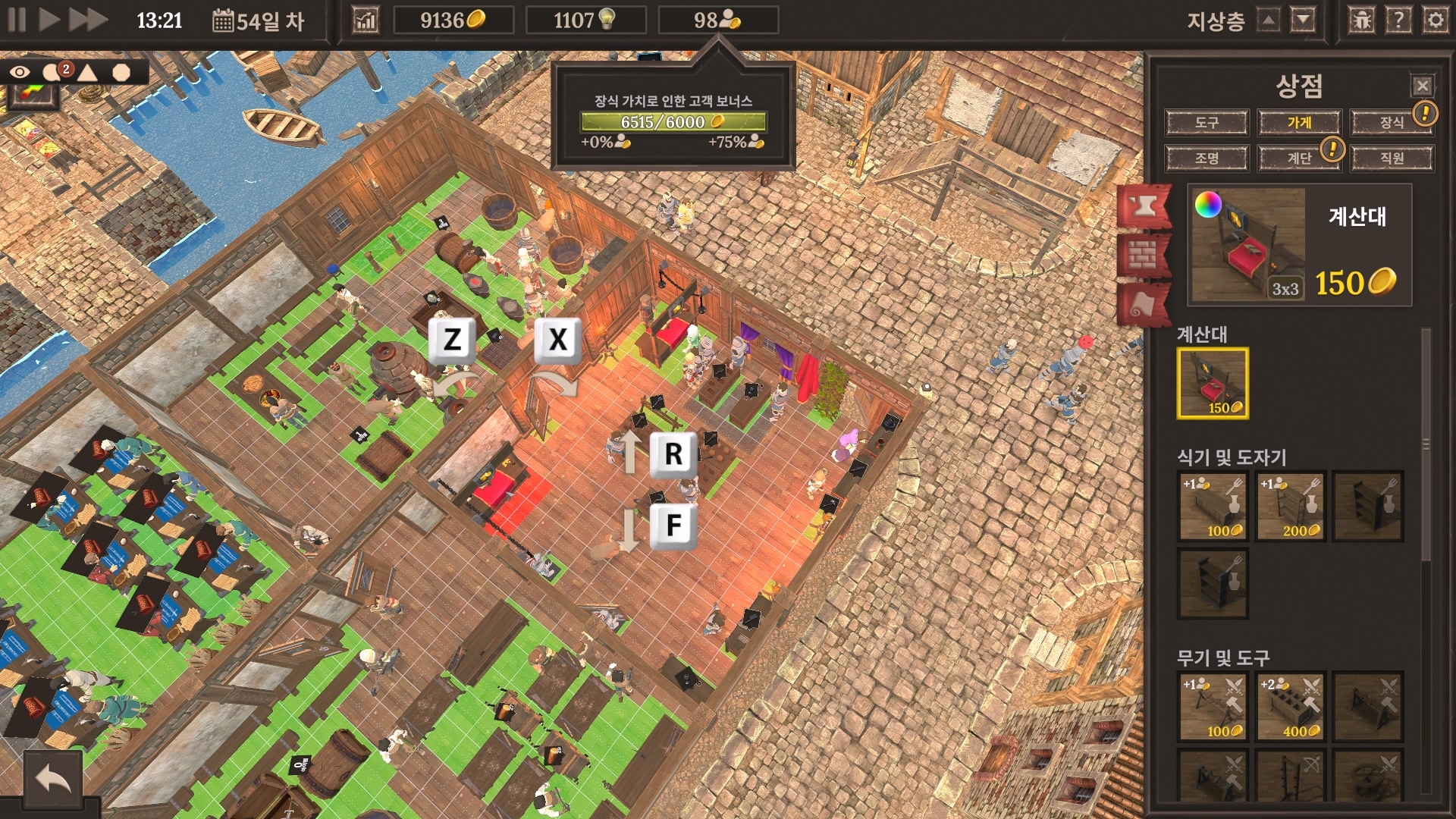
Unlock the trade system, and you can build a shop inside the forge and sell goods to visitors. In my experience, though, delivering goods to merchants was the main way to make serious money, and sales through the shop were closer to side income.
The resources you use start as iron alone, then move on to copper, silver ore, and gold. Most deliveries, though, were iron goods, and the late-game silver ore and gold were only a brief taste before I finished the game.
Resources that appear at the very end, such as clay, gold, gems, and birch, can be obtained only by making special items. From this point, the game’s production process becomes another step more complicated.
Working through that more complicated production takes considerable effort, and expanding the forge to match is essential. These late-game goods, though, were less a way to make a lot of money and closer to a part you finish once you have the satisfaction of “So I made even this.”
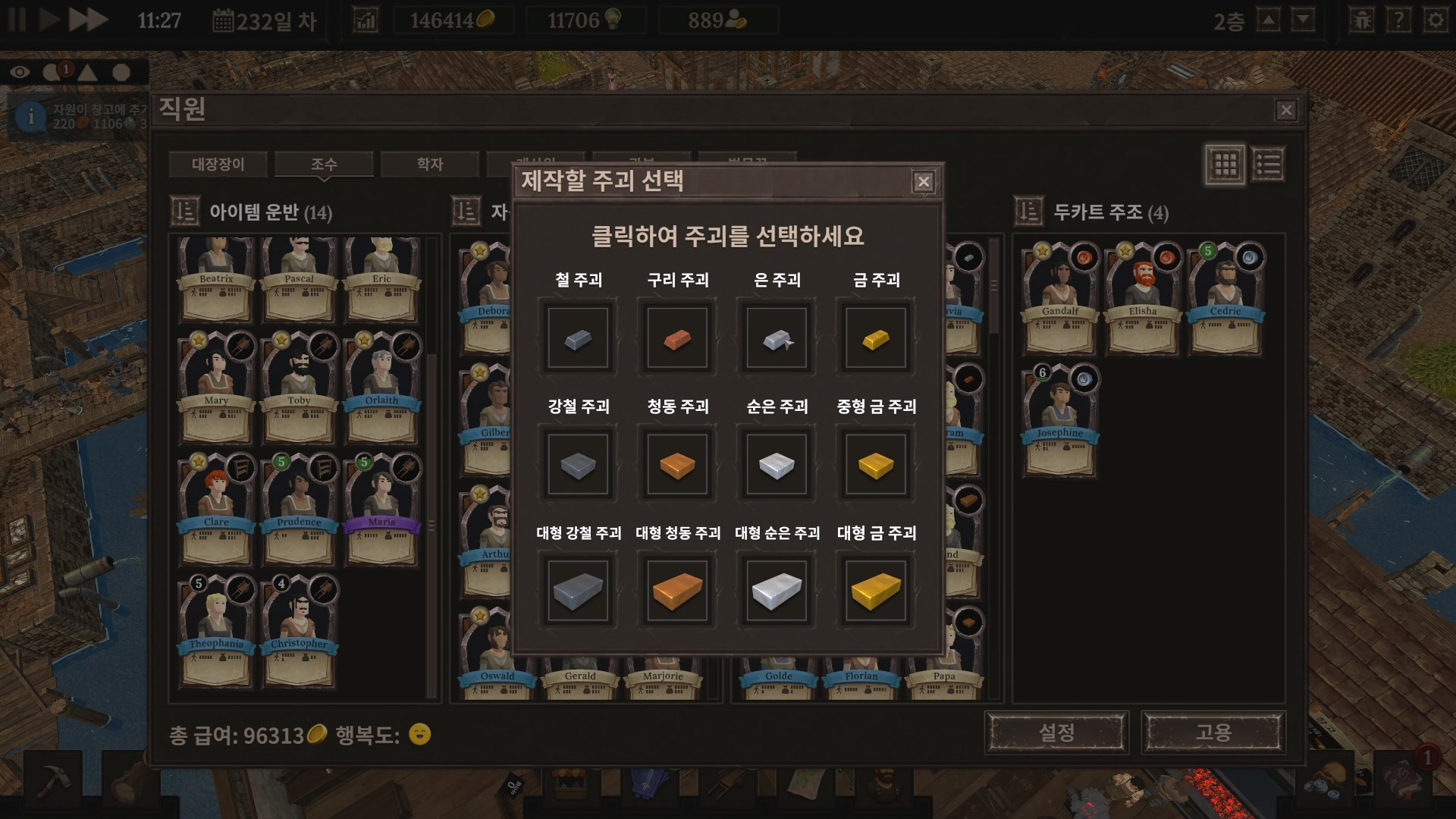
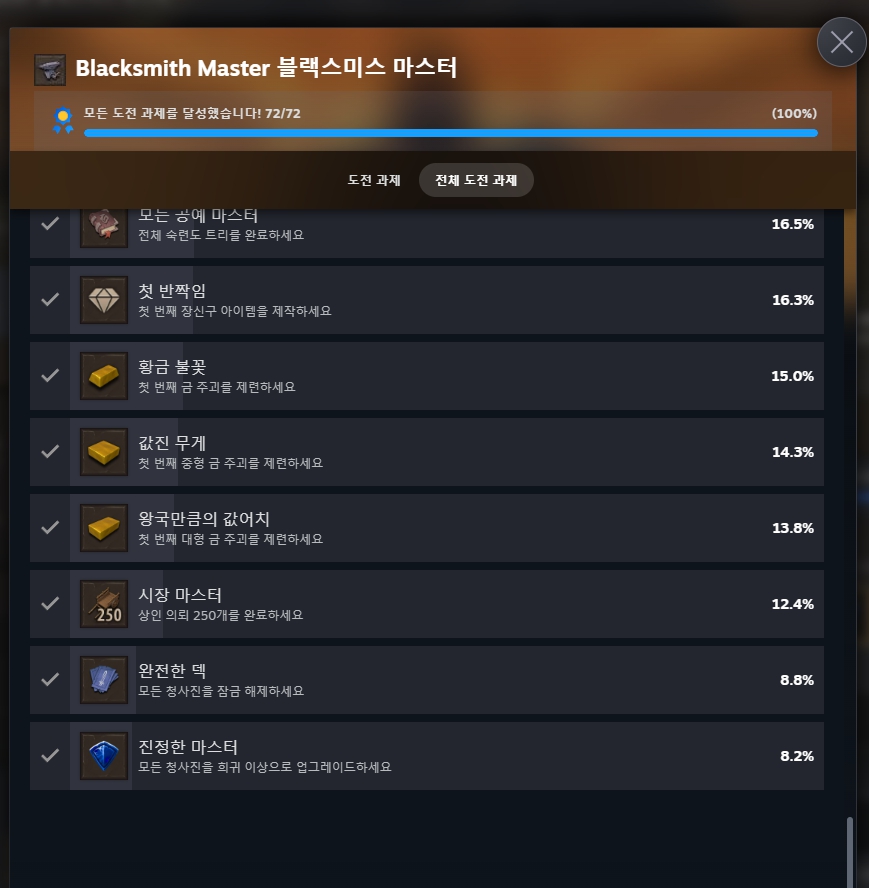
I do not know whether the game itself has a clear final goal and an ending. From what I played and felt, there does not seem to be a separate ending. I decided I had played a fair and sufficient amount and wrapped up, then checked the Steam library screen and saw that three more achievements would complete every achievement. In the end I played further, with finishing the achievements as my last goal.
My personal goal for the playthrough was to unlock every system in the game. A side goal was to raise every item to Legendary grade. After that there was also content where you spend coins for additional beneficial effects, but completing all of it would have taken an enormous amount of time, so I did not see it through to the end.
2.2. Graphics and Sound
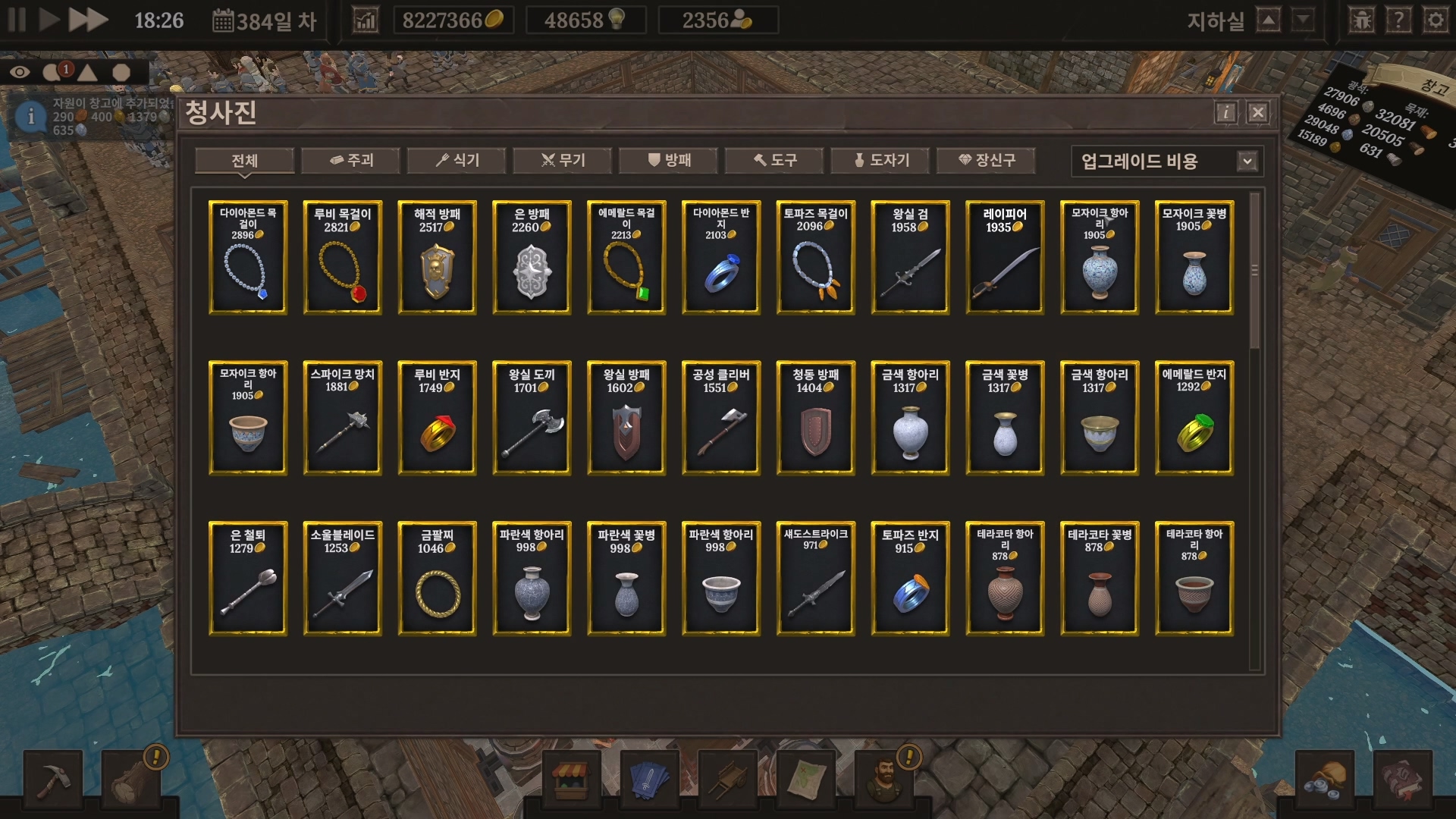
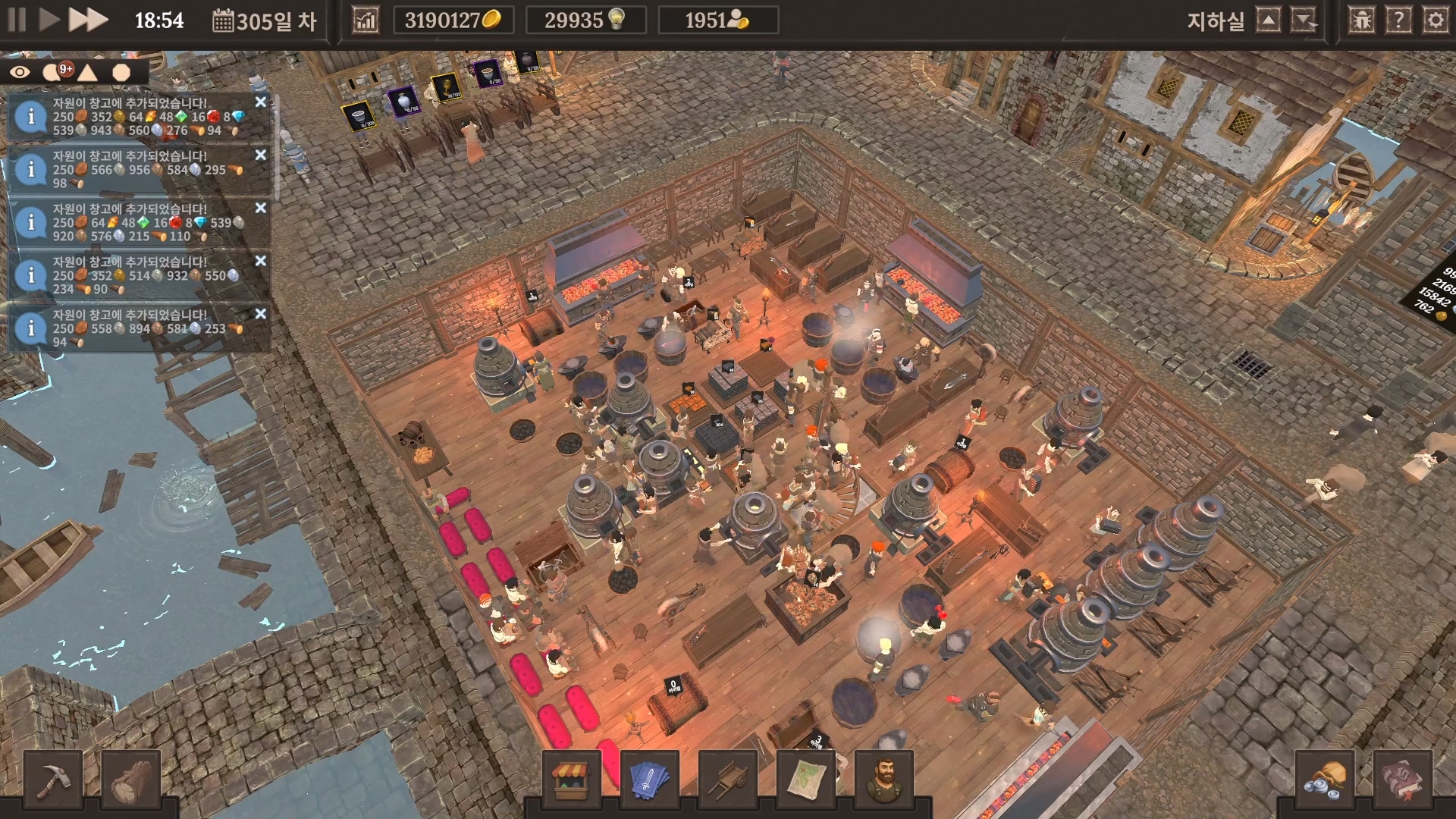
The graphics are not greatly different from the previous title, ‘Tavern Master’. I do remember this one having a slightly brighter atmosphere. There is an enormous number of objects inside the forge, and I still felt each of them was expressed fairly well.
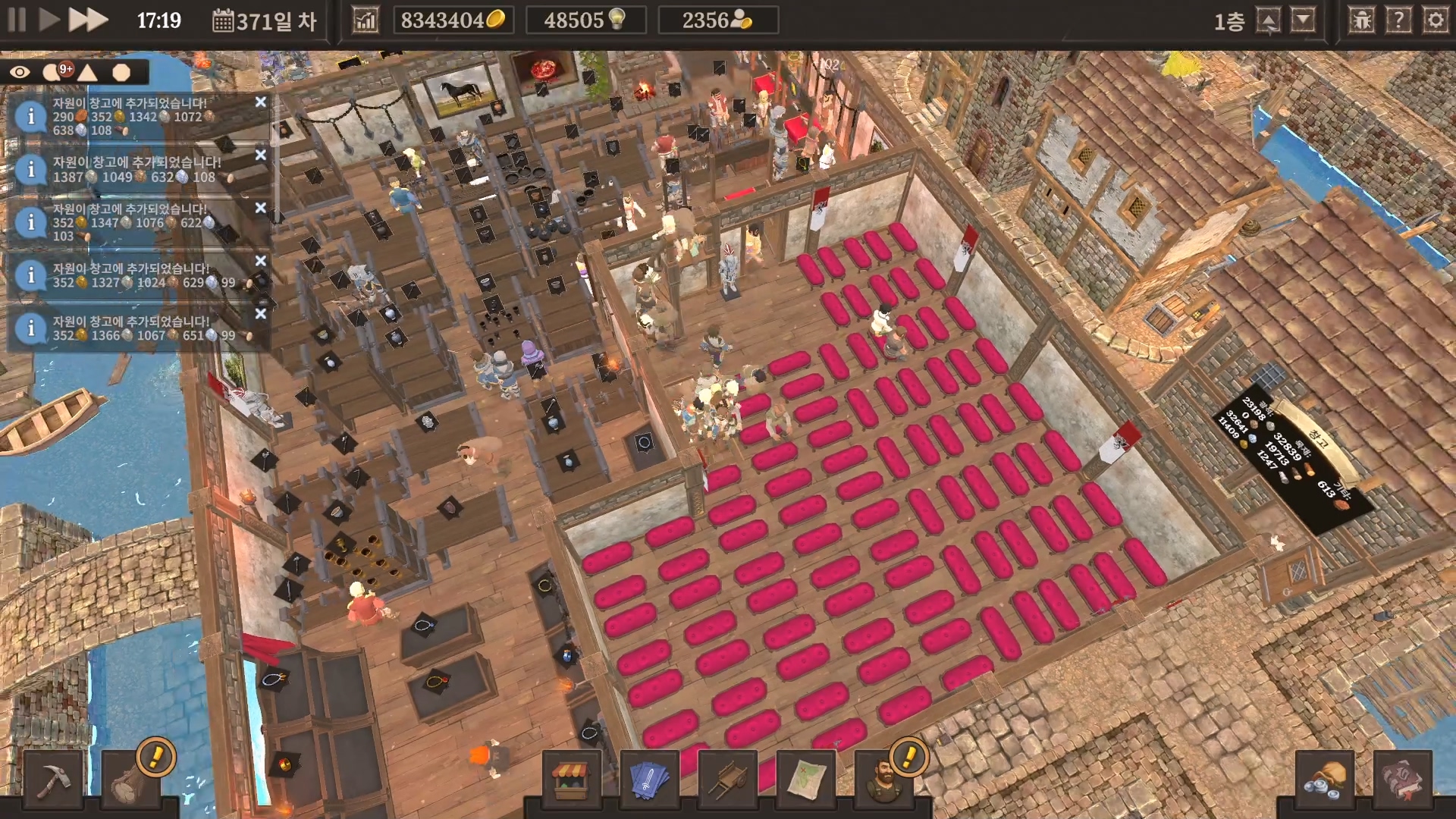
What surprised me in particular was that piled goods are shown directly to match the actual number you hold. As production grows, raw materials and finished goods stack up around the forge, and you can visually feel that it has grown into a large-scale production facility.
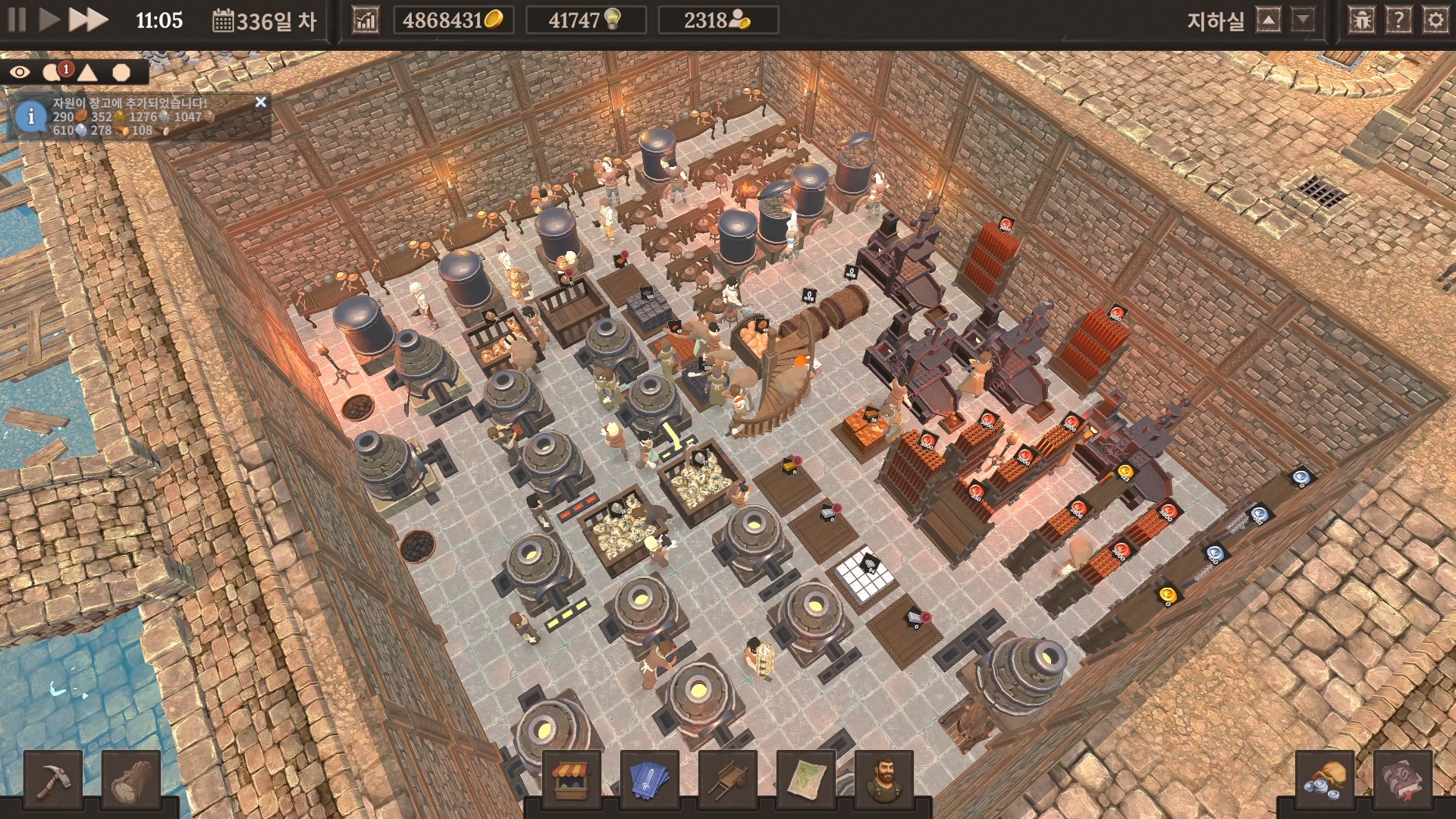
Because there are an enormous number of hired people and interaction points, the game appears to allow workers to overlap one another. In the later game, the many workers and objects also caused frame drops. Some people might find that a bit hard to take, but in my case it never went as far as the game itself freezing, which was a relief.
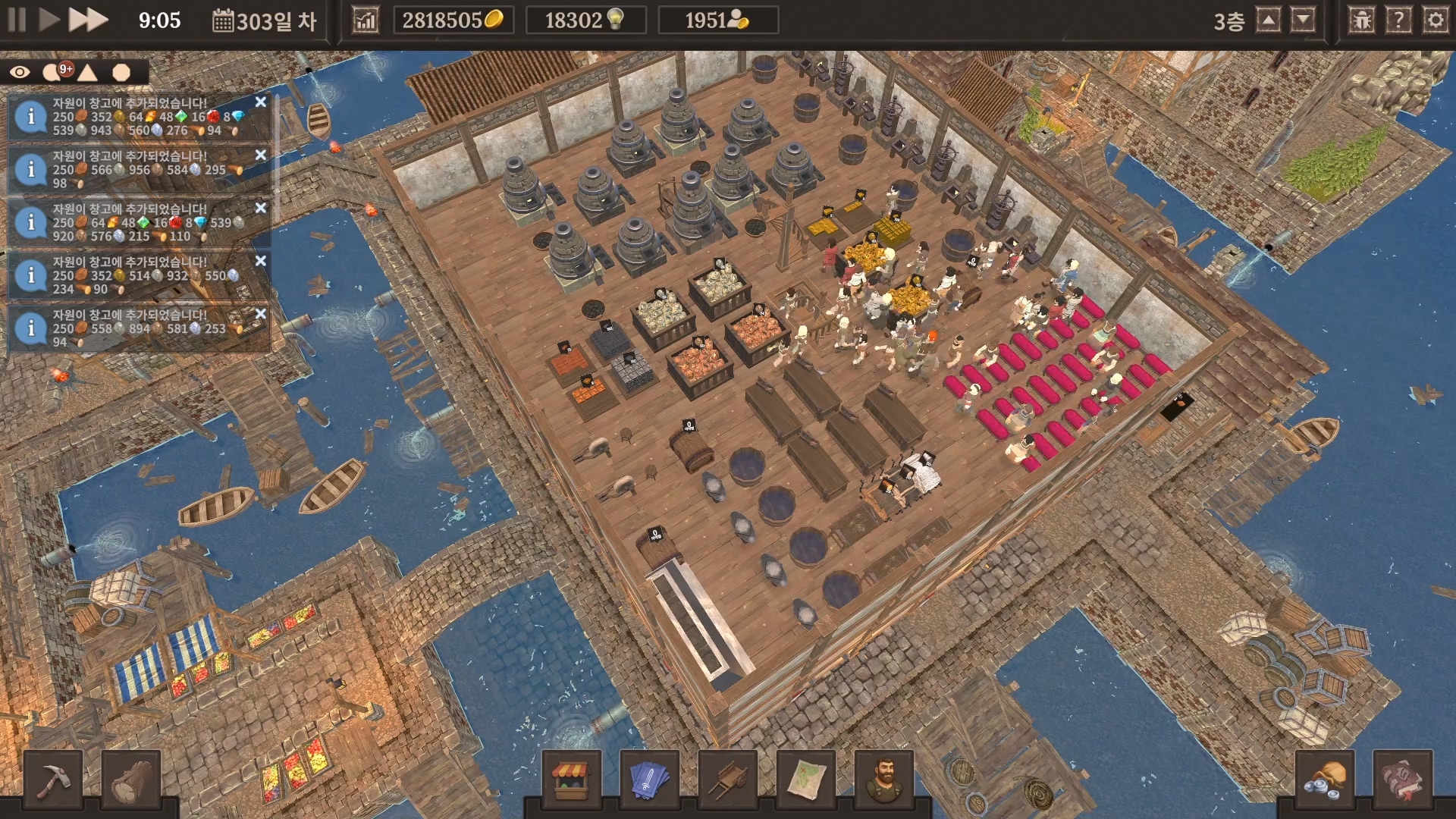
In the sound, the brisk clash of anvil and iron, and the sound of hot metal dipped in water to cool, stand out the most. Beyond that, there were not many sounds that left a particular impression. I think there were sound effects when opening and closing menus as well, but in the end the forge work sounds described above are what will linger in your head the longest.
The background music is leisurely overall. In the later game there is often time spent waiting for production to finish, and I remember drowsiness setting in then, enough that I actually dozed off. A few parts feel like an idle game, but overall it was fine.
2.3. Difficulty
You can set the difficulty when you start the game. I played on the Normal difficulty the developer intended, and I was able to get through it without much trouble. I finished the game without needing to look up a guide.
There were a few times, though, when I discovered only much later that a certain feature existed. The explanations of buttons and how the work is done are a little thin, so you might pass by a feature you can use without knowing it is there.
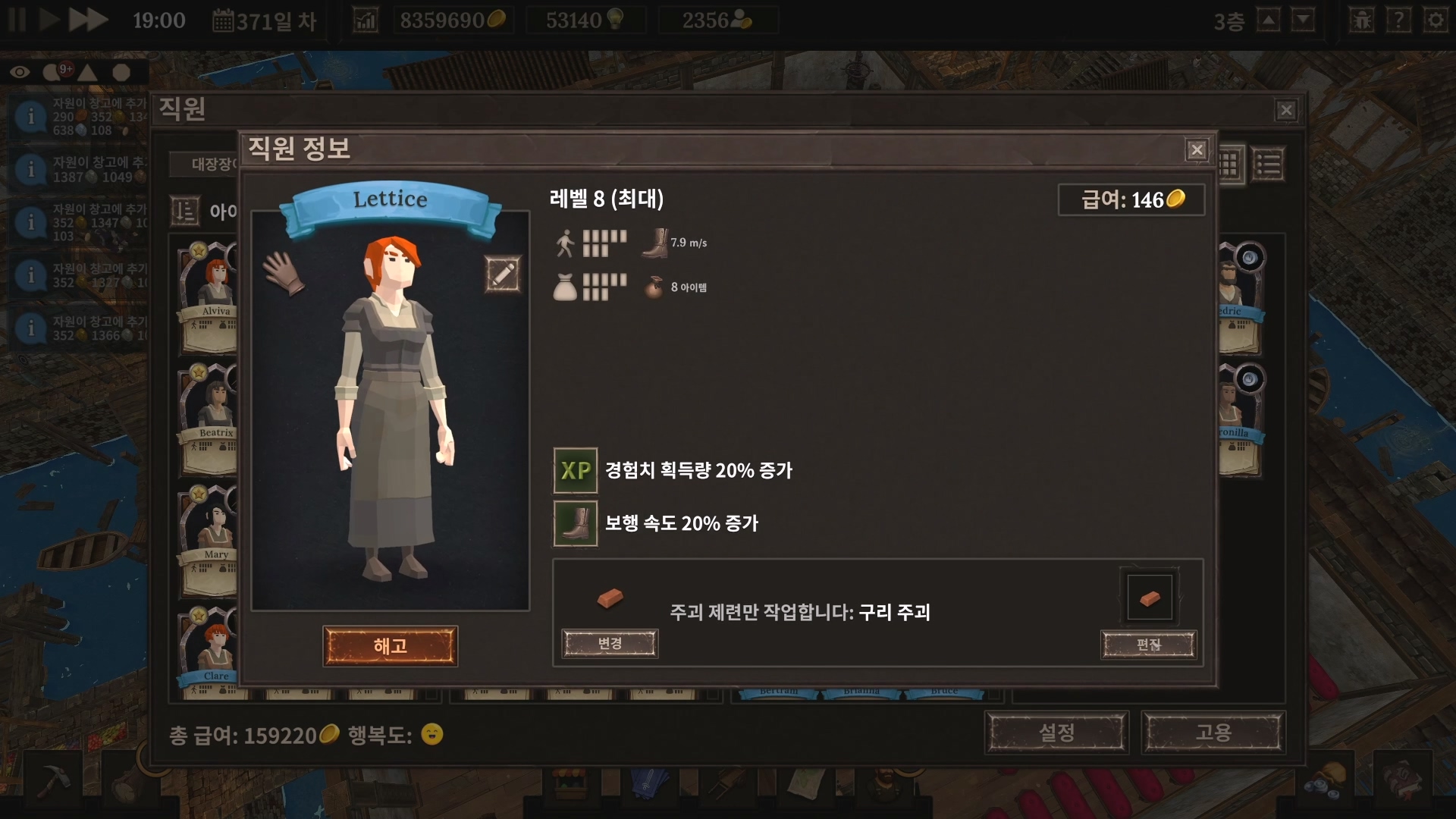
After that I played by guessing at the features in my own way, and I was able to continue without any particular problem. The systems can be a little awkward to understand, but the difficulty of the game itself is not high.
Aside from worker management being somewhat tedious, I never had to load a save and repeat dull work because of a difficult situation. It is not a game you lose, either, so on the difficulty side I would call it casual.
There can be times when money comes in a little slowly and that feels frustrating. Also, if you hire far too many workers without considering your income, it looks possible to stay in the red and be ruined. I do not think many people would keep adding workers with no regard for the situation at all.
2.4. Play Time
My total play time in ‘Blacksmith Master’ is 29 hours. Honestly, I could have wrapped up at about 20 hours, but I played a little more to complete the achievements.
After completing every achievement, I spent time on content where you use coins to gain additional upgrade effects. It was not included in the achievements, so there was no need to see it all the way through.
That content has bronze, silver, and gold tiers. While I was working through the silver tier, I judged that finishing every tier would take a considerable amount of time, and in the end I decided to stop and finish the game.
Anyway, looking at immersion and addictiveness, immersion from the early game through the midgame is certainly strong. The further you go, the more features you can use, and you discover new resources. Developing the mine and the logging site, and adding new items to the production list, continues as well.
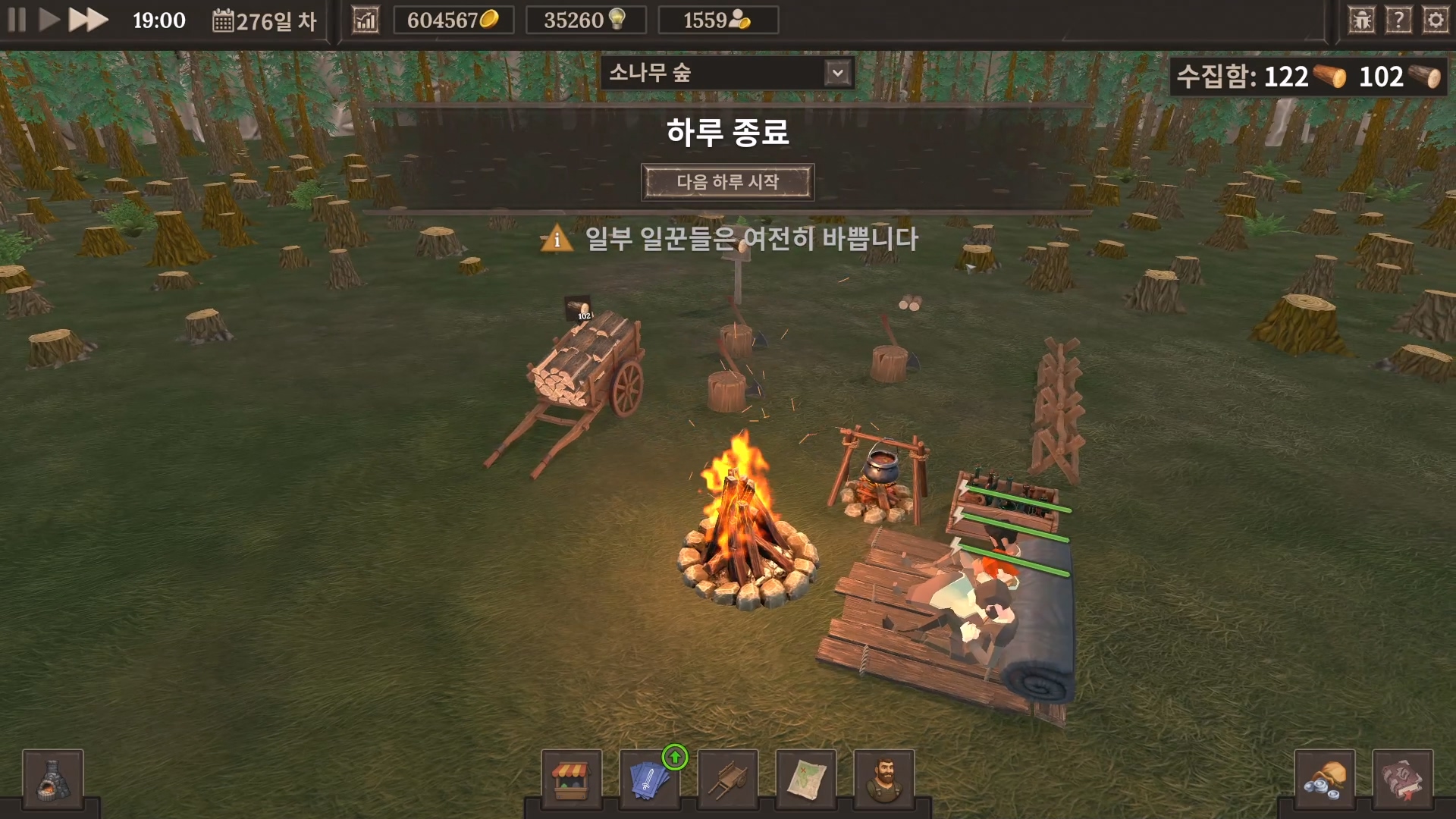
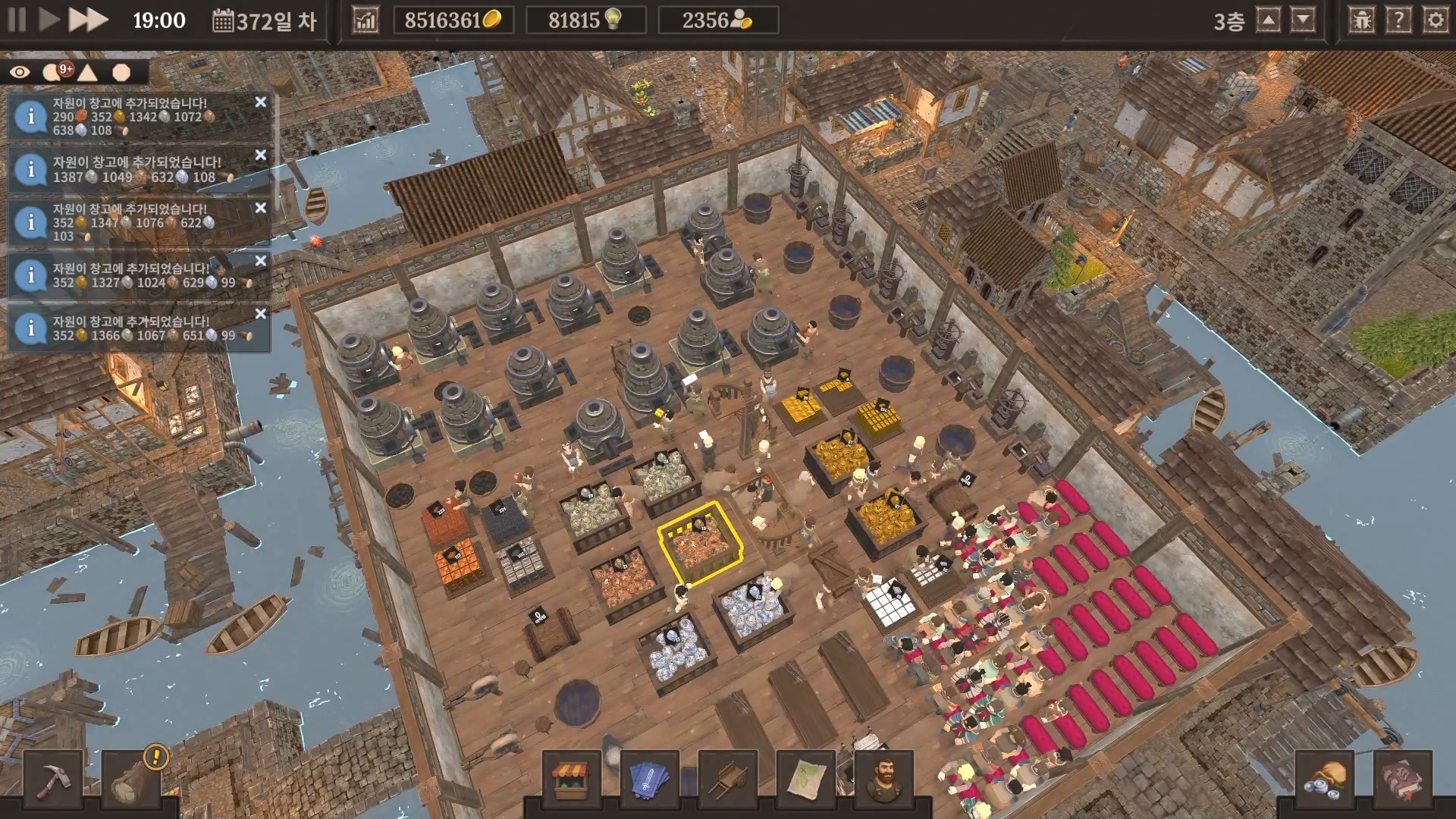
You gradually hire enough workers for mass production, and it grows into something like a big-company forge. Seeing several goods produced at once, and finished products stacking up, you can feel a clear sense of growth.
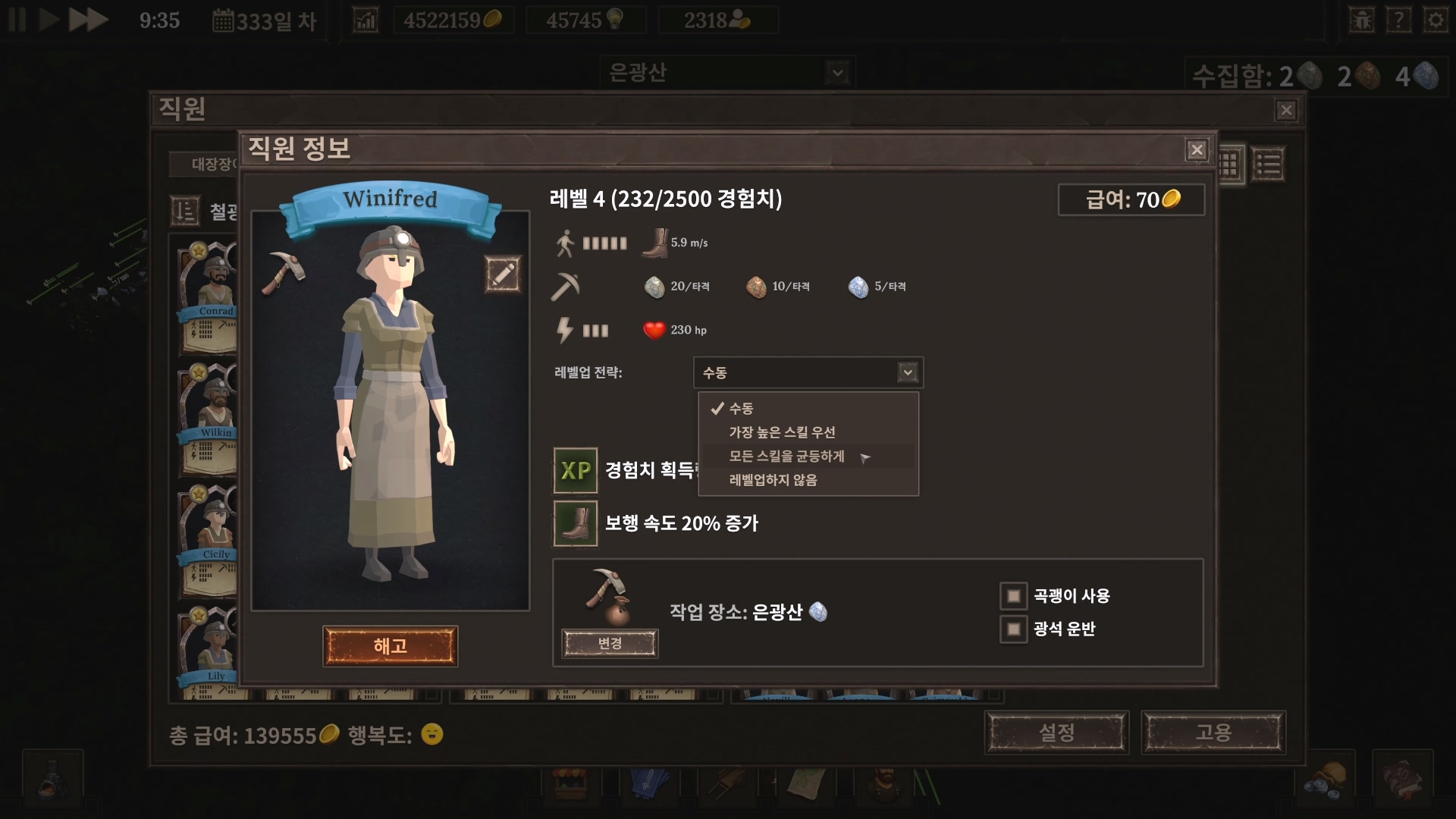
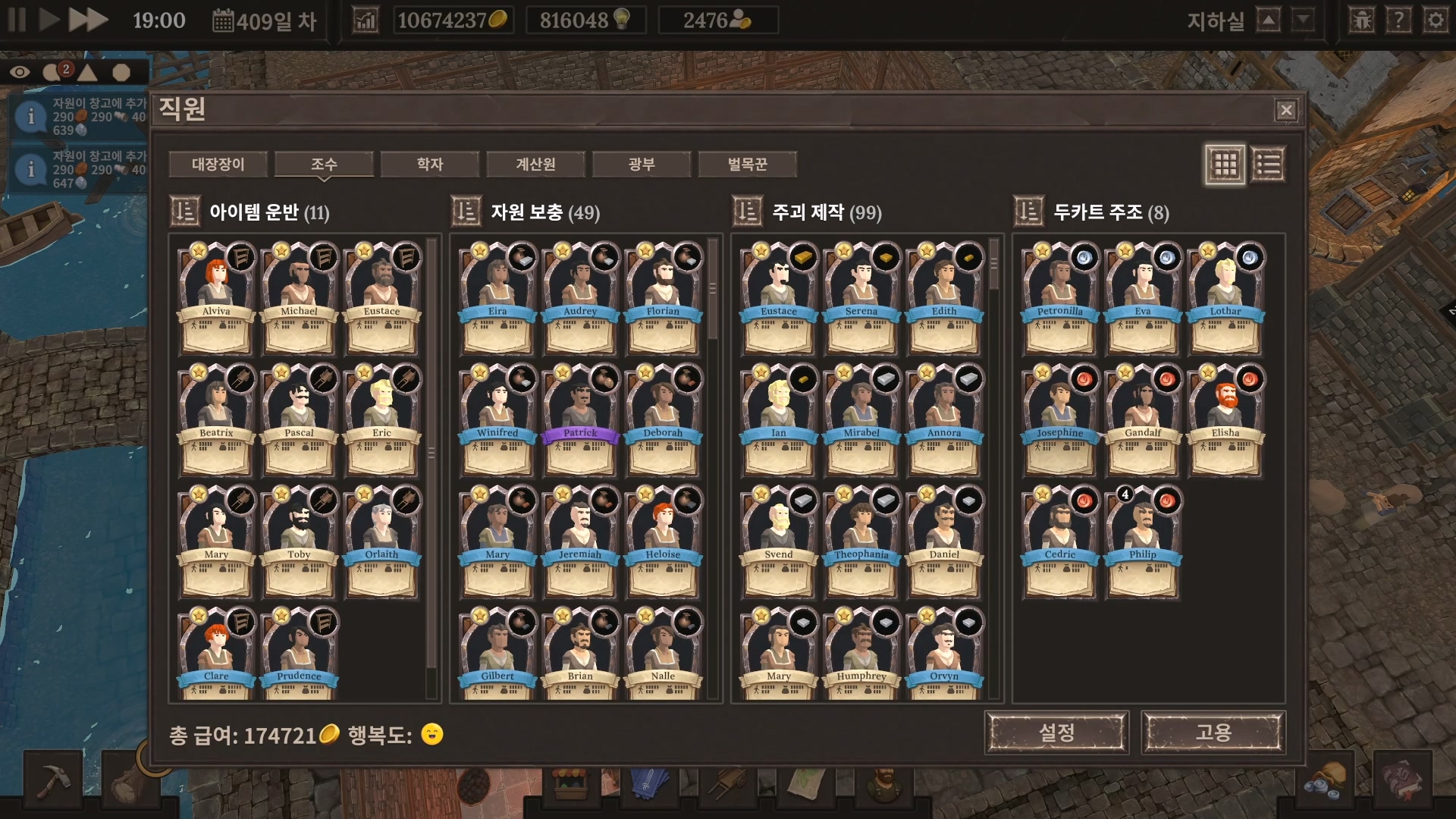
Once there are many workers, though, management gets a little annoying. When a worker levels up you have to raise their stats, and early on I optimized in my own way, assigning stats to fit each worker’s role.
In the later game so many workers kept leveling up that raising stats one by one became a chore. In the end I gave up on fine-tuned optimization and used the automatic setting so the stats would be distributed evenly.
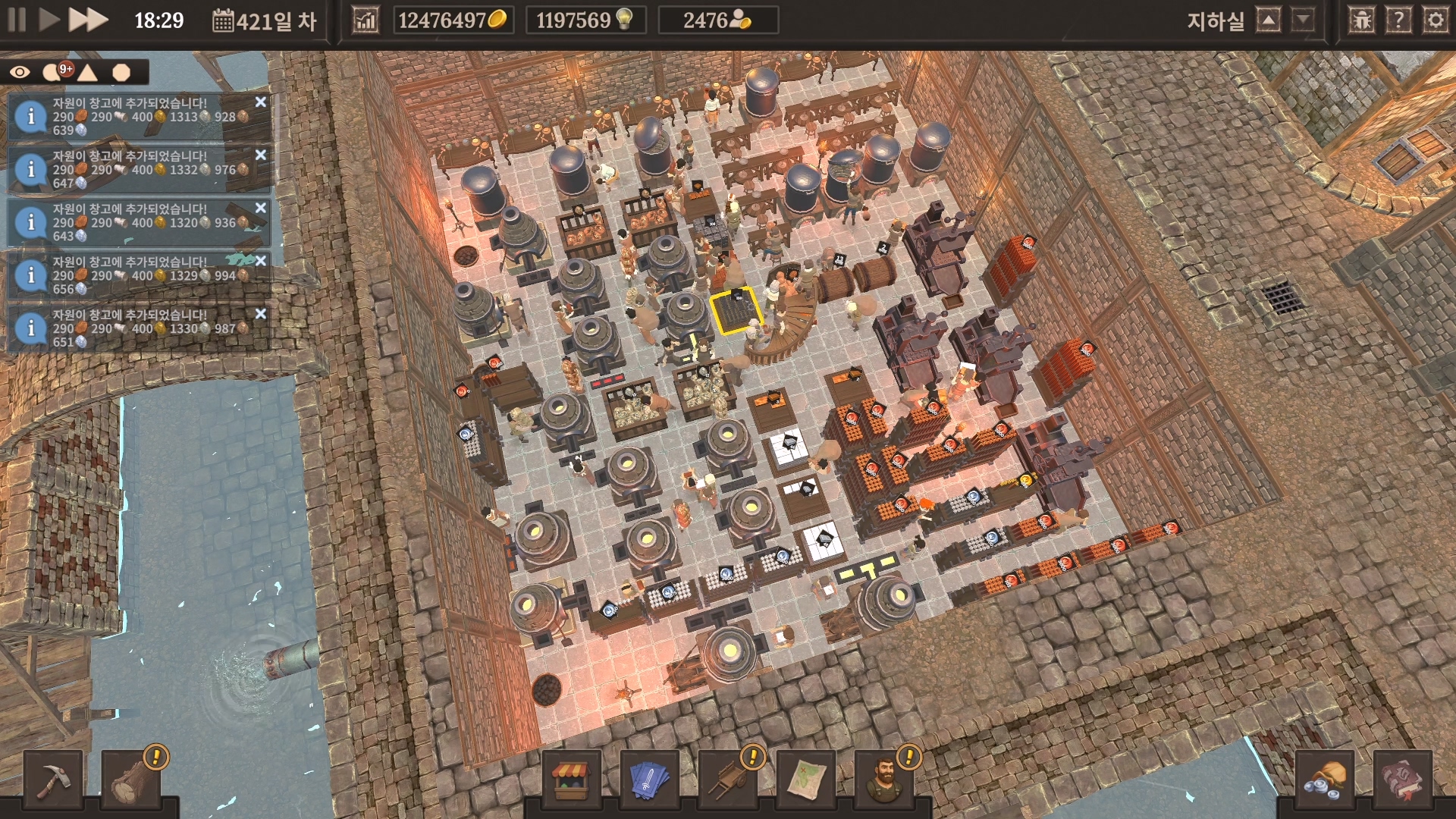
Anyway, the later game also brings frame drops, and the inside of the forge can feel a bit hectic. Rather than moving toward a clear new goal, the focus becomes finishing elements you have not achieved yet, so immersion falls as well.
If I judge addictiveness by the appeal of another playthrough, I do not want to start over from the beginning once I have finished this play. The disappointing part of this kind of game is that once you have experienced every element once, you are not inclined to play it again.
At least the one I played recently, ‘[PC Game Review] Timberborn <Beavers change the terrain. Benefit beavers widely!>‘, had a separate faction with a somewhat different system. I think I played more of it because I wanted to experience that new faction.
‘Blacksmith Master’ is short on elements that draw you into a new way of playing like that. All things considered, I think the addictiveness, judged by another playthrough, does fall a little short.
3. ‘Blacksmith Master’ Closing
On the surface, it feels like a follow-up built on the structure of ‘Tavern Master’. I would like to give ‘Blacksmith Master’ a favorable review as well, as a game you can play in a short, substantial run.
As with the previous title, there is a part of the later game where immersion drops, and once you have experienced all the content the appeal of another playthrough drops as well. Even so, it is a well-made game overall.
As someone who personally wants to develop games, I also find it quite a major role model. There was a lot worth learning from, especially for me, a player who likes the construction and management genre and who aims to become a developer.
It includes a variety of elements, and it is built so you can feel growth from several directions. You raise the grade of goods, unlock new products, and expand the forge and the resource sites. Workers and production facilities keep increasing, and you create a forge on a scale entirely different from the start.
A good deal of the work is automated, so there is time spent waiting for production to finish. Even so, it is set up so you can move several pieces of content forward at once, and I came away impressed that it kept the time you spend only waiting to a minimum.
It is a management game that keeps complex operations from becoming overly difficult, so you can enjoy it lightly and finish. If you get the chance, I think playing it once is a fine idea.
That is all. I wish you luck on the road ahead. Thank you.