

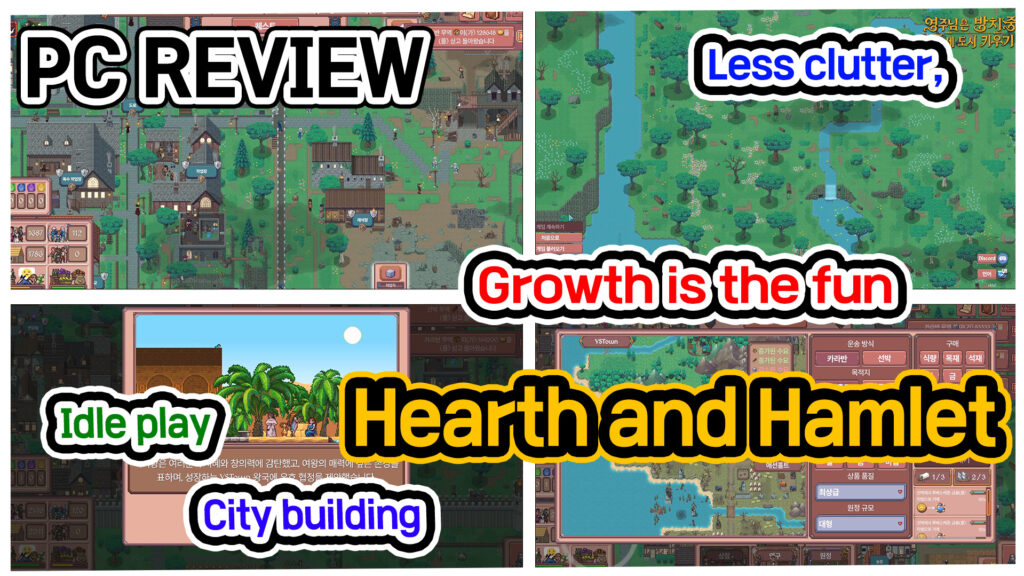
This review is an AI translation of the original Korean post. Proper nouns, and some game titles and expressions, may differ.
1. ‘Hearth and Hamlet’ Overview
I bought it because it looked like a light game. It was a light game, but finishing it took considerably more time than I expected. If you asked whether it was a carelessly made game, I would say it was not.
If anything, it was a distinctive work that made me think a little about what a game is. There is also something peculiar in the way the Korean title and the English title seem to go their own ways. From the title alone I wondered if it was a game you leave completely idle, but in practice it is not a fully idle game.
If I were to name similar games, there are others where you build an estate, but I hesitate quite a bit over calling this a typical building-and-management game. Even so, I think the management side is definitely there.
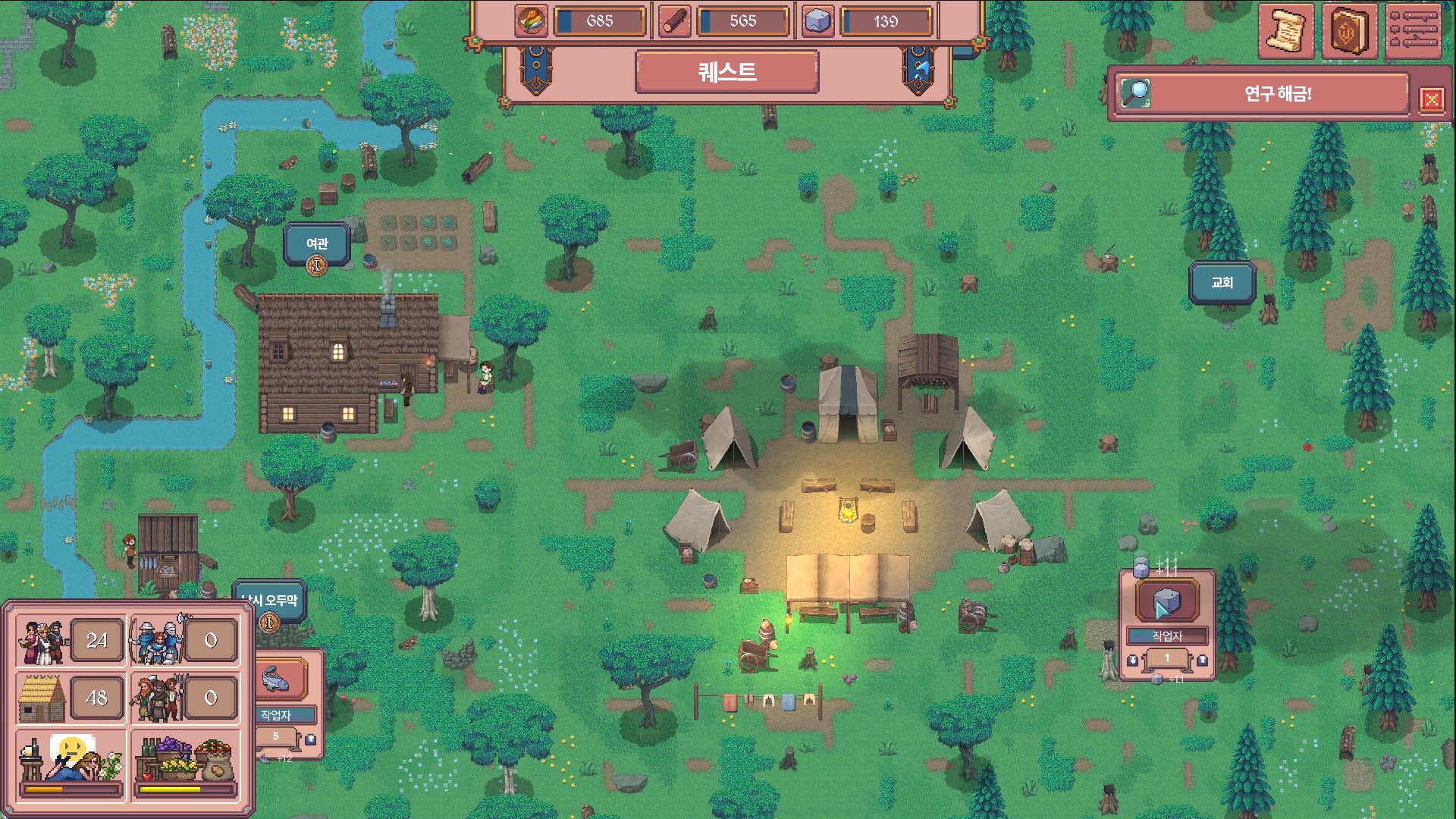
The Korean localization was done well enough that I had no major trouble playing through it. I did find one place where the terminology was inconsistent, but it was not enough to interfere with play.
There is a story of sorts, and a little text you have to read, but nothing burdensome. I did not run into any particular bugs while playing, and I was able to play stably through to the end. On to the review.
2. ‘Hearth and Hamlet’ Review
2.1. Features
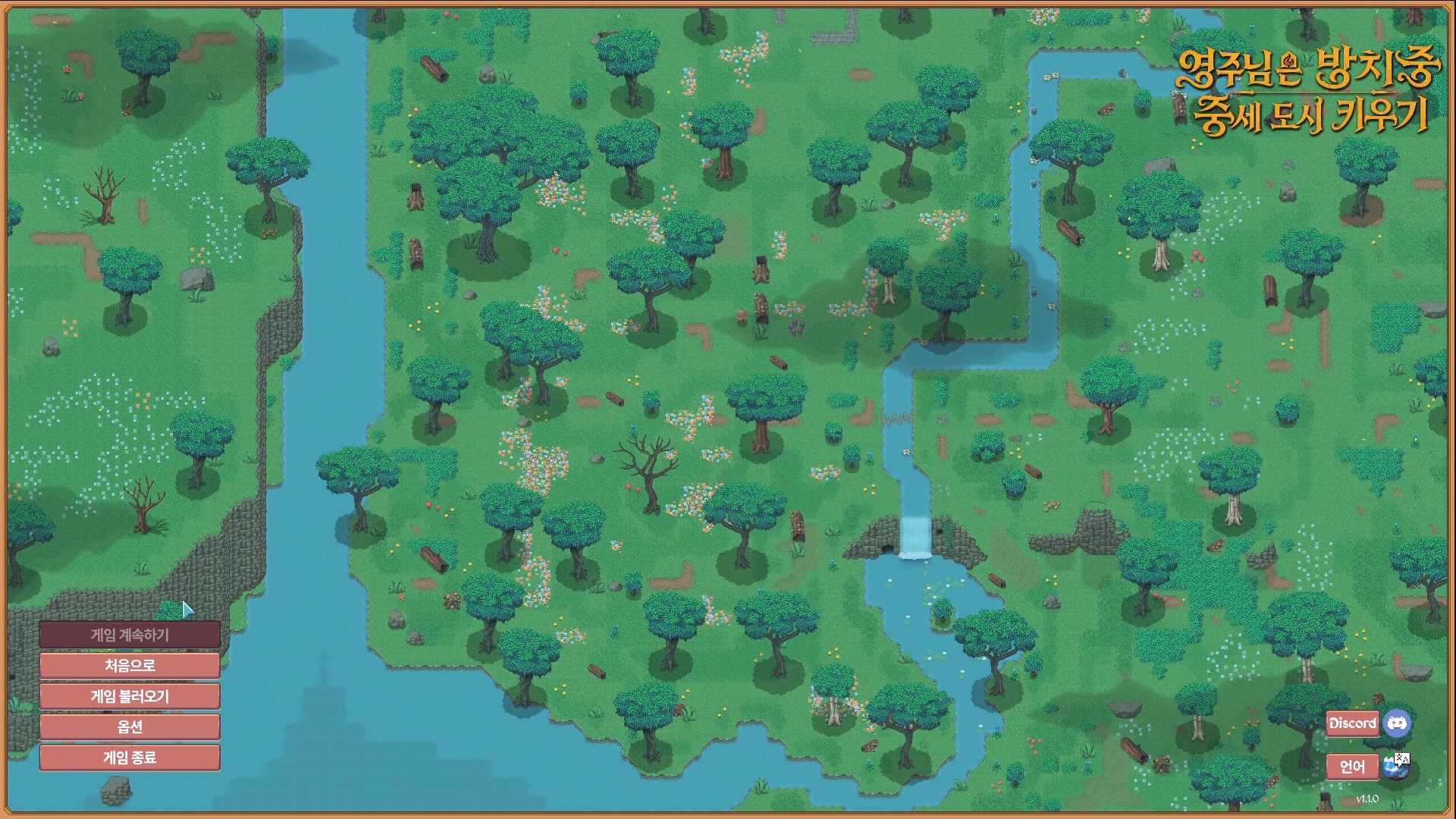
The Korean title makes you curious about what kind of game it is to grow a medieval city while leaving it idle. I also wondered whether it was a well-chosen title, but at least when I was choosing the game it made me think, “Is this a game I can play lightly?”
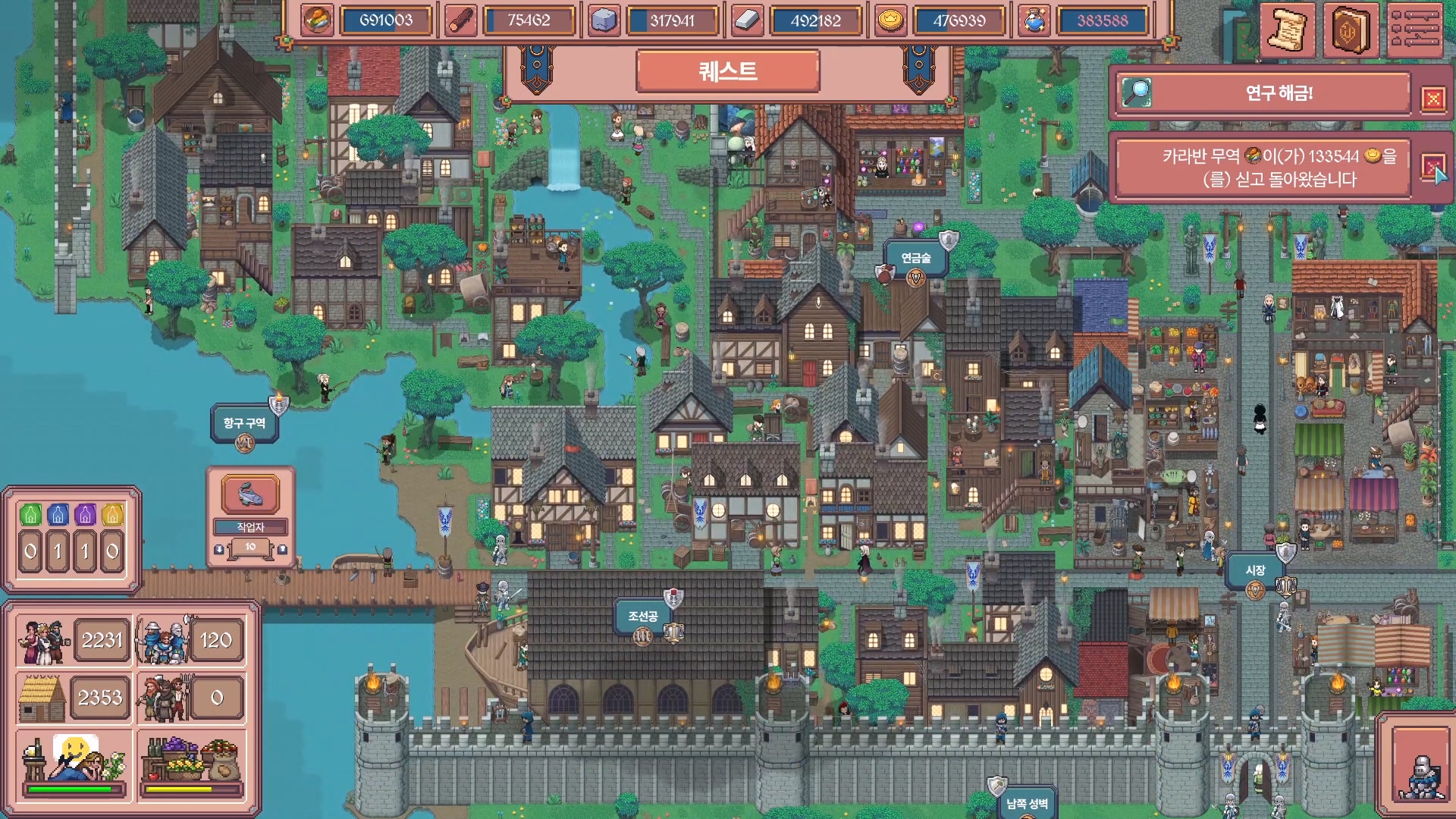
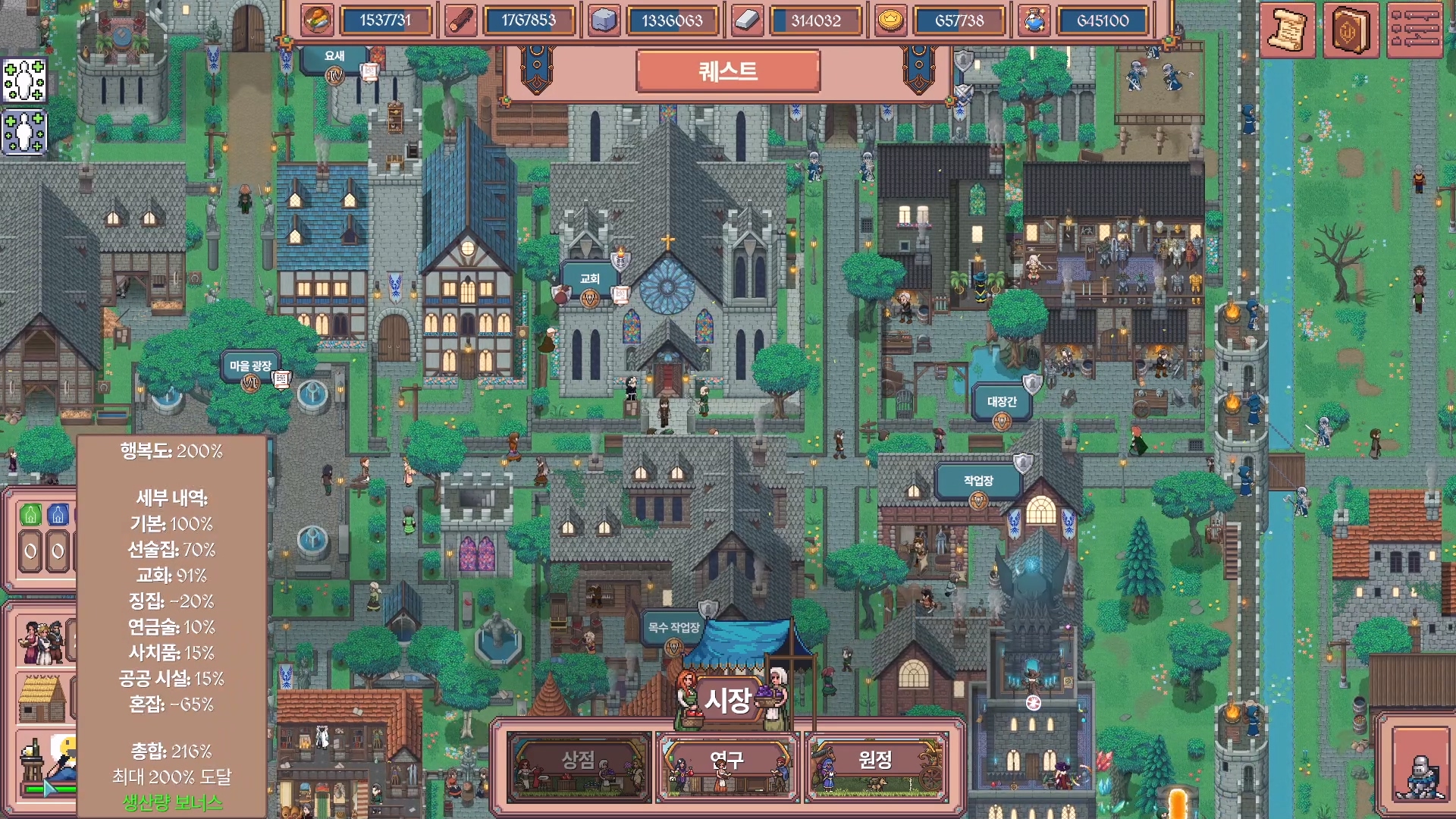
The graphics give the feel of an older RPG you have seen somewhere before. They strongly carry an atmosphere like Gensei Suikoden (a 1997 top-down martial-arts RPG), a feeling of having surely seen it somewhere while still being unable to say exactly what it is.
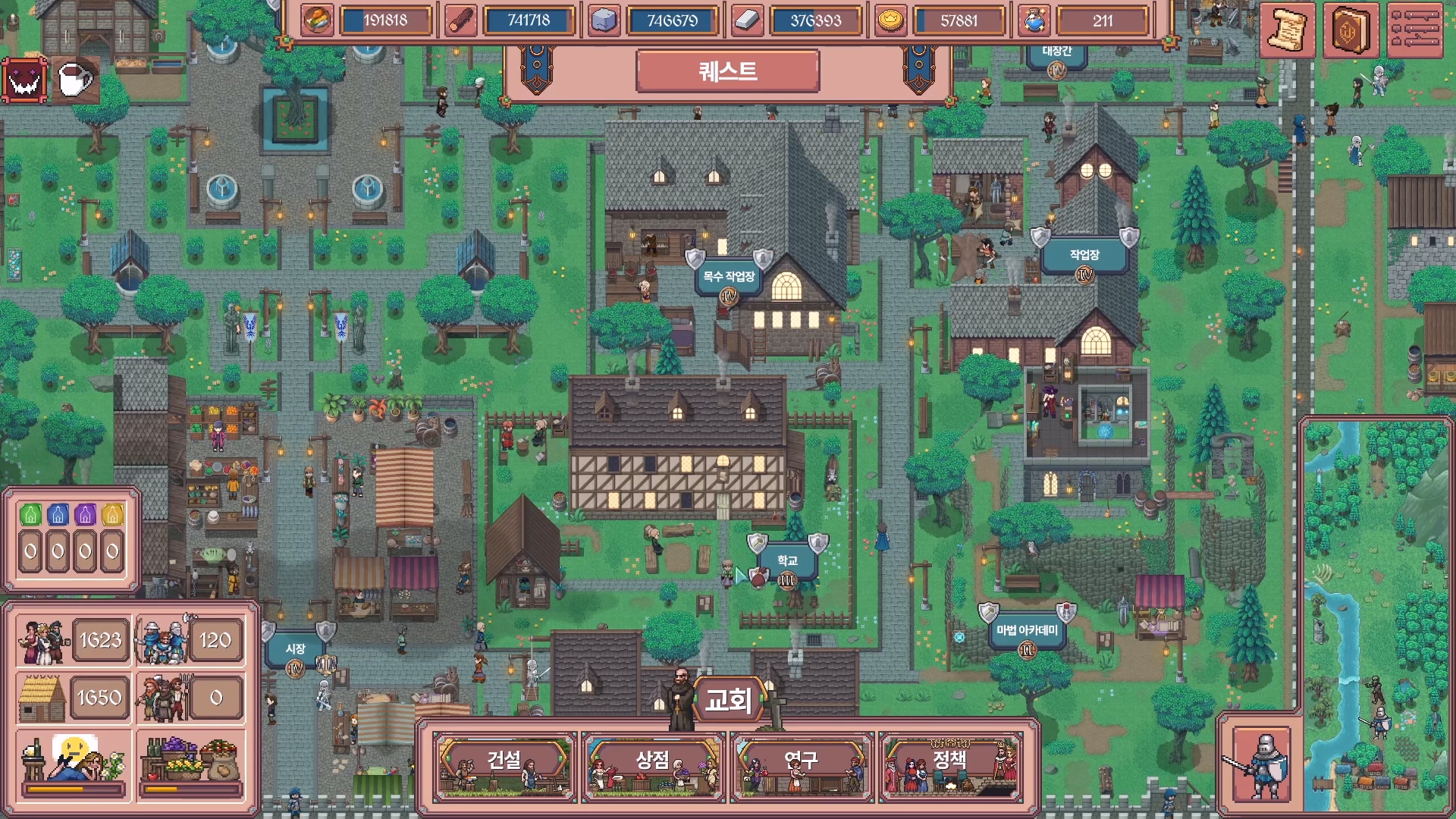
I am not sure it is right to call a building-and-management game linear, but this game’s progression is quite linear. It feels as if many elements were boldly cut from the building-and-management game you would normally picture, leaving only what was needed.
If you asked what was left, resource management would come first. It starts with wood and food, resources you often see in estate-management games, and expands as you go into resources such as stone and iron.
It gives you quests, and new elements unlock as you work through them. You use what you unlock to raise production efficiency again and advance to a higher stage, and the game continues that way.
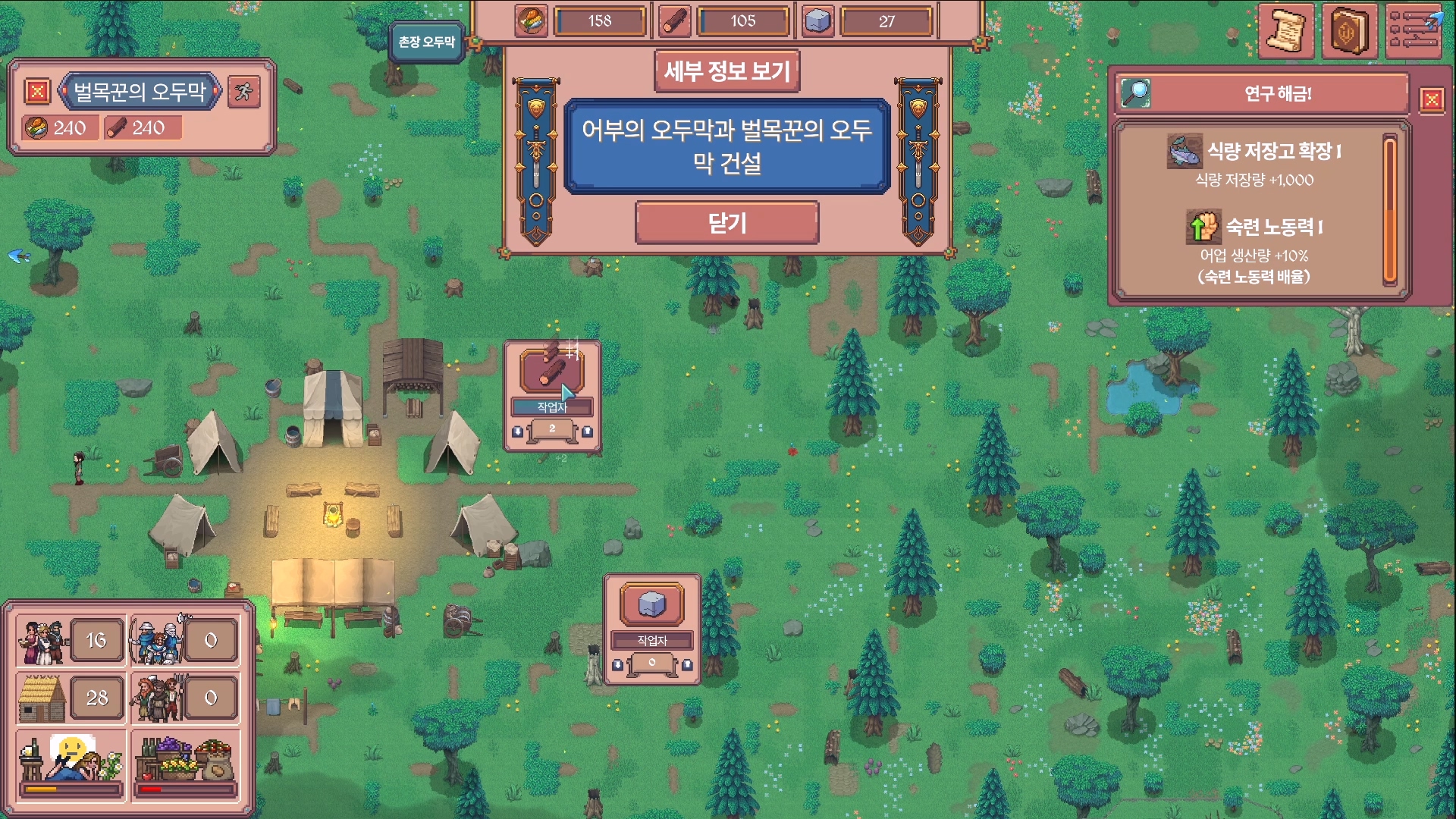
There are two main ways to gather resources. You can assign workers to a resource so they gather it automatically, or you can hover the mouse yourself over that resource’s button.
At first I thought I had to keep clicking to gather resources, but you only need to leave the mouse hovering. You can truly leave the cursor there and do something else, and the resources keep piling up. On this point, the ‘left idle’ wording in the title makes a certain amount of sense.
Early on, the game explains things so kindly that it almost feels like too much. That feeling fades toward the later stages, but what you can interact with is simple and not complicated, so if you poke around, things upgrade naturally and progress continues.
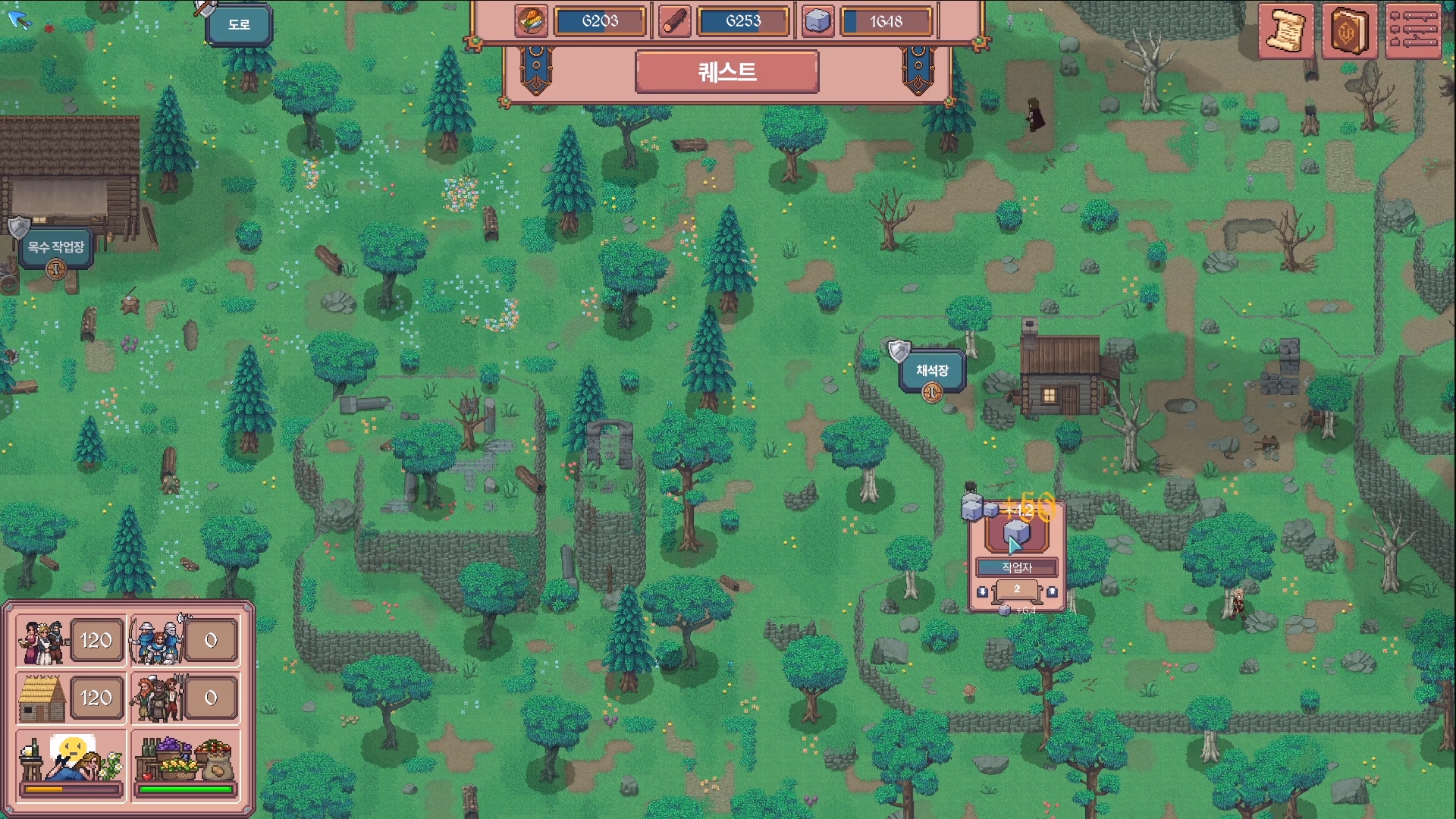
You use the resources mentioned above to raise the various efficiencies. As the city grows, the resources you can produce increase, and so does the amount gathered in the same amount of time.
Work through the quests and new elements unlock, and from what you gain you carry out upgrades one step higher. Repeat that process, and an estate that at first had almost nothing gradually takes on the look of a medieval city.
There is combat, but you do not control units directly. If you have troops prepared, enemies arrive over time on a small battle panel, and the battle proceeds automatically.
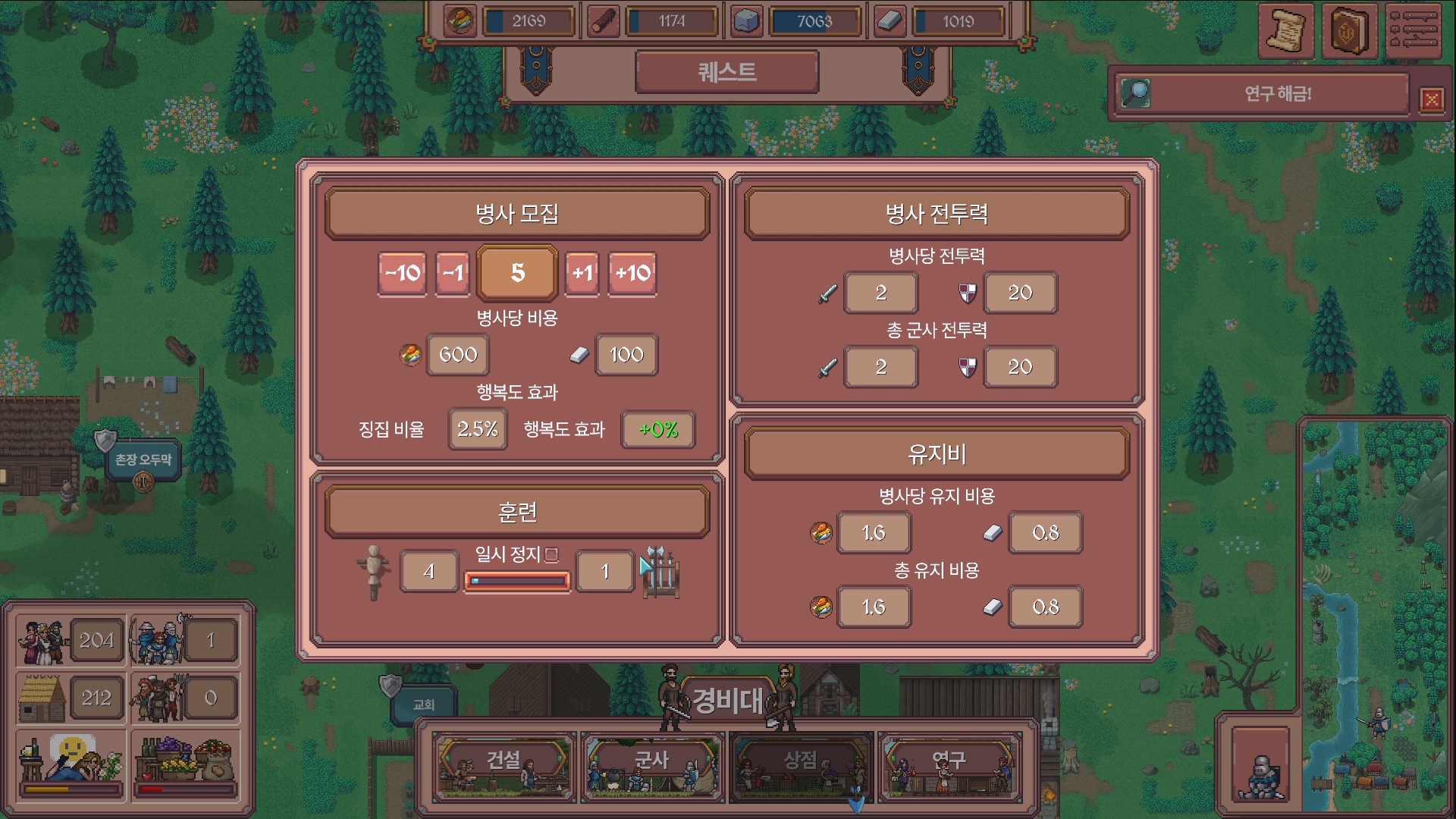
You steadily grow a group that started as only 3 people and develop the city, and once you reach the coronation, one clear is complete.
In short, it seems more accurate to call this a medieval city management game that leaves out much of what a typical building-and-management game calls ‘building’ and keeps only the ‘management.’
In a typical building game, the player chooses a location and places buildings, but in this game most of the spots where buildings go are already set. You are not so much designing the city’s form yourself as managing resources inside a frame that is already made, and growing a predetermined city step by step.
2.2. Graphics and Sound
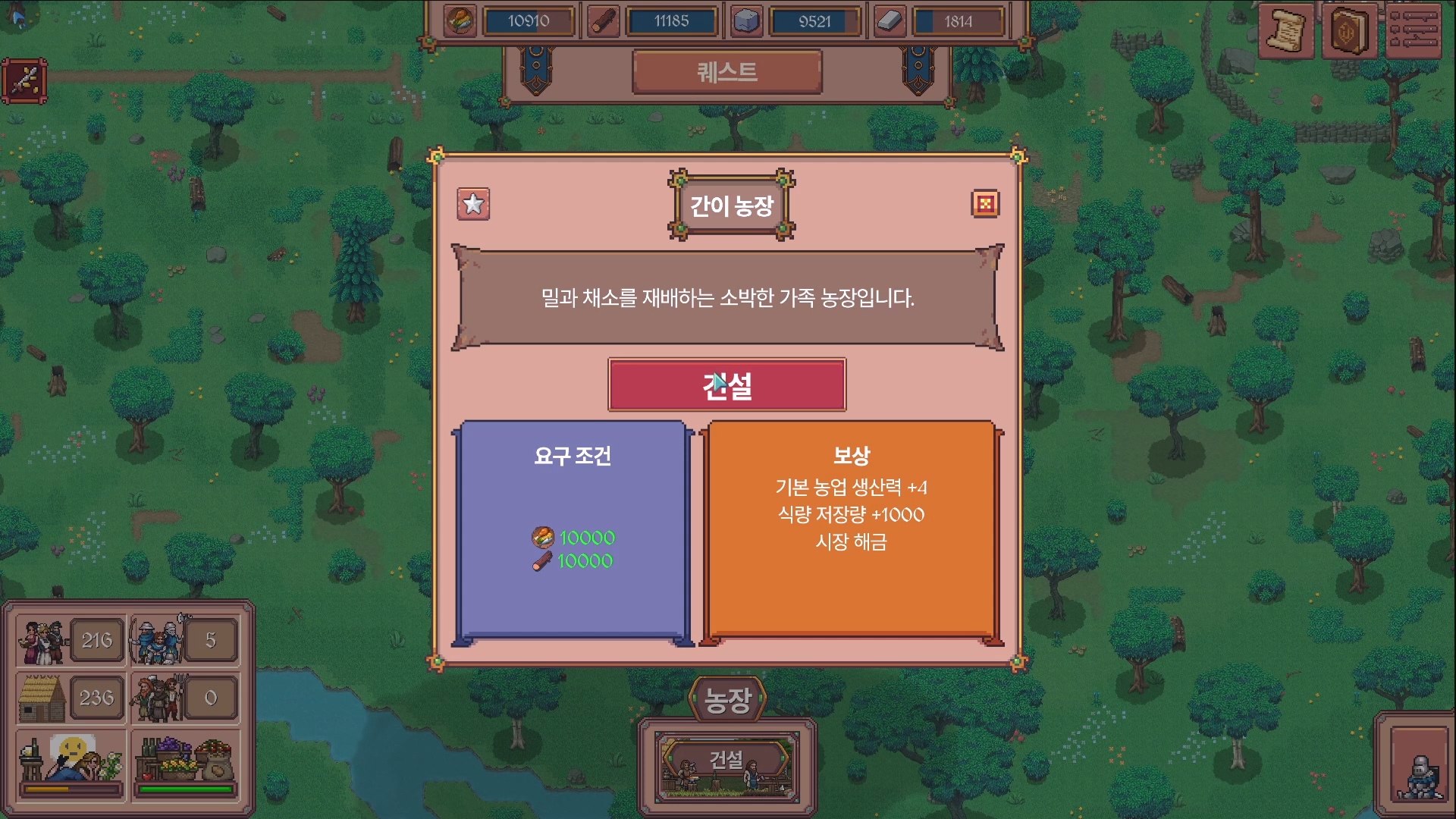
Beyond what is distinctive about the game system, the graphics and effects themselves are clean and impressive in their own way. Even so, they are hard to call graphics that show natural, detailed movement. The character motion honestly feels very much like an indie game.
It feels as if the motions were put together to some extent by moving joints, and yet the objects are varied and the terrain is well composed, so there is definitely a pleasure in watching the city grow.
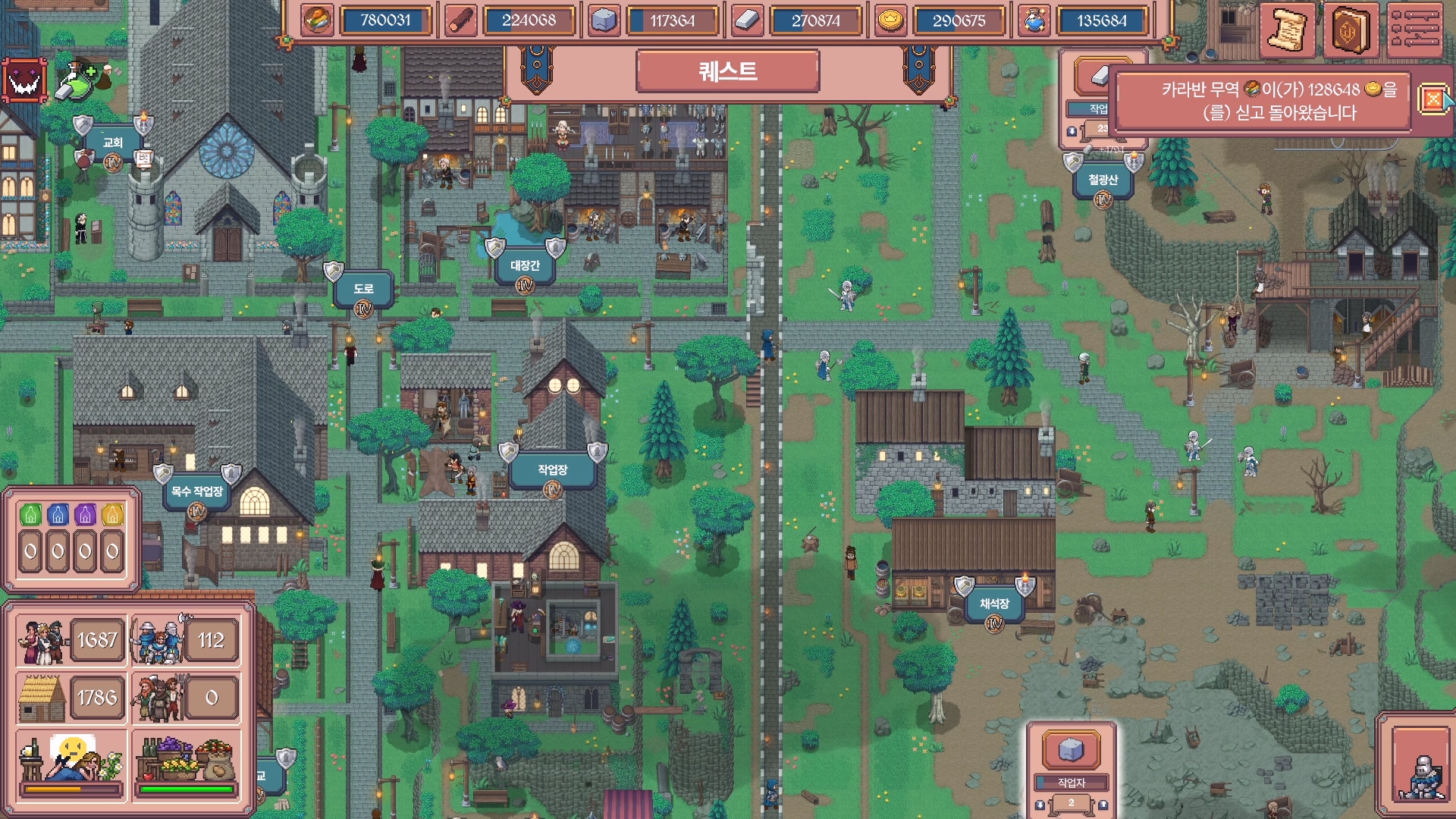
Once you actually start focusing on the game, though, your eyes go mostly to the pop-up UI and the HUD that shows resources, rather than to the workers and buildings moving in the background.
In the end, even while workers were moving busily somewhere on the screen and the city was developing, my eyes went to the numbers rising over time. Strangely, if you watch the numbers of resources piling up, your eyes keep going back to them.
As for the sound, a soft background track plays on, and a few times it seemed to bring on a little drowsiness. Fortunately, it was not a game where briefly doing something else caused any real problem.
So I also played by doing other things in between, getting a change of air, and coming back. In a way, you could say that fits the game’s idle nature well.
The sound effects make a different sound for each resource when you gather it, and as I played I never felt an effect that was particularly grating or out of place. Overall, I would say it is composed plainly and cleanly, without any part that sticks out badly.
2.3. Difficulty
For difficulty, I played on the recommended standard (?) difficulty. There were 2 higher difficulties, but having cleared the game, I had no desire to raise the difficulty and play again.
From the description, higher difficulties seemed to increase the burden related to resource use and to require more troops prepared for combat. I judge that the city would develop more slowly, and that the overall play time could grow longer.
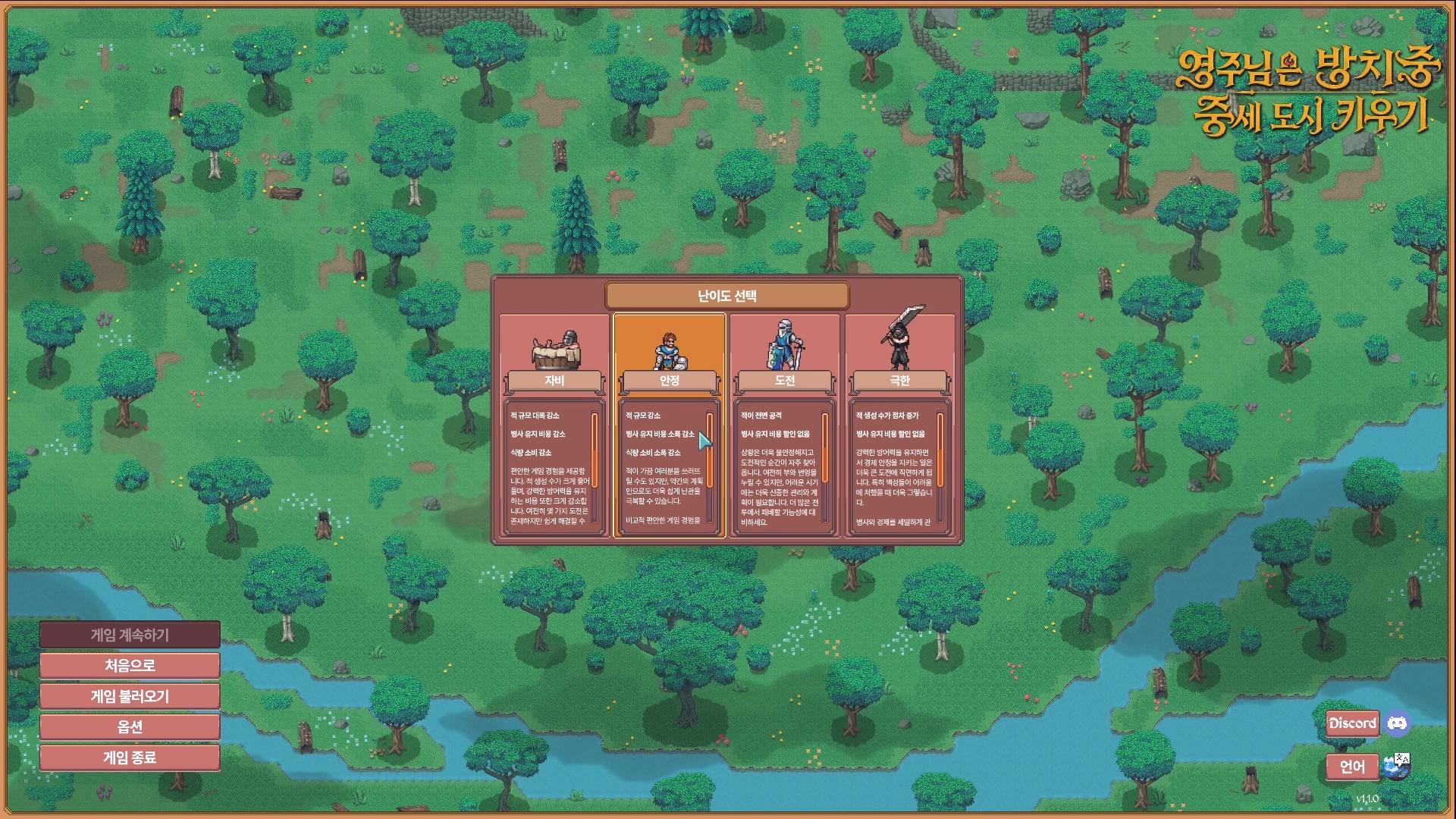
If defeats in combat keep coming, population is consumed, so in some cases I think running the city itself could become difficult. I had no particular desire to create that situation just to check.
It is a game to enjoy lightly, so I did not want to torment myself.
Playing on the normal difficulty, I was able to reach the end without a separate guide. If you asked whether grinding is necessary, I would say that, too, is up to the player in the end.
If you set up the workers and the production structure so resources gather steadily, you can leave it alone for a while and the resources keep piling up. If you want what you need quickly you can step in yourself, and you can also wait at your leisure, so nothing felt particularly difficult.
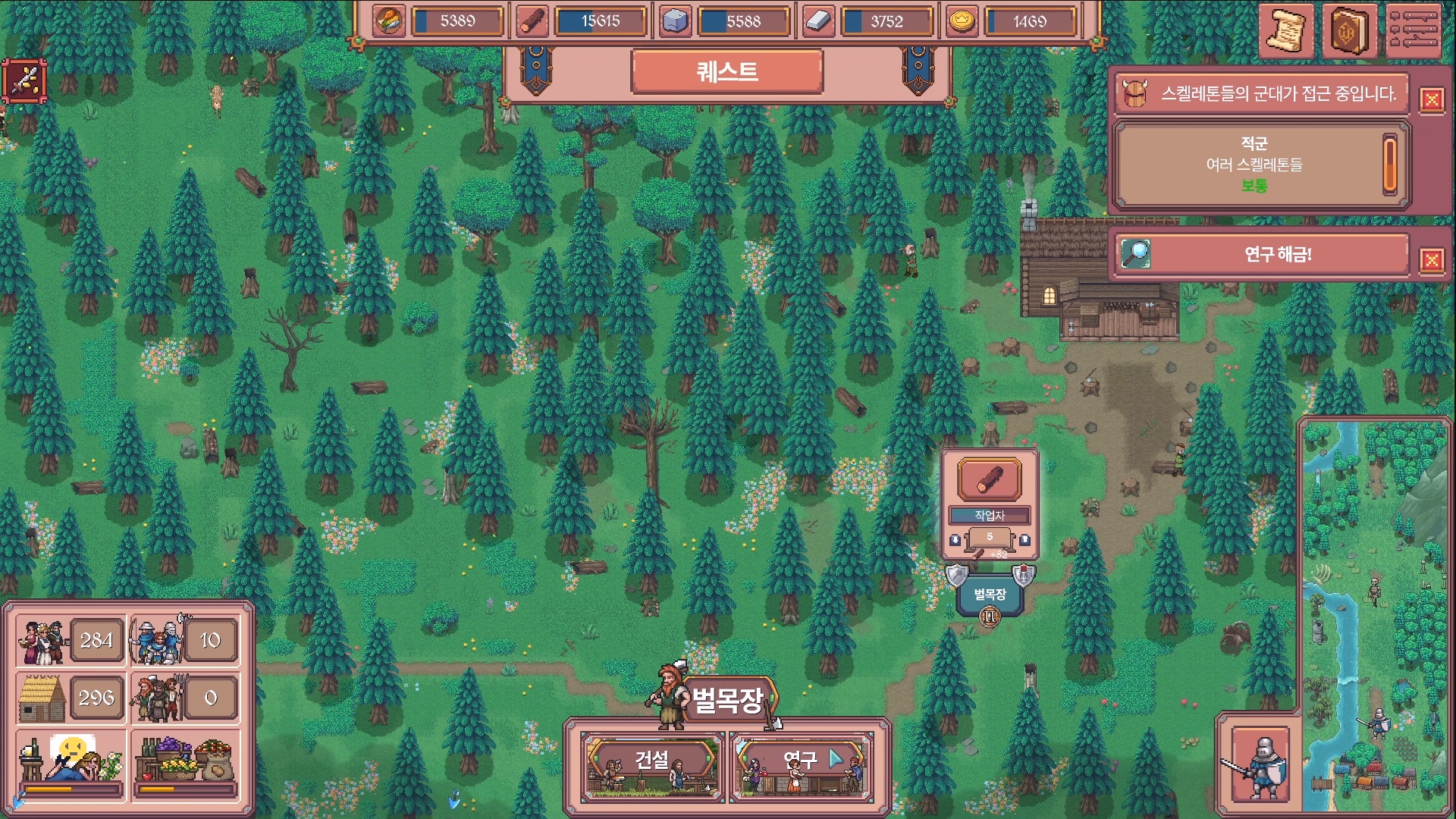
In the end, I do not think the difficulty itself is high. It is closer to preparing the resources you need and developing in order along the quests than to demanding hard decisions or complex management.
2.4. Play Time
My total play time is 10.4 hours. Considering that it is a work at 10,000 won or less, I played considerably longer than I first expected.
Honestly, when I thought about the graphics, the sound, and the various elements you can choose, I also found myself thinking, “Do you have to build it out this far to sell it for around 10,000 won?”
There were more elements to choose and grow than I expected, and looking at the graphical composition and how the city changes as it develops, the amount of prepared images and objects felt quite large as well.
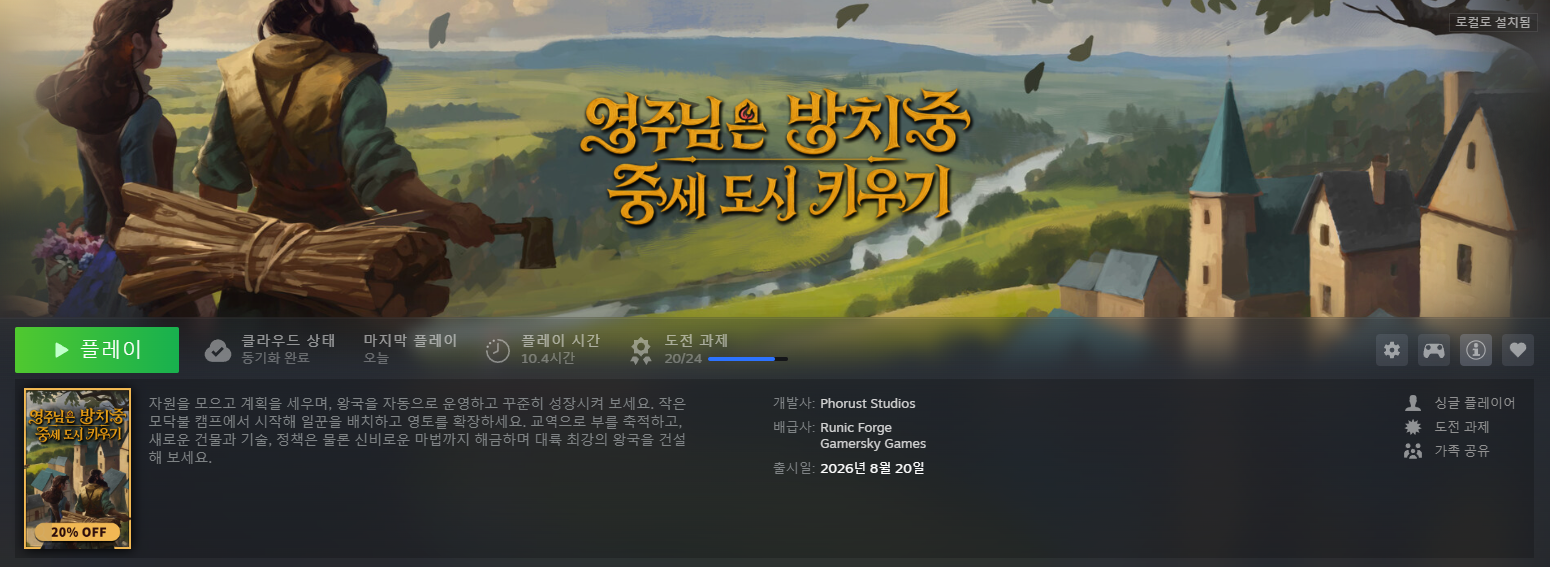
Speaking of how immersive it was, once I started the game I essentially played it through to the end since I already had it on. Of course, I did pause briefly along the way to rest.
Even so, it was quite easy to get immersed overall. Because it is not a high-difficulty game, there was almost nothing to get stressed about, and it was fun to watch the city grow at an easy pace.
There is a sense of achievement in particular when resources start gathering much faster than at the beginning. Because raising production and efficiency shows up right away in the numbers on screen, it is simple, but it gives a clear feeling that you are growing.
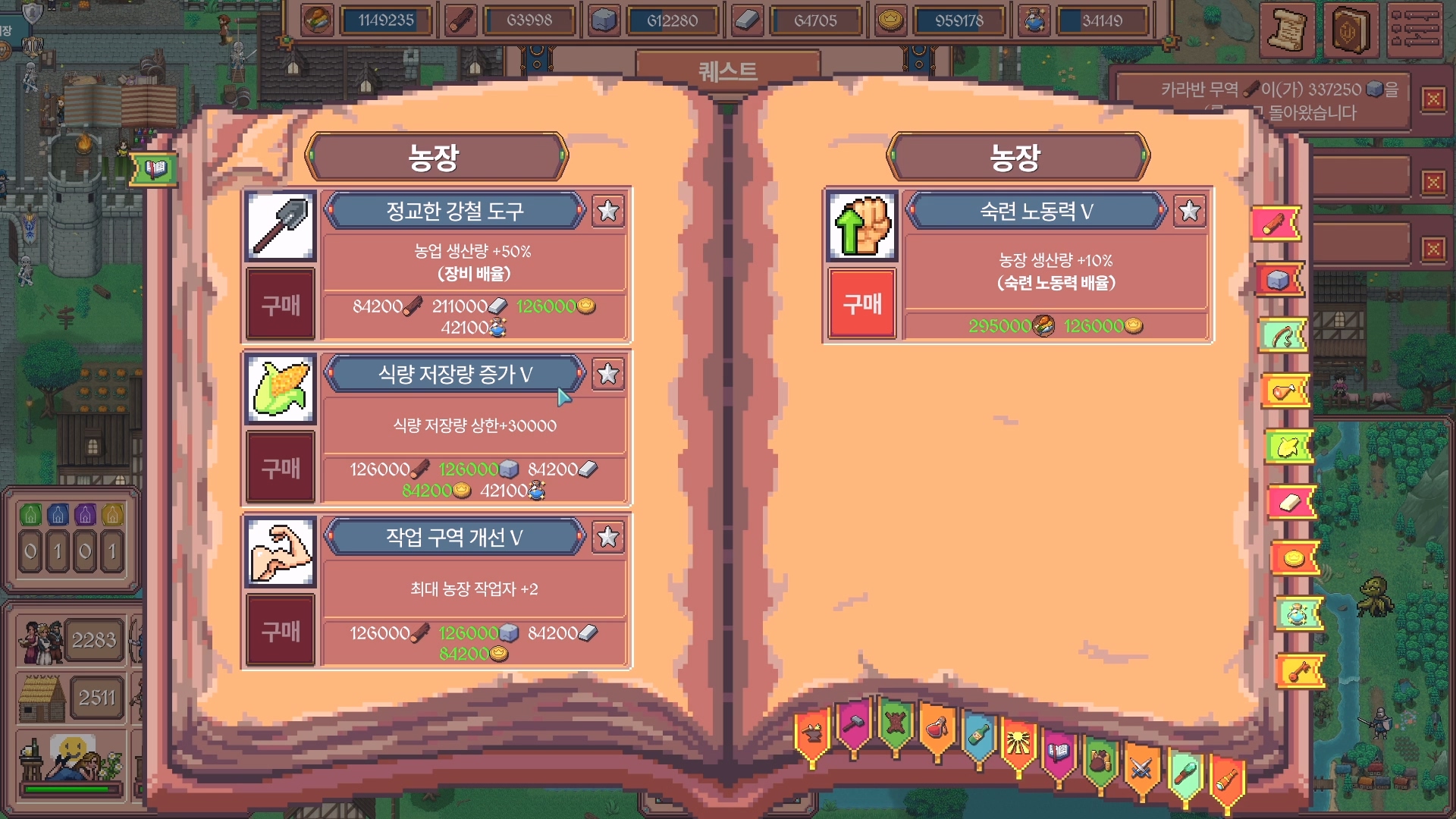
It felt a little different on the question of addictiveness. It had the pull to make me play a game I had started all the way to the end, but if I were told to play it again from the start after already clearing it, honestly I do not think that would be easy.
That is because it is not structured so you enjoy new content on another map or run the city in a completely different way. It also does not appear to have a separate new story prepared, so personally I think clearing it once and wrapping up is enough.
If anything, I see the strength of this game in experiencing, without pressure, the process of one city growing from start to finish, more than in replaying it.
3. ‘Hearth and Hamlet’ Closing
I think of it as a snack of a game, one you can start lightly and finish lightly. I did not want to raise the difficulty and torment myself, and thinking it over after clearing it, that choice seems to have been right.
Clear speed can change depending on how you manage resources, but I played at a relatively relaxed pace.
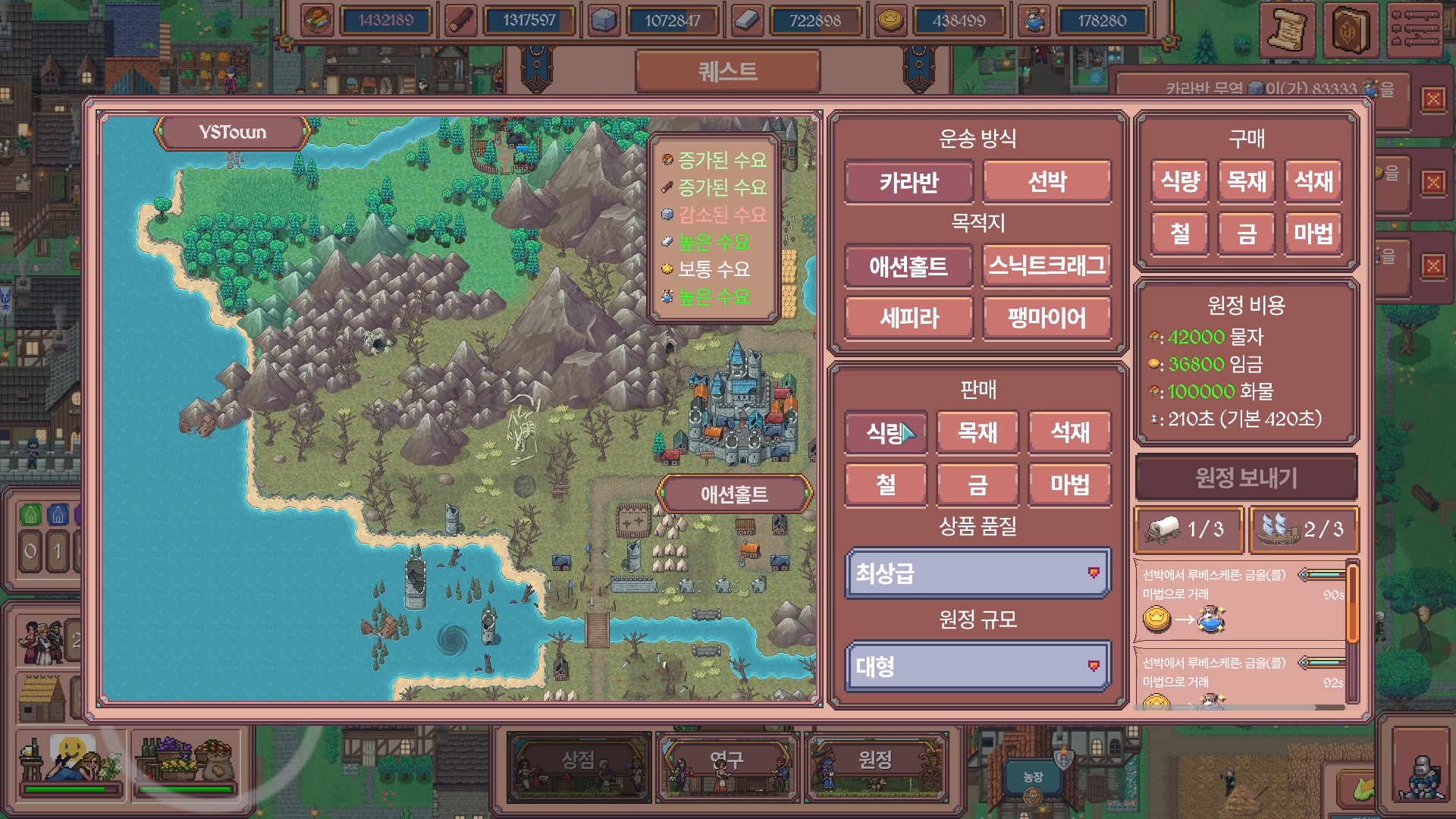
Even so, I tried to raise resource efficiency as far as I could by using trade. I do not actually know how efficient that was, though.
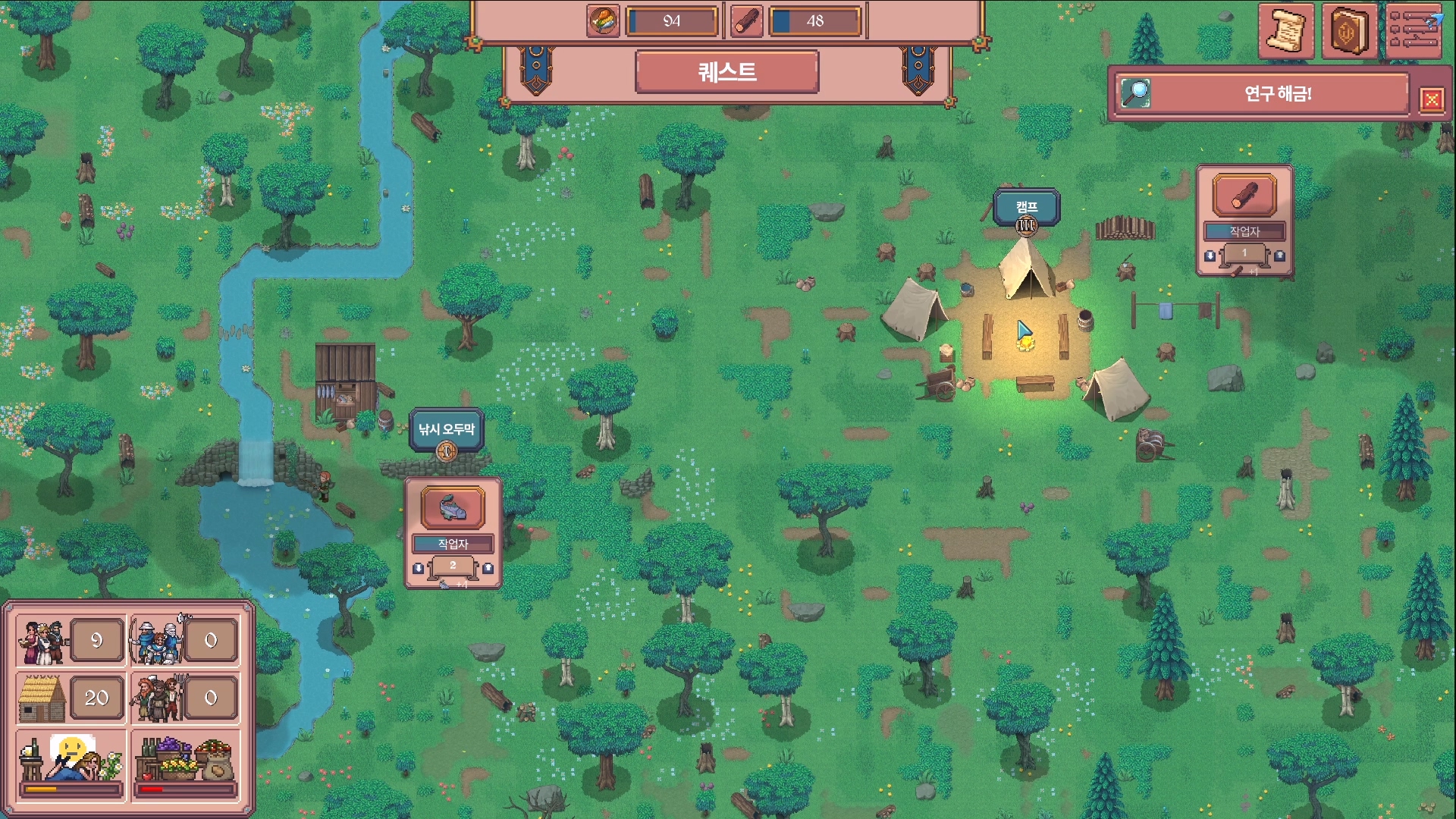
In a place that at first did not even properly have tents, buildings gradually increase, walls go up, a university is established, and in the end a castle is completed as well.
There is definitely a pleasure in growing it, and there is clearly resource management in it as well. I think it is a game made light by removing a good deal of the complicated elements of a typical building-and-management game and trimming it down well to only what was needed.
The player is not so much free to design something as left with no choice but to move along the frame and the guidance the developer set in place.
So I think some people might think, “Is this the end?” or “Can you call this a game?” From my point of view, though, I think it is very much a game.
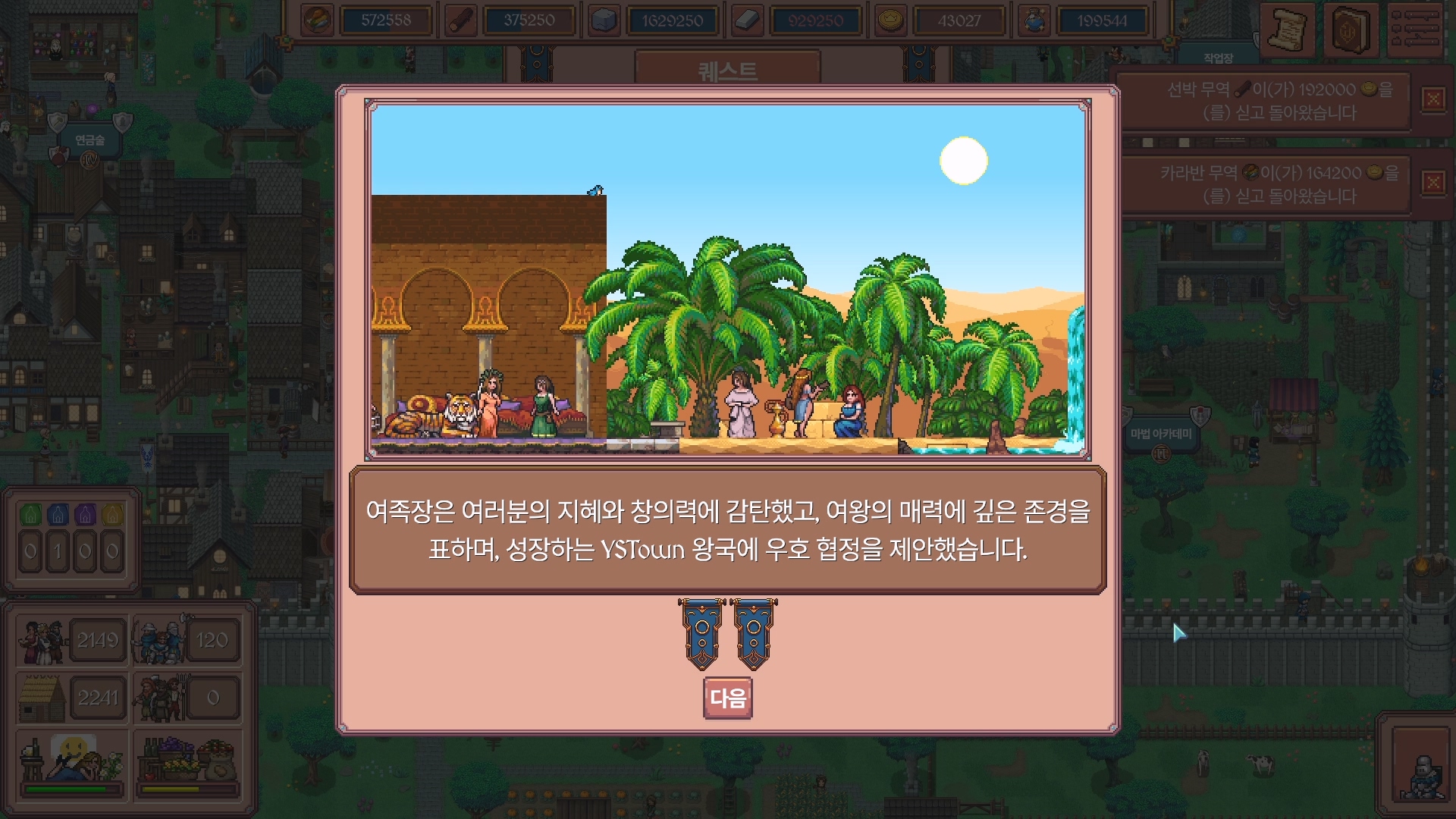
Repetition increases toward the later stages, so boredom could set in, but in my case the game ended before that feeling built up much. So I also thought it finishes at a fitting point.
If you are looking for a slightly more complex and substantial medieval estate management game, one I reviewed in the past, ‘[PC Game Review] Norland‘, I would like to mention.
Conversely, if you want to lightly enjoy resources piling up and a city growing step by step, rather than complex management, I think ‘Hearth and Hamlet’ is a perfectly fine choice as well.
That is all.
I wish you luck on the road ahead. Thank you.