

This review is an AI translation of the original Korean post. Proper nouns, and some game titles and expressions, may differ.
1. ‘Mr. Prepper’ Overview
‘Mr. Prepper’ is a game I bought not all that long ago, but I had put off playing it. I only briefly played the opening in May 2023 and then set it aside, and only recently started again and finished it.
In terms of genre, I would call it a side-scrolling survival and crafting game. I am not sure how large a part the survival element actually plays, but it does seem clear to me that this is a game centered on exploration and crafting.
As the most similar game, ‘[PC Game Review] This War of Mine‘ comes to mind. For one thing, that is so in that you explore and craft on a side-scrolling screen. In the way you gradually upgrade your own space and build a comfortable life, it also has something in common with several games I reviewed before.
In any case, it officially supports Korean localization, so I had no language trouble while playing. Even so, because it is a game built around a mystery, some parts of the progression felt unclear.
I ran into a bug once while playing. Even after the fight in the desert area ended, the trigger for the battle being over did not fire, so the car menu would not activate. In the end I had to load my save once and continue again.
2. ‘Mr. Prepper’ Review
2.1. Features
It is a game with a story. If you ask whether the story is important because of that, it is hard to say it takes up that large a share. It can be called important in that the game has an ending. From my personal point of view, I do not think the story is the main enjoyment of the game.
The exact reason cannot be known, but the protagonist fell into disfavor while trying to escape government surveillance, and the story begins with the protagonist under watch in a particular house. An inspector visits the house regularly and censors the protagonist’s daily life and belongings.
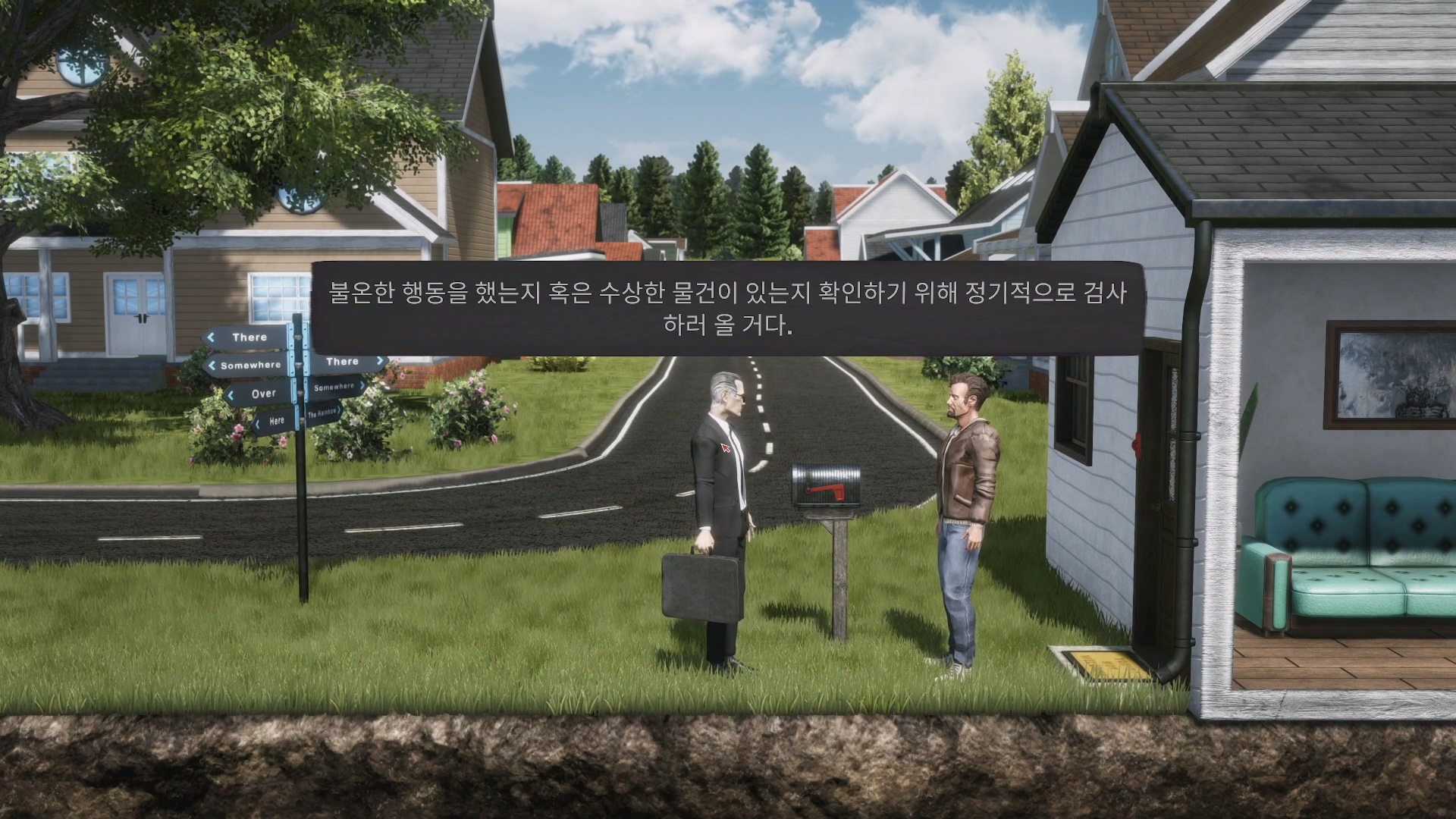
Early on, you have to make a little effort to get through the inspections safely. It teaches the basic ways to respond in a tutorial format, but in my case I still went through several rounds of trial and error during that process. After that, the level of inspection also rises gradually as you progress through the game.
At first they check whether there are any illicit items, but later they also check whether anything among the items that were originally in the house has gone missing. They go further and check water and electricity usage as well, to see whether you used more than the standard.
What I find a little questionable is that I cannot tell how you are supposed to live with no real living expenses to speak of. In the end the protagonist grows crops in the underground bunker or explores the forest, and lives a self-sufficient life.
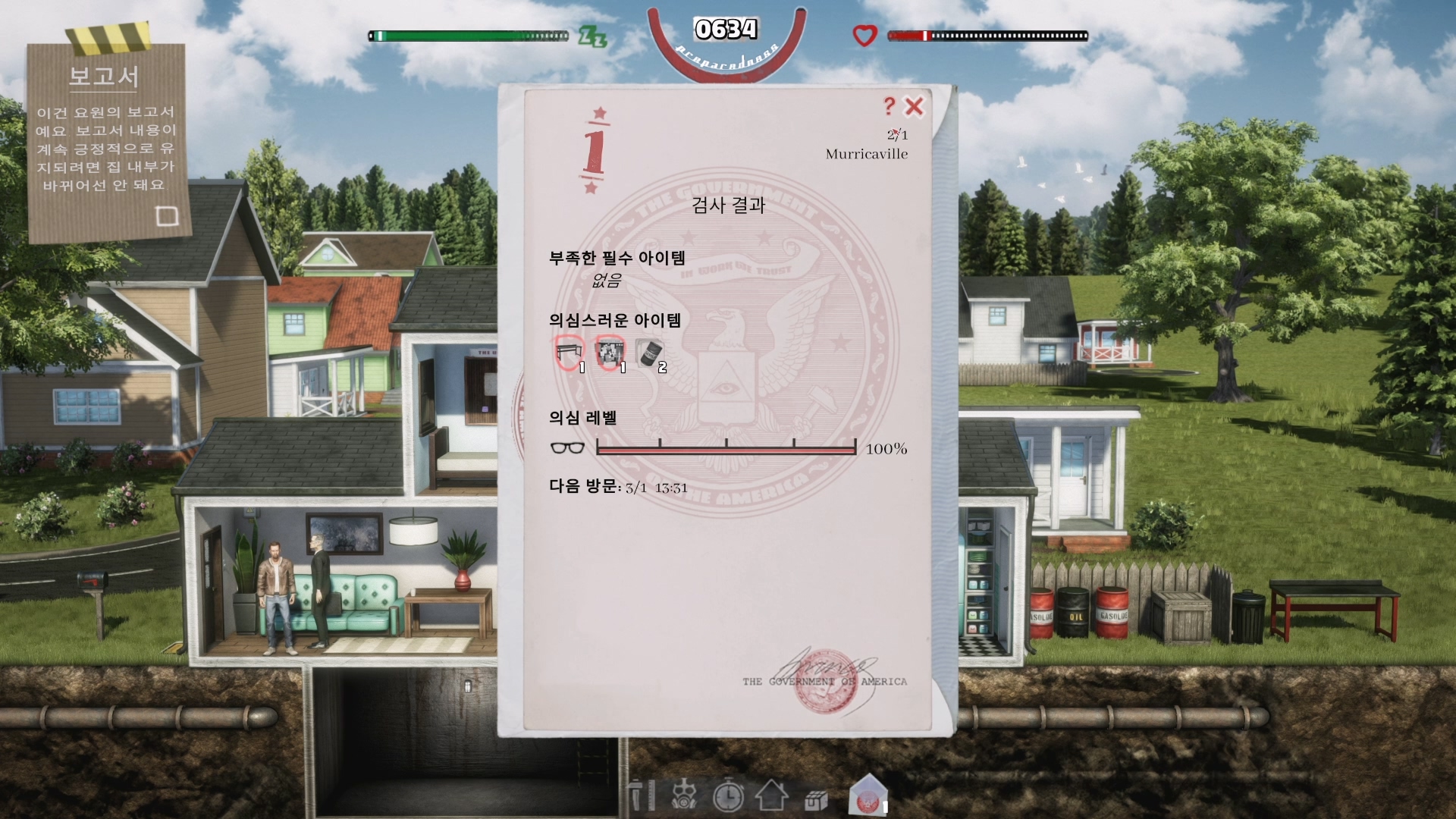
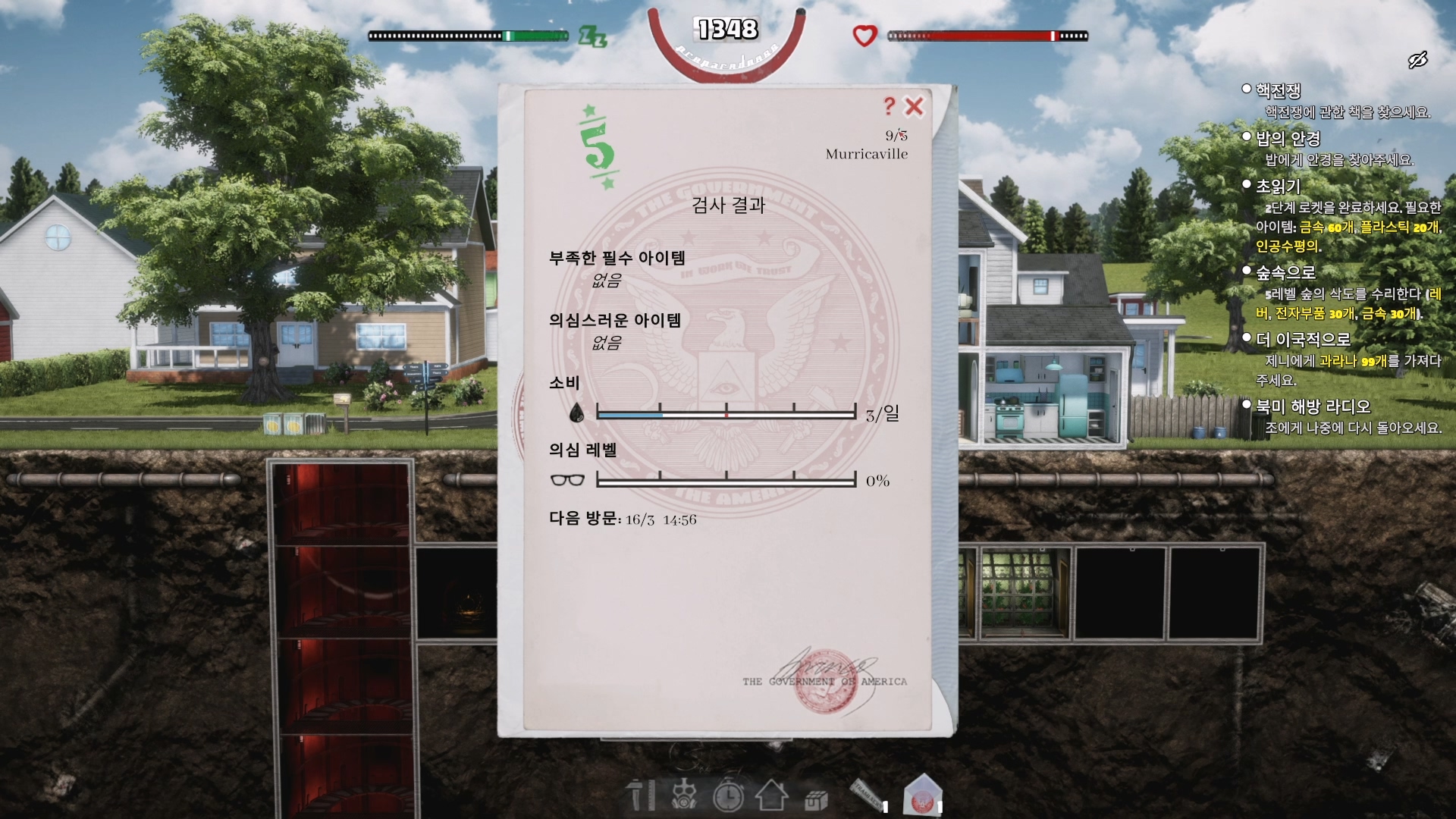
In the later part, even the items you are wearing and the goods stored in drawers become subject to inspection. Worn items can be removed before the inspection, and items in the drawers can be moved into the bunker, so it is not very difficult.
In my case I was keeping a bit too much salt and sugar, and it was truly awkward that that alone drew suspicion. Even so, the suspicion level did not rise enough to become a problem. If the inspector’s suspicion gets high, the visits come at an even shorter interval, so it is something to watch.
That is because it is very hard to do other work while an inspection is underway. Fortunately, aside from certain visit days, sudden surprise inspections did not occur on the default difficulty. I do not know whether that happens if you raise the difficulty.
The tutorial teaches only the truly basic points, and you need to figure out the rest gradually by trying things yourself. The fun of that kind of exploration is not always a good thing, though. If you discover a convenient feature late in the later part of the game, you have a somewhat awkward experience.
It often happened that, after I had struggled through the work, I realized too late that there had been a much easier feature all along, or another way to get the materials I needed.
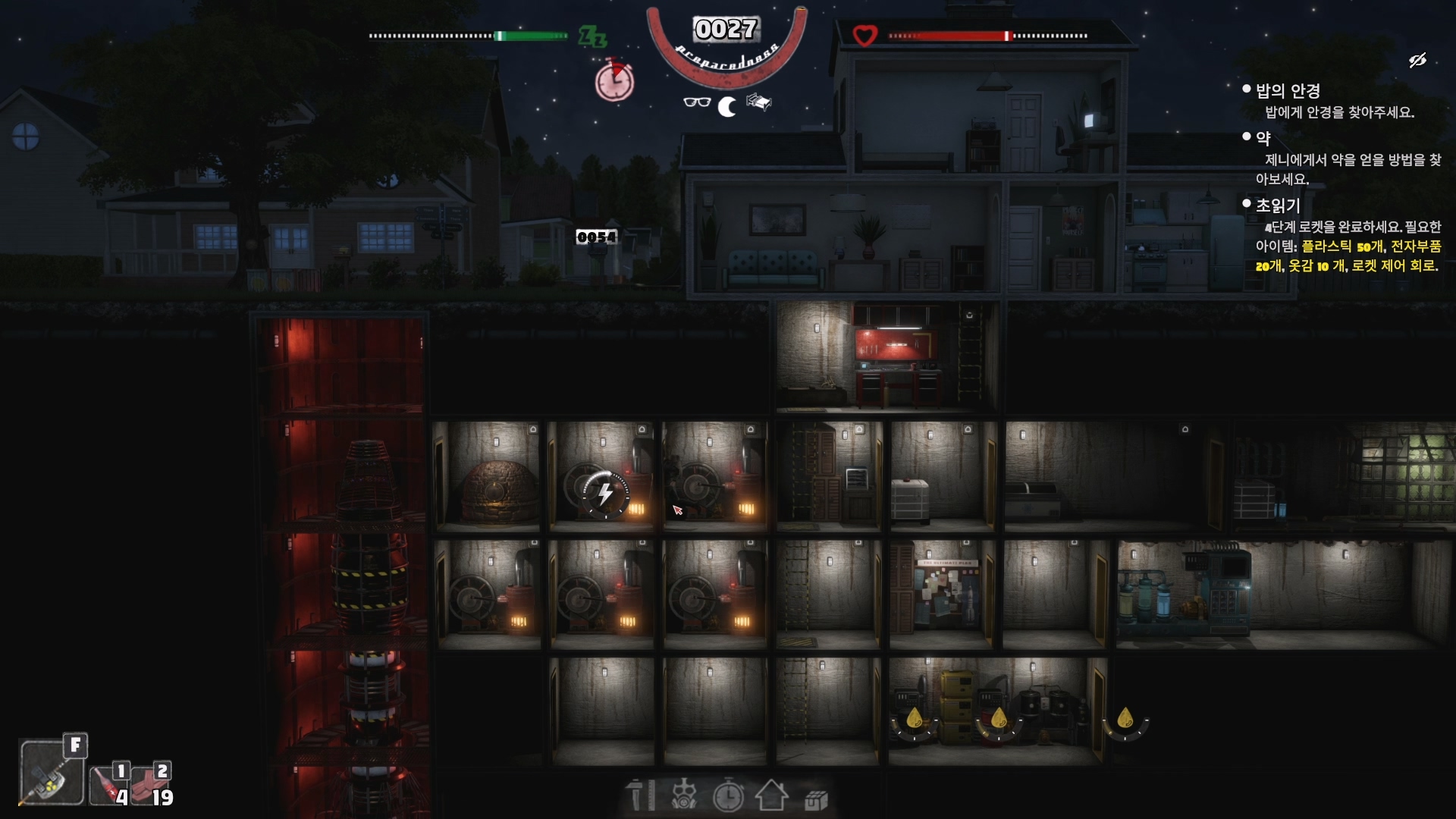
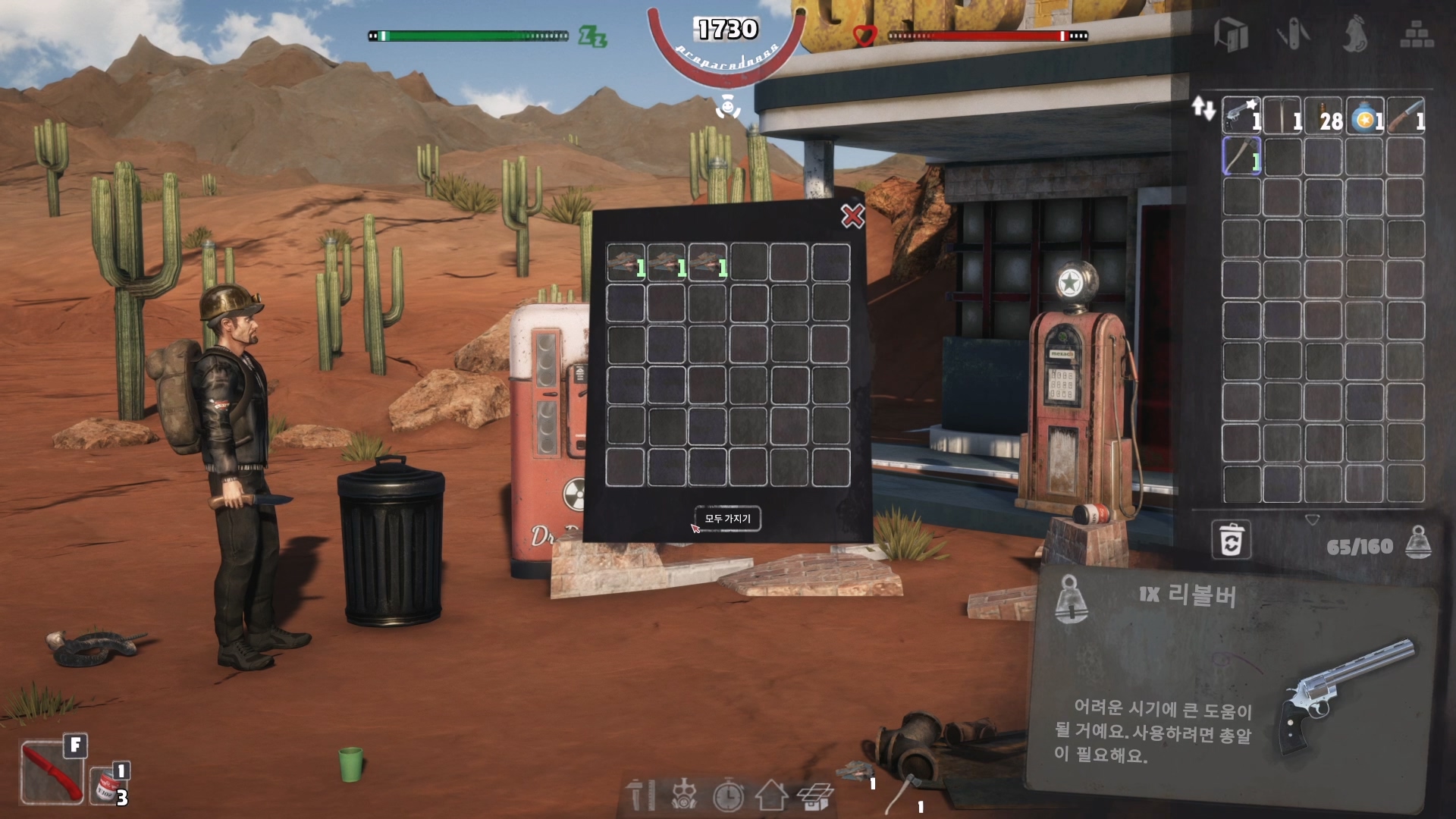
In any case, you expand the bunker’s space, install a generator and growing facilities inside, and develop it step by step. In the later part you can even draw groundwater. Outside, you travel around three main gathering and mining areas, bring materials back, process them, and either sell them to the residents at a high price to make money or trade them for useful goods.
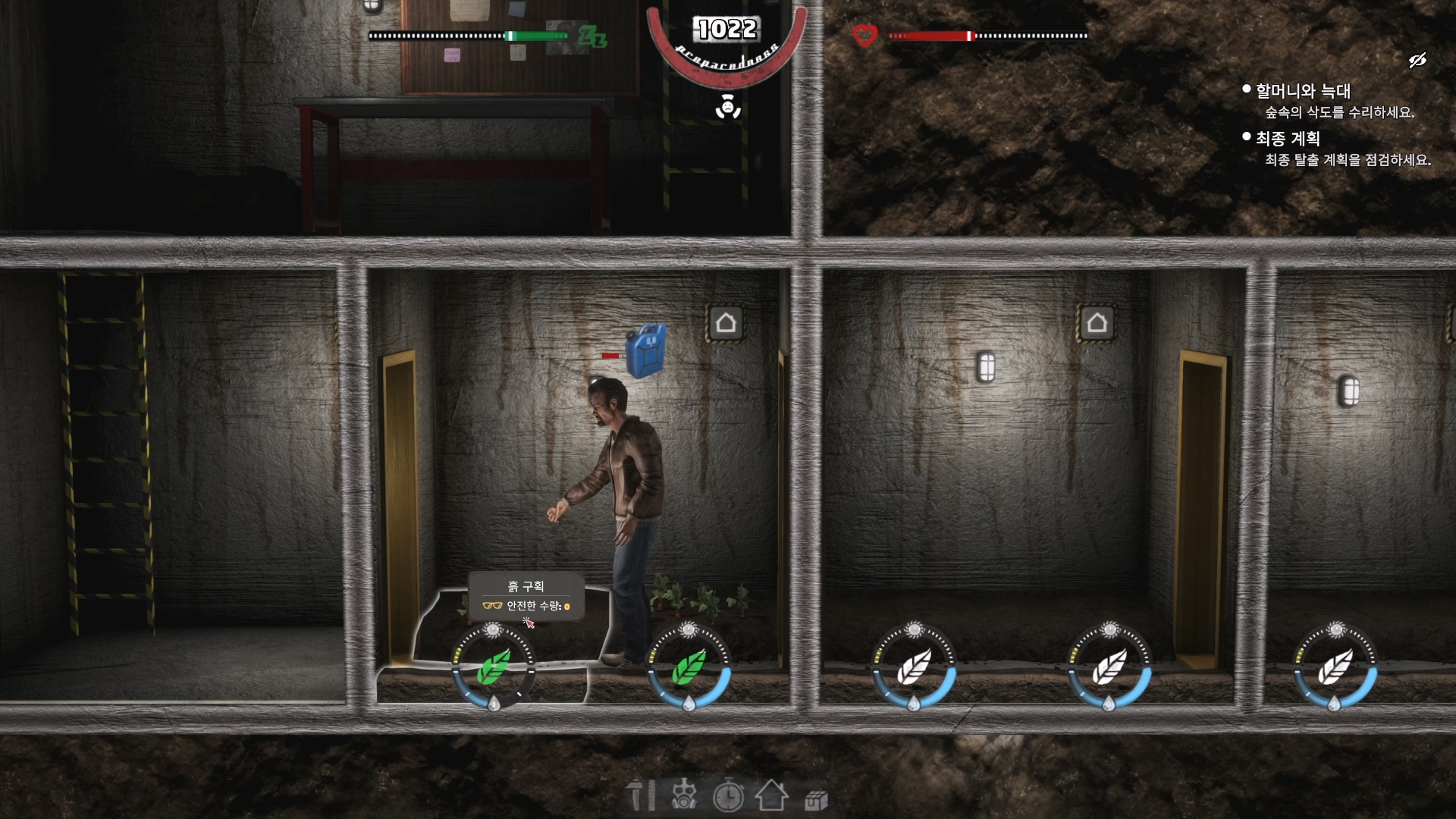
There is fun in your standard of living gradually rising, your weapons performing better, and the stages of the areas where you can gather materials going up. I did not get badly stuck while raising the stages of the forest, the mine, and the desert.
What actually held the play back were the other, somewhat unclear tasks. Personally, I think the destinations would have been easier to find if the task log had offered a bit more specific hints. I felt that the hints for finding the buttons or places you need were not direct, and were given only indirectly.
2.2. Graphics and Sound
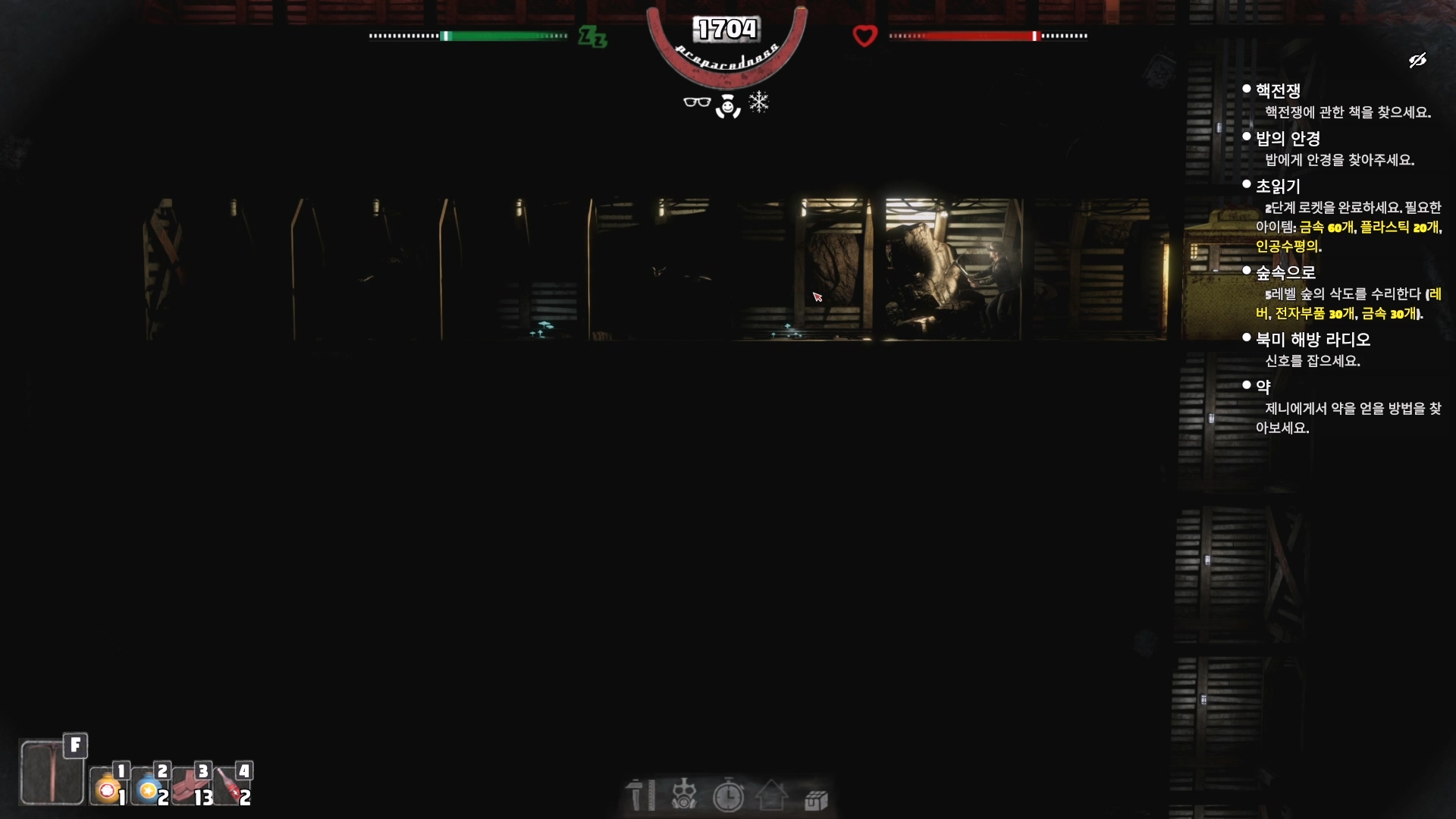
The graphics did not feel especially impressive, but they were not bad either. In places the detailed touches were even a little surprising. Taken on their own, the graphics were perfectly fine.
The problem is that an unnatural look stands out with the character’s movement. When moving quickly between the upper and lower floors, there was a sudden teleport-like effect on the stairs, and the motion of climbing a ladder was often played in a position that did not match the ladder.
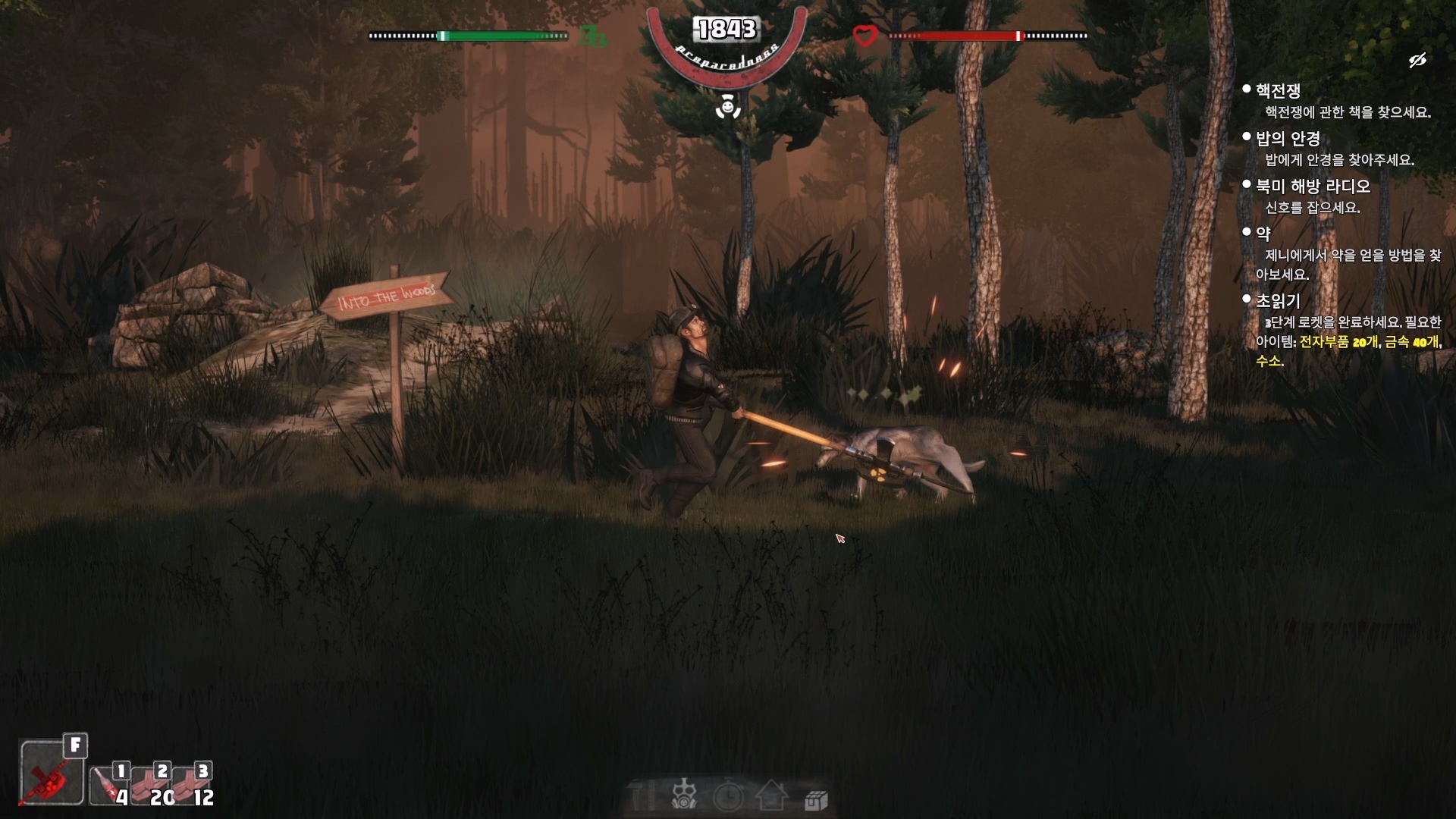
Movement this close to a bug is a small minus in judging the graphics. Still, it is fortunate that it was not a fatal problem that blocked progress.
Nothing in the sound was a major problem. If you ask whether it was good, it did not stay especially strongly in memory, but nothing about it was particularly irritating either. I would say it fit the game’s setting and mood well enough.
Honestly, my eyes went more to the unnatural parts of the graphics and the movement than to the sound, so I do not think I paid the audio much attention.
2.3. Difficulty
As I mentioned earlier in Features, the guidance on how to progress through the game is a bit lacking. Even so, if you solve the given tasks one by one, you can make a fair amount of progress. Fortunately, the difficulty of the crafting and growth side was on the low side.
In my case I played with a focus on crafting and growth, ahead of advancing the story and the tasks. That way of playing was not bad, and it became a perfectly decent experience with the game. When it came time to finish the game, though, I ended up relying on a walkthrough.
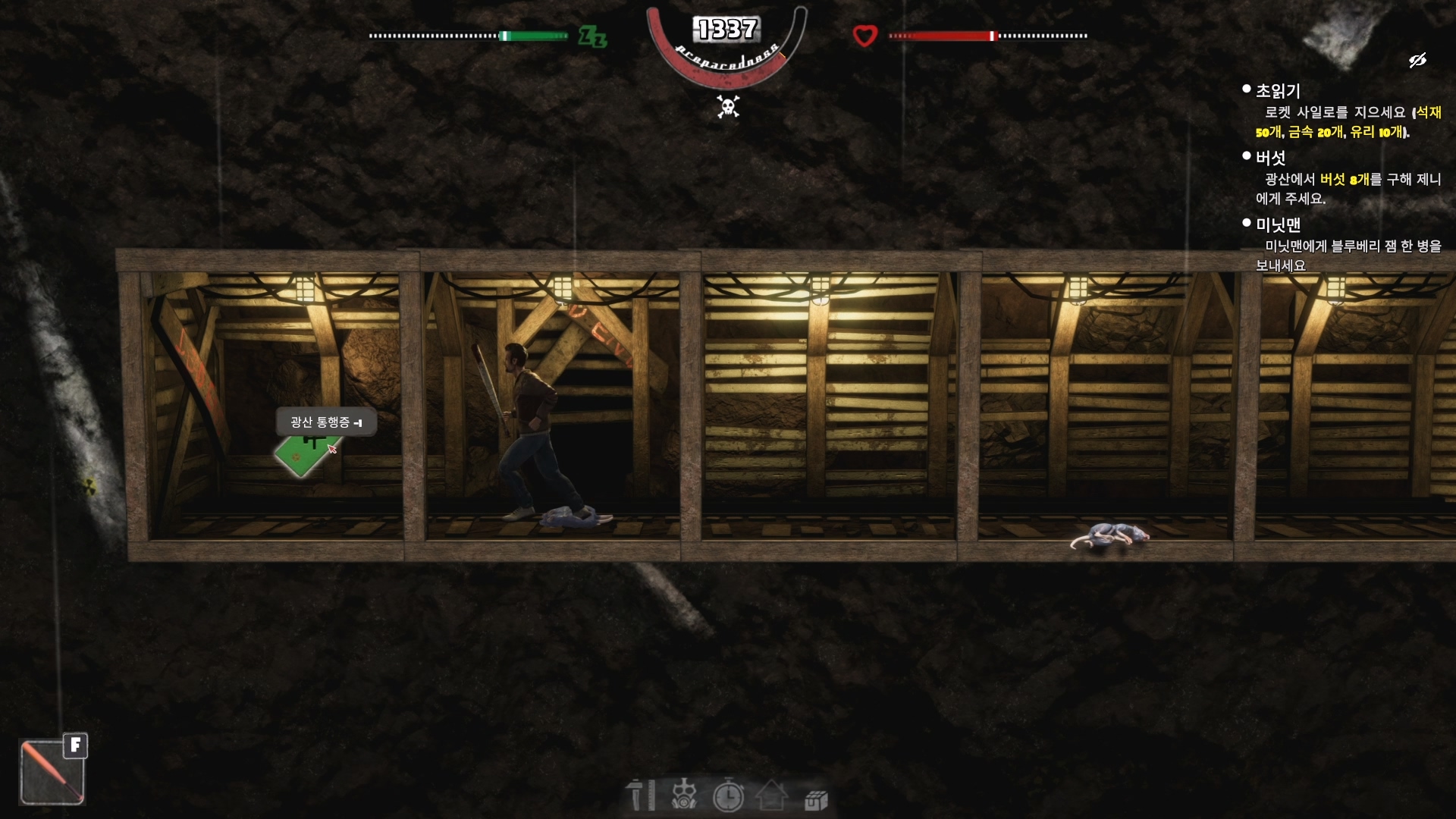
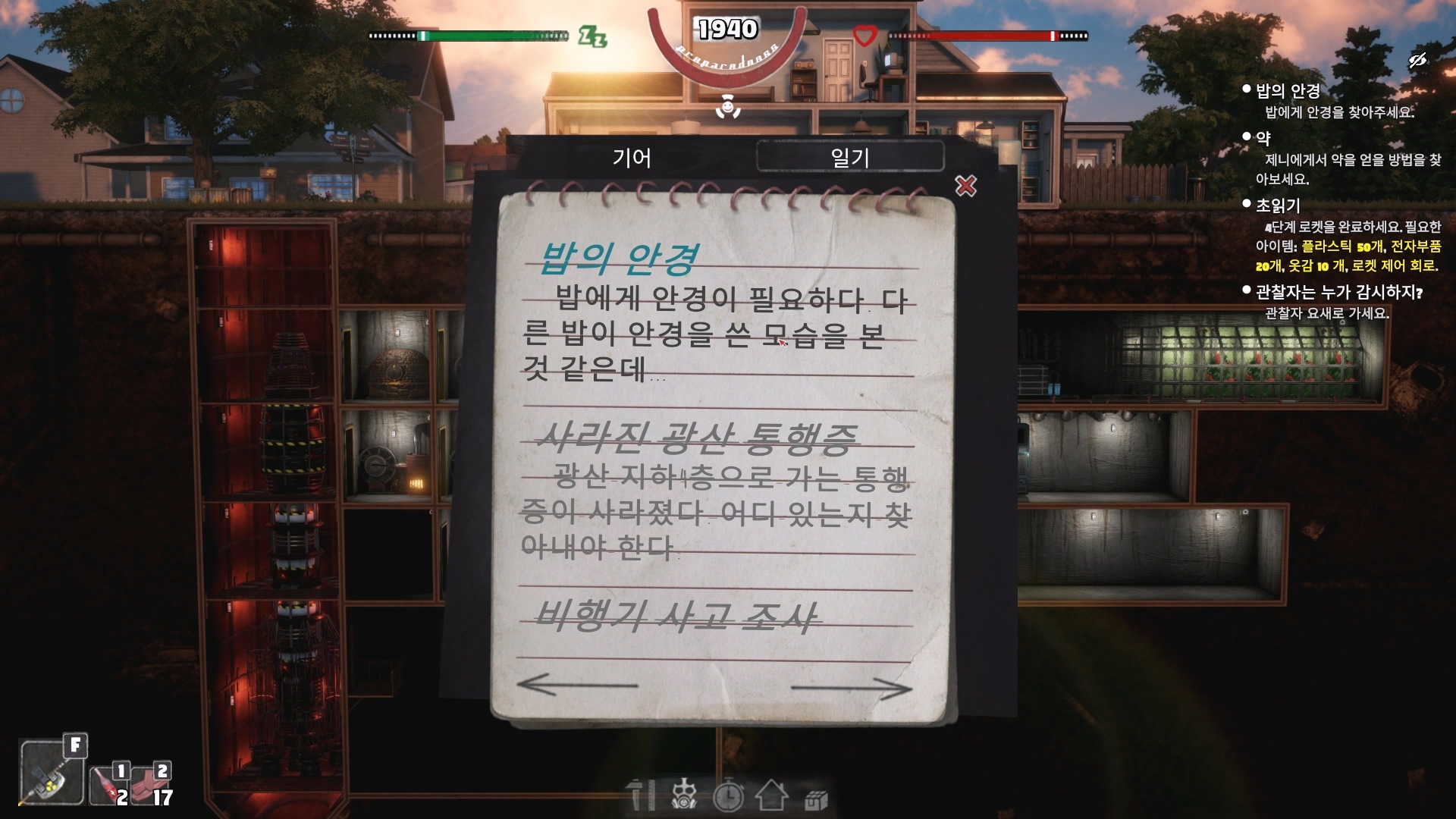
One of the tasks I got stuck on was being asked to find Bob’s glasses. There was a hint in the description, and if I had looked at it properly I could have found the answer, but because I was focused only on crafting and growth I missed that clue.
I also could not solve the task of being asked to find a book for a long time. The process of reaching the place where you can learn the protagonist’s secret likewise felt unclear about what I was supposed to do. In the end, the difficulty that came from vague explanations weighed more heavily than the combat or the survival itself.
The crafting, selling, and growth process has some slightly tricky parts as well. This part has the fun of trying things yourself as you go, so it felt closer to fun that comes from a little trial and error than to something greatly difficult.
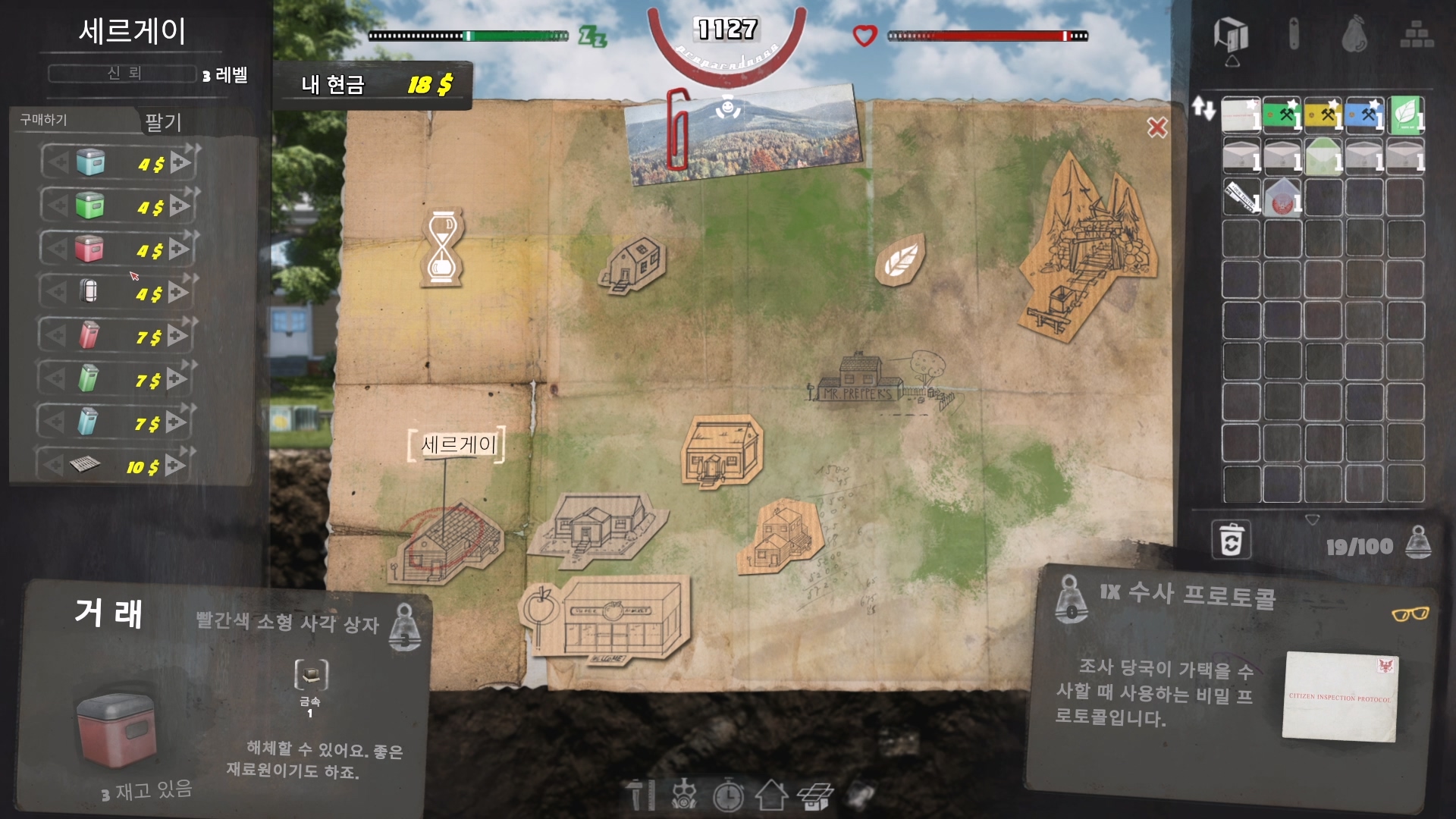
In my case I made money by processing materials obtained from the forest and the mine and selling them to the residents. With the money I raised that way, I bought the goods I needed and focused on securing electronic parts that were hard to obtain. Scrap metal felt faster to get by dismantling items bought from the residents than by collecting it myself.
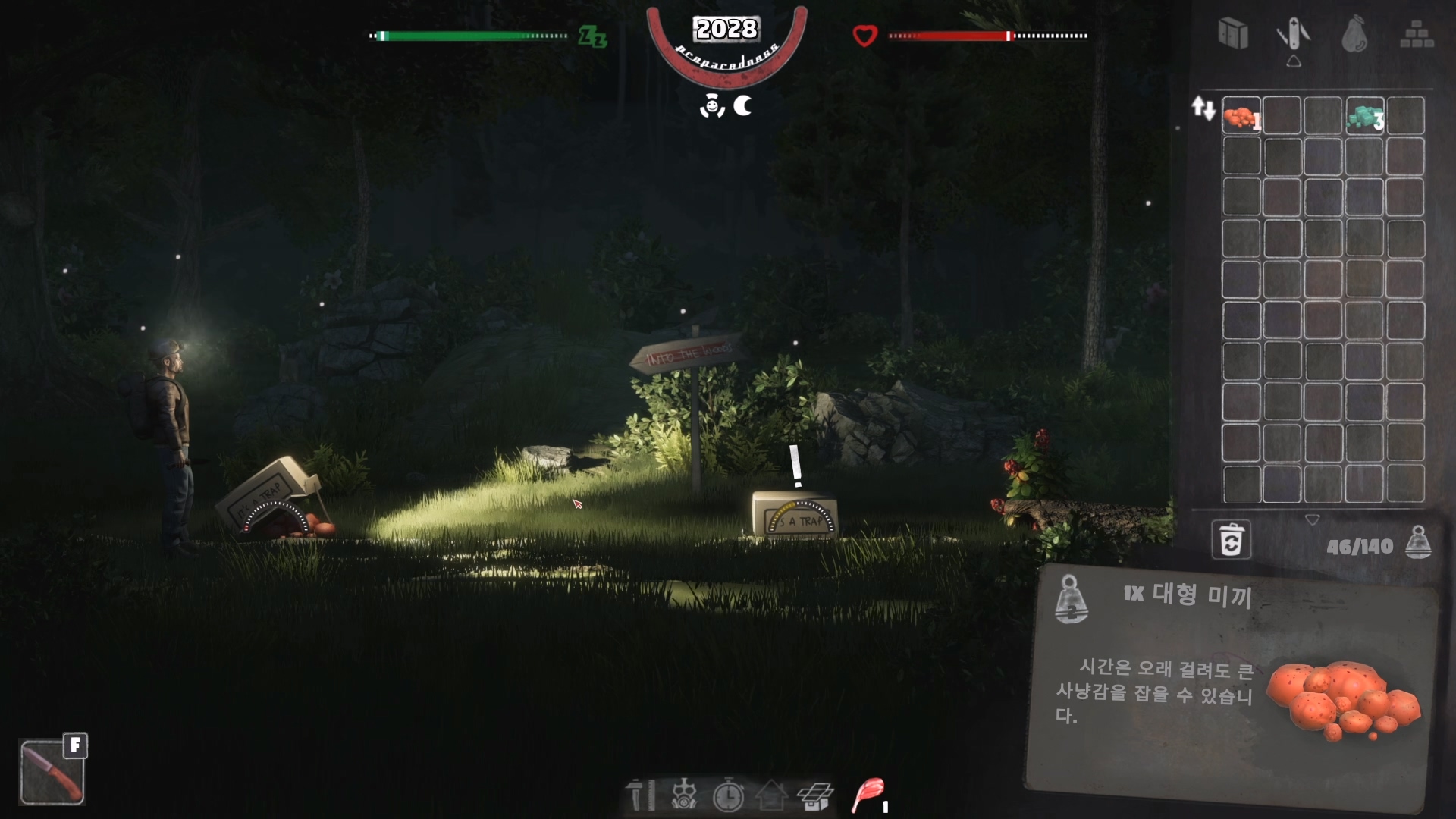
There was definitely fun in setting traps in the forest to get materials, obtaining crops through cultivation, and mining ore in the mine. There were also things I learned far too late. I knew that smelting iron ore gives you scrap metal, but I only learned late that heating stone gives you glass, and that was truly baffling.
Once you know it, it seems like a possible combination, but the game does not do enough to lead you there naturally, so it never occurred to me to make glass by heating stone. I think I would have noticed easily if at least a slightly more intuitive material had been used. There was difficulty that came from crafting methods that are not intuitive, like this. Of course, it might just be a personal problem.
2.4. Play Time
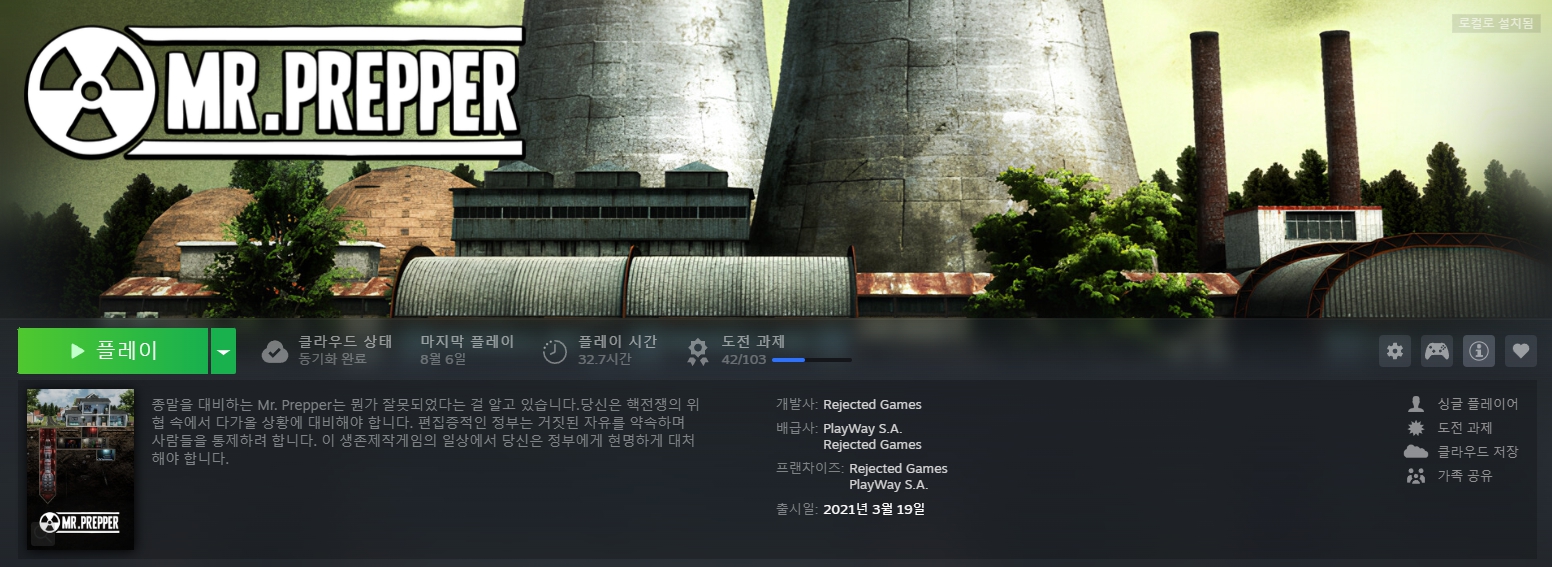
My total play time is 32.7 hours. After I finished the game, I thought I could have completed it much faster if I had known the methods from the start. It was not a game that should have taken this long, but I played for quite a long time.
Because I did not properly understand the game, there were times I gathered items in an inefficient way or collected more than necessary. As a result, securing materials took a long time, and the point at which I could obtain certain items was naturally delayed as well.
In any case, I was able to play truly immersed in the game itself. The inspector who arrives now and then serves as the seasoning of the game. Honestly, I think that added a little inconvenience to a game that could have grown more boring, made the player use their head, and raised the gameplay.
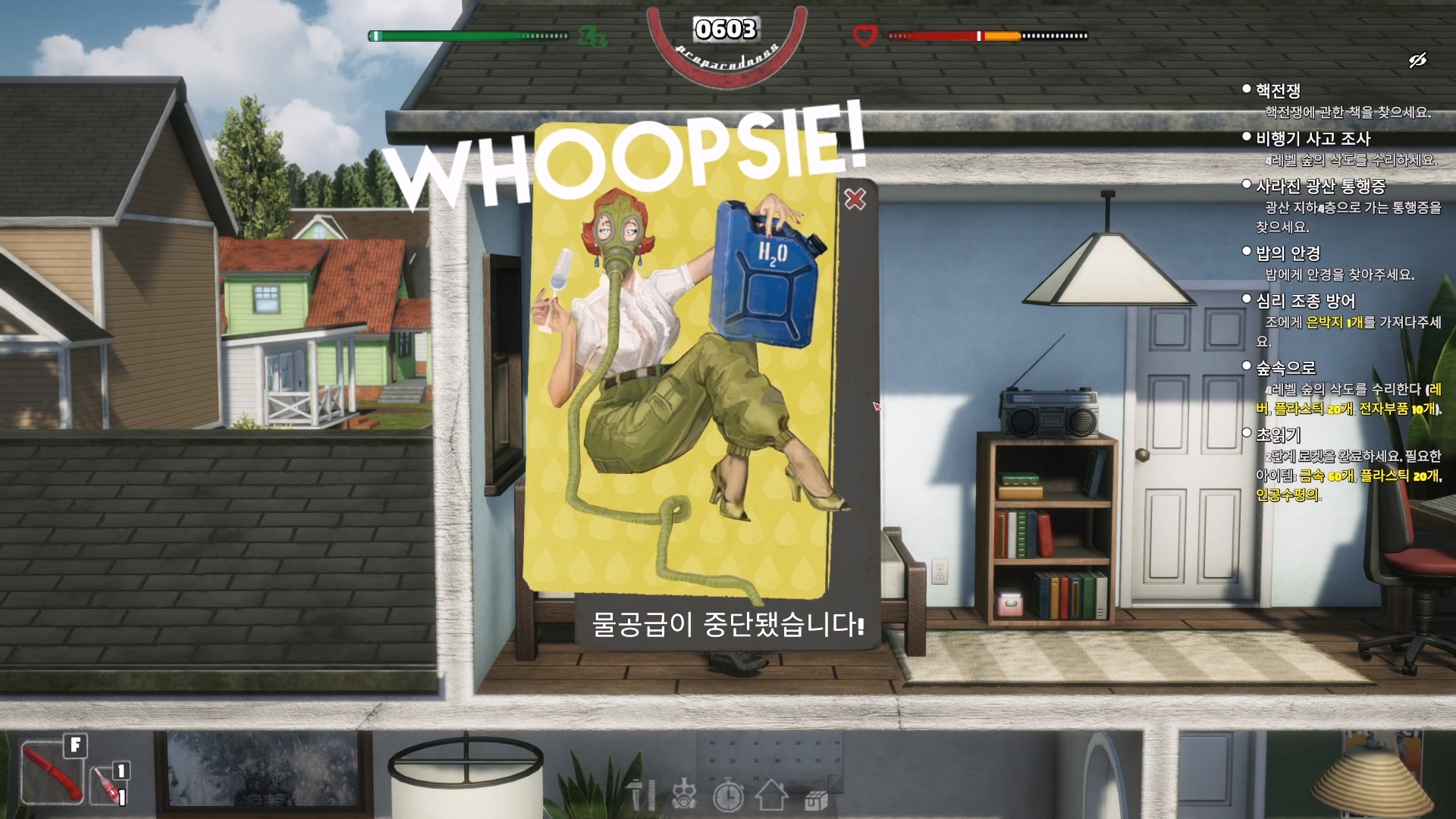
There are also times when a water shutoff or a power shutoff is imposed and the game becomes hard going. It is an element that lengthens the time the game takes, but I could also feel the fun of thinking, in my own way, about how to get through that period well.
There was fun in immersing myself in crafting and growing, and in trying this and that. The story, on the other hand, was a little unclear, and I also got the impression that various pieces had been forced together. It was closer to a game of living and crafting on the basis of a story and a setting than to a game centered on the story itself.
It suited my personal taste well, so I was able to play fully immersed. If you ask whether I want to play again, a little regret remains, so I do feel like developing the bunker further.
It feels as if I finished the game without having made the bunker perfectly. I also found it a shame that there is not enough content you can keep enjoying after building a more complete bunker. You can make all sorts of food and tools for survival, but situations in which survival itself is urgently needed felt few.
If those elements had been strong I would have felt stressed in my own way, but in the present setup a little regret remains. There is a moderate addictiveness, but I do not think it was completely satisfying.
3. ‘Mr. Prepper’ Closing
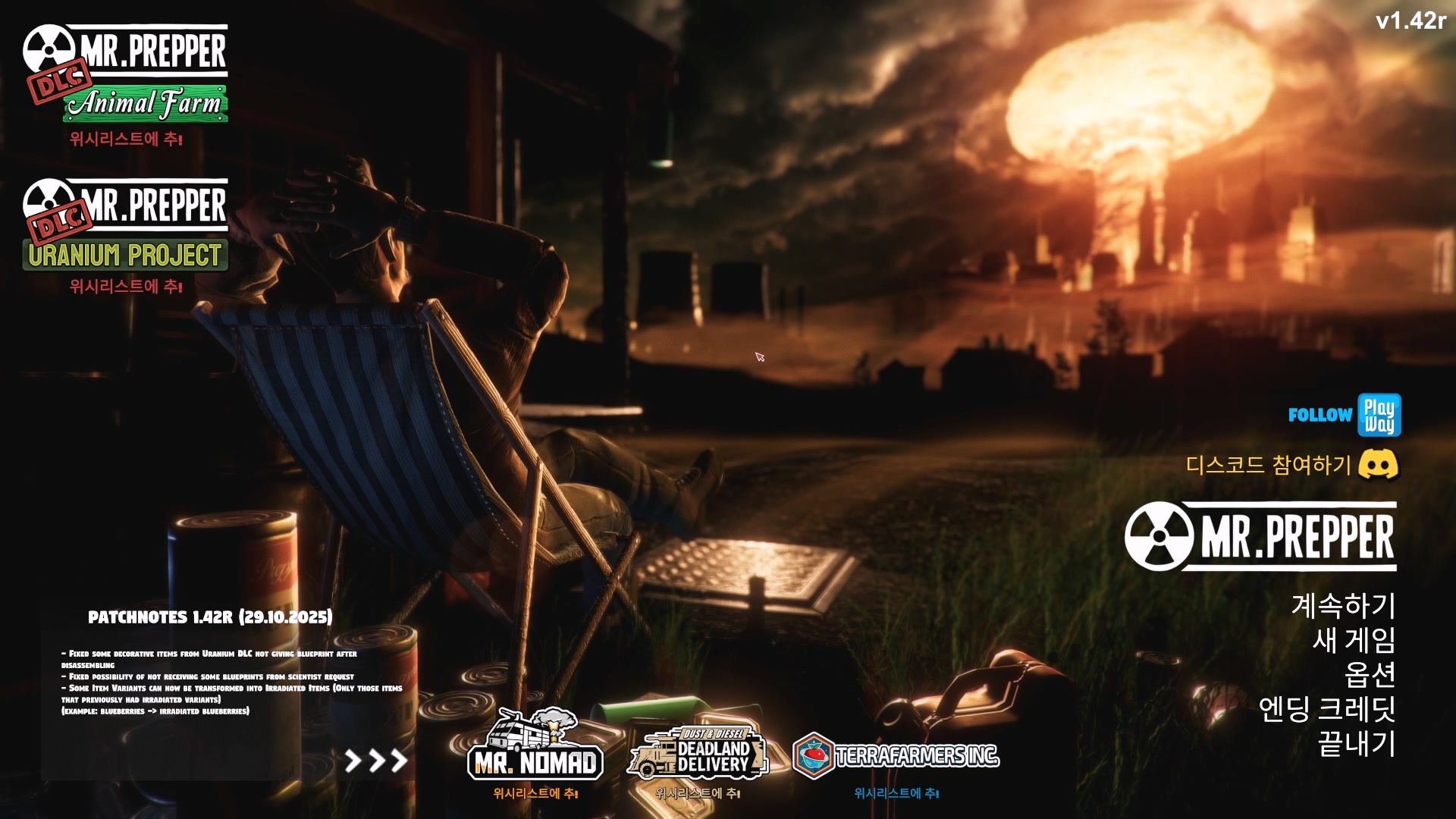
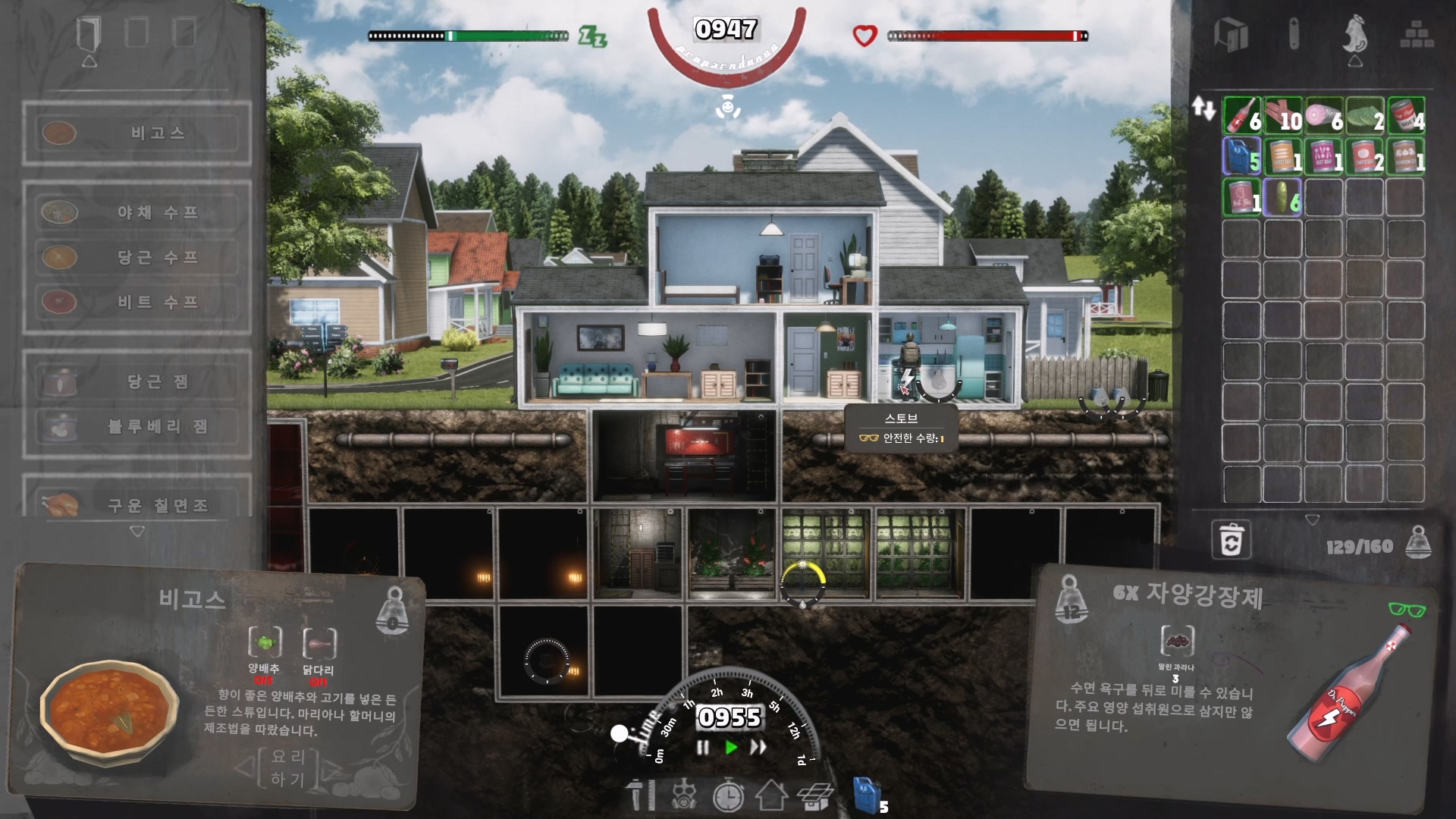
At first I definitely thought it was a game about building an air-raid shelter in preparation for a nuclear war. After actually playing it, though, it was not a game in which the nuclear war and the air-raid shelter are directly connected. That was closer to the game’s background, and the core fun was expanding the underground bunker while collecting various resources and crafting the items you need.
As you upgrade, stage by stage, the places where you can obtain materials, you secure better resources, make better products, and gradually put together a more prosperous life. It is a game with the fun of making a variety of food and setting up, one by one, the facilities needed for survival.
If you want, you can follow the tasks and see the game’s ending, but you can also play in a somewhat open way. I would call it a game where the fun can be found in the life of furnishing the bunker and keeping the needed resources supplied, more than in following only a clear goal.
There is also the fun of going to the forest, the mine, and the desert when you need to, to hunt or collect materials. It is not that there is some grand element, but it was a game with a fun of its own inside exactly that repetition. I think it was a game you can start lightly, and yet not one that is merely light.
That is all. I hope good fortune lies on the road ahead of you. Thank you.